Staircase Carpentry — Upgrades
A Spectacular Turned Balustrade Restoration
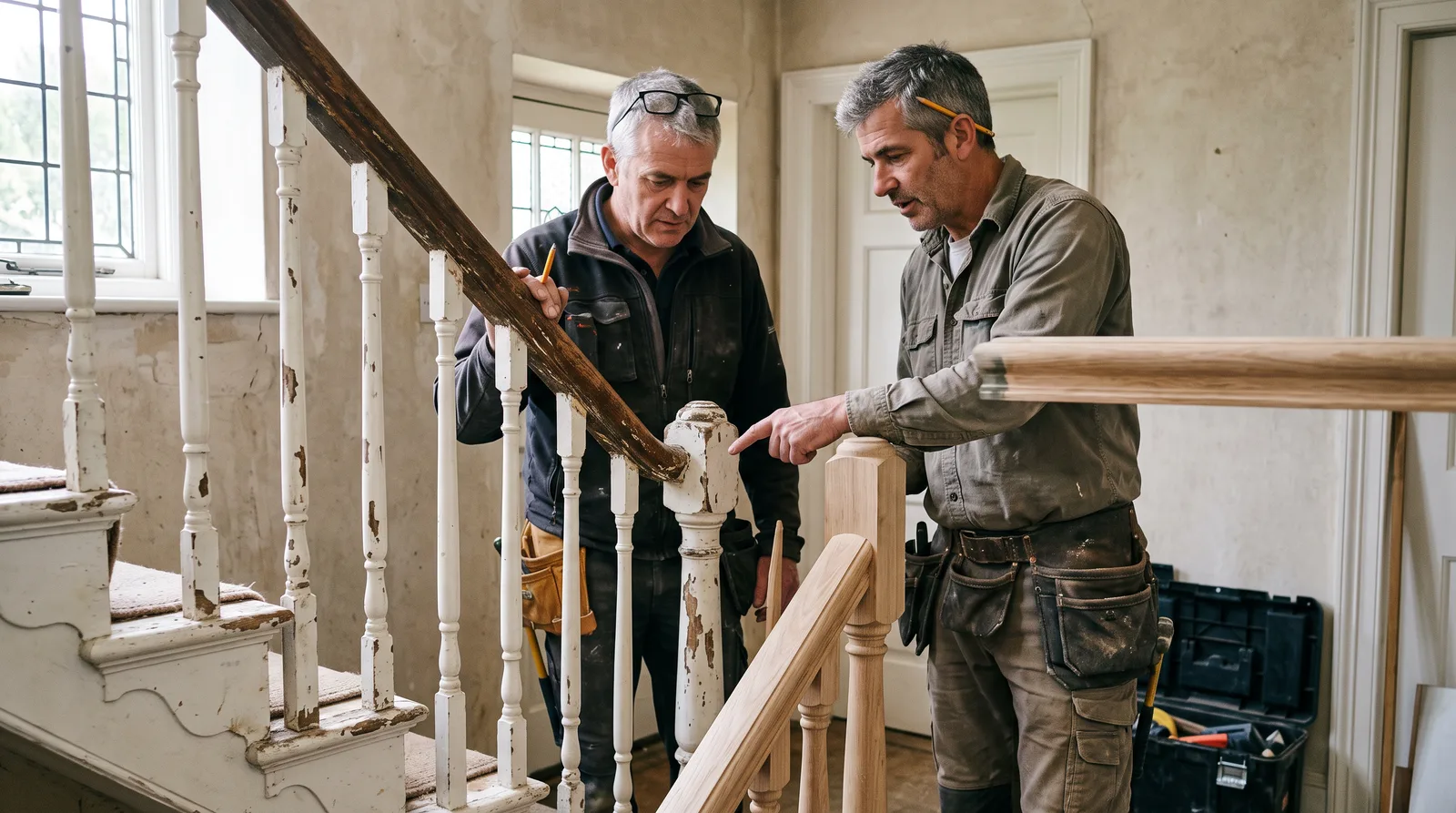
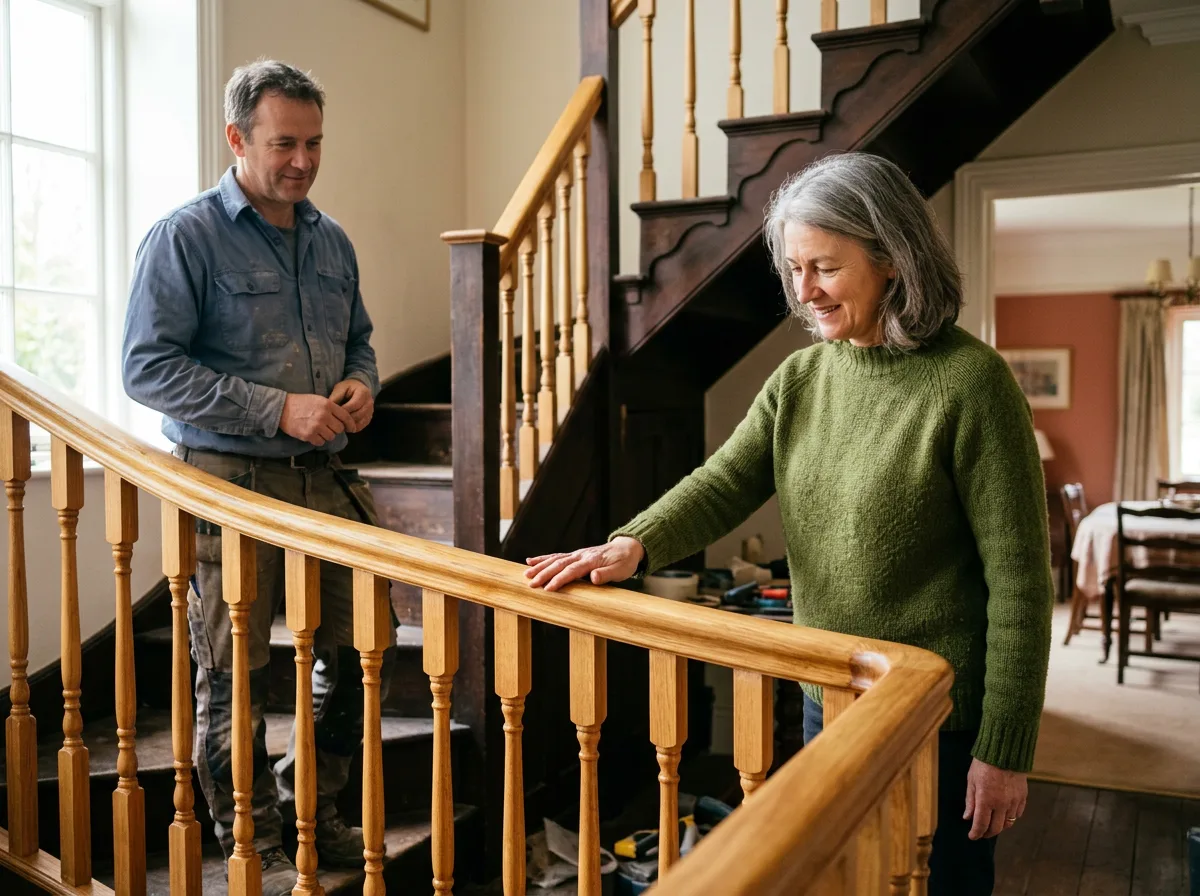
A tired balustrade, stripped back and reborn with hand-turned oak spindles and a glowing handrail — the same staircase, transformed.
Local to Berkshire
Experienced Carpenters
32 years in the trade
Fully Insured
High-Quality Finish
The Brief
A Tired Balustrade, Given a Second Life
This is the kind of balustrade restoration we take on regularly across Berkshire: a staircase with good bones and a sound structure, let down entirely by a balustrade that has had its day — spindles worn thin at the handrail, chipped paint, and a rail that has lost whatever shine it once had. The staircase itself is staying exactly where it is. What changes is everything the eye and the hand actually notice.
The elegant part of this kind of upgrade is how much is replaced without a single wall, string, or tread being disturbed. Each tired spindle is eased out in turn and replaced with a new hand-turned oak spindle, profiled to echo the character of the original run rather than a flat, modern substitute. It is unhurried, one-at-a-time work, and it shows in the result — a balustrade that reads as a single, graceful, continuous piece rather than a patchwork of repairs.
The handrail gets the same exquisite attention: sanded back past decades of old varnish to bare, honest timber, then built back up with oil and care until the grain glows under its own natural light. Paired with the new spindles, the finished balustrade is chic enough for the grandest hallway and robust enough for daily family life — a refined, spectacular transformation of a feature most households simply live with rather than fix.
This page illustrates the type and standard of balustrade restoration work we carry out — not a specific named address or client. Every project is scoped and quoted individually after a free site visit.
The Process
From Tired Spindles to a Glowing Handrail
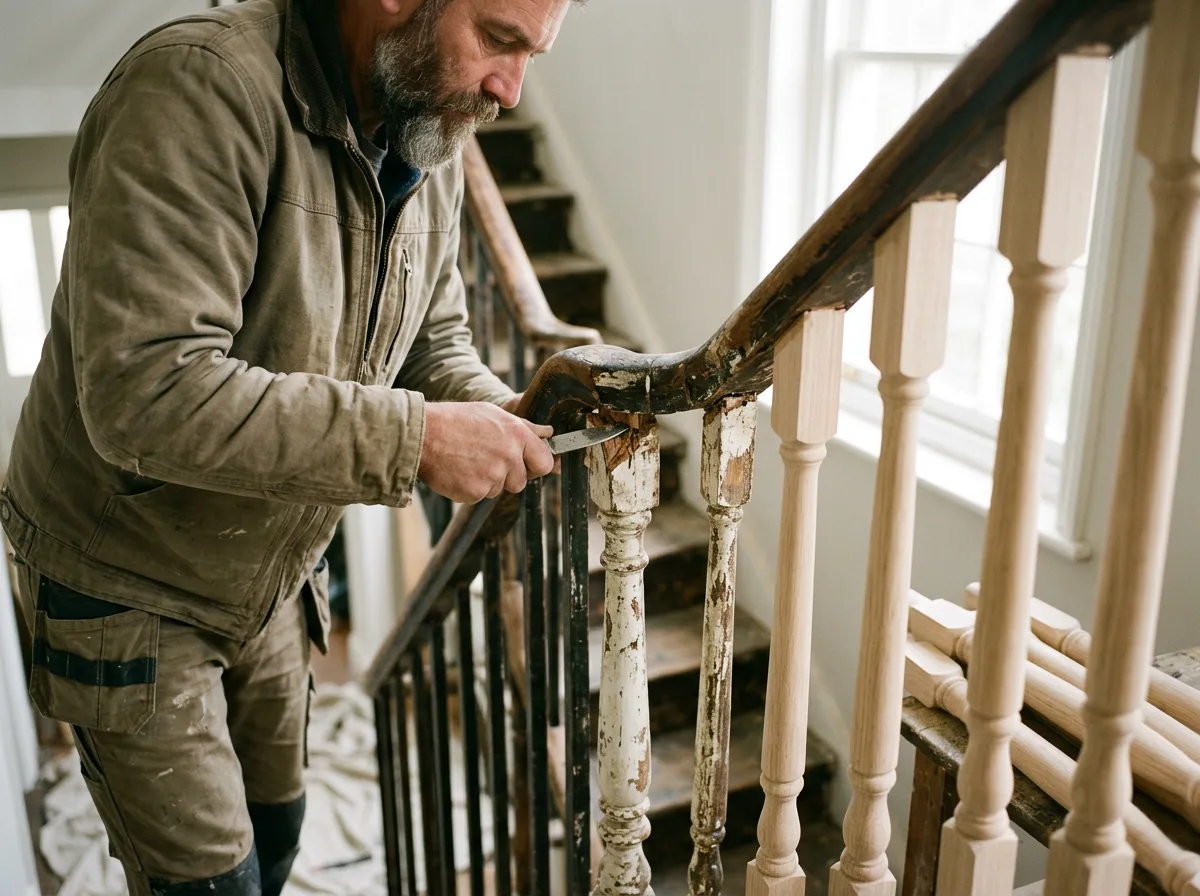
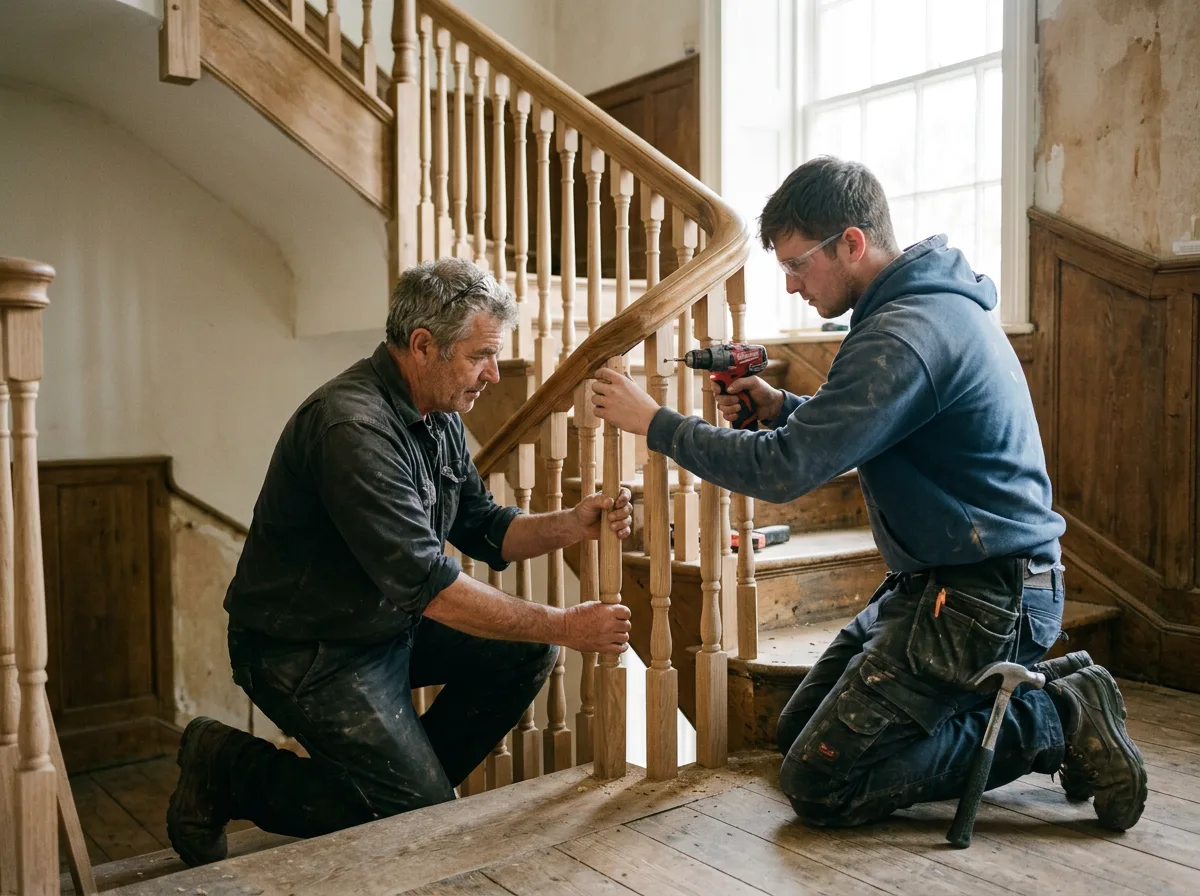
The restoration begins with careful removal, not demolition. Each old spindle is eased out of its housing in the string and handrail one at a time, so the staircase stays usable throughout and nothing around it is disturbed. Where a spindle has swollen, warped, or been overpainted into its socket over the decades, it is worked free gently rather than forced, to keep the surrounding timber — and the string it sits in — in good condition for what comes next.
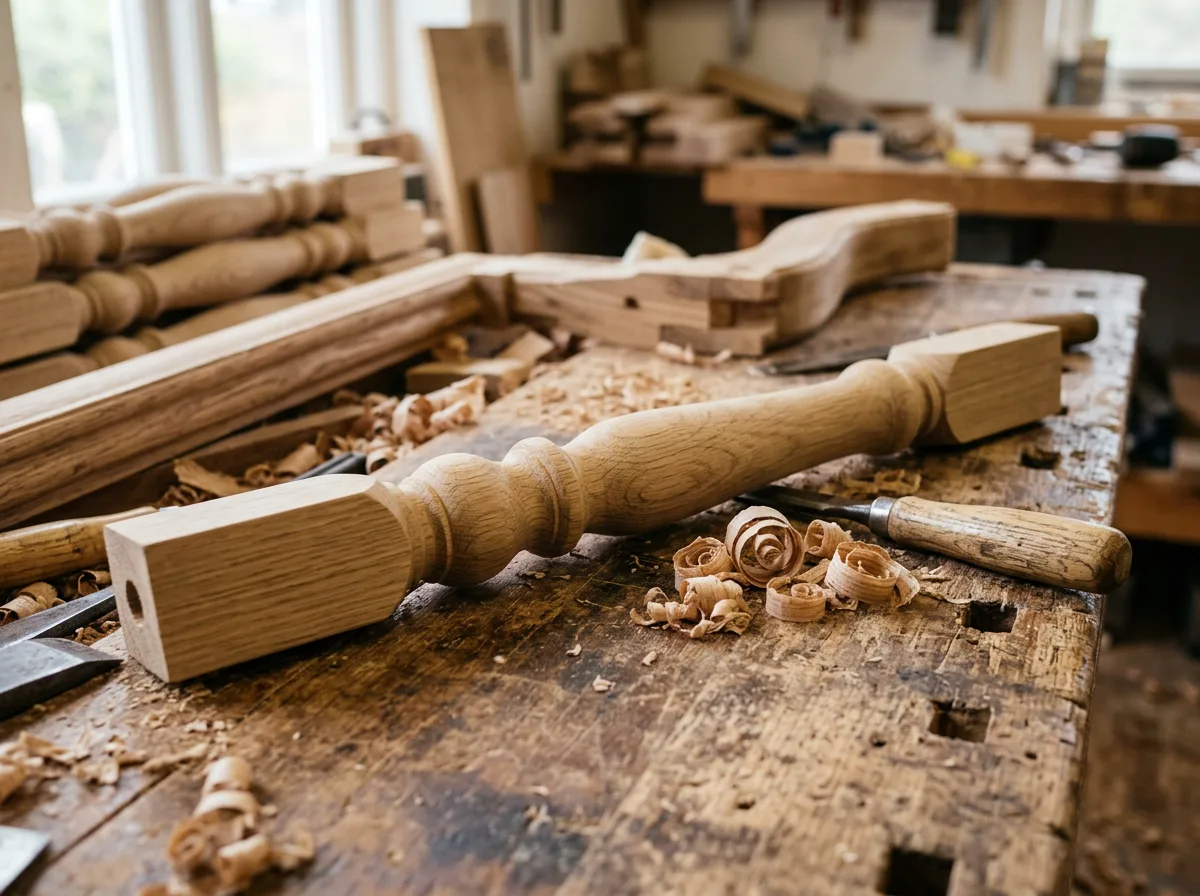
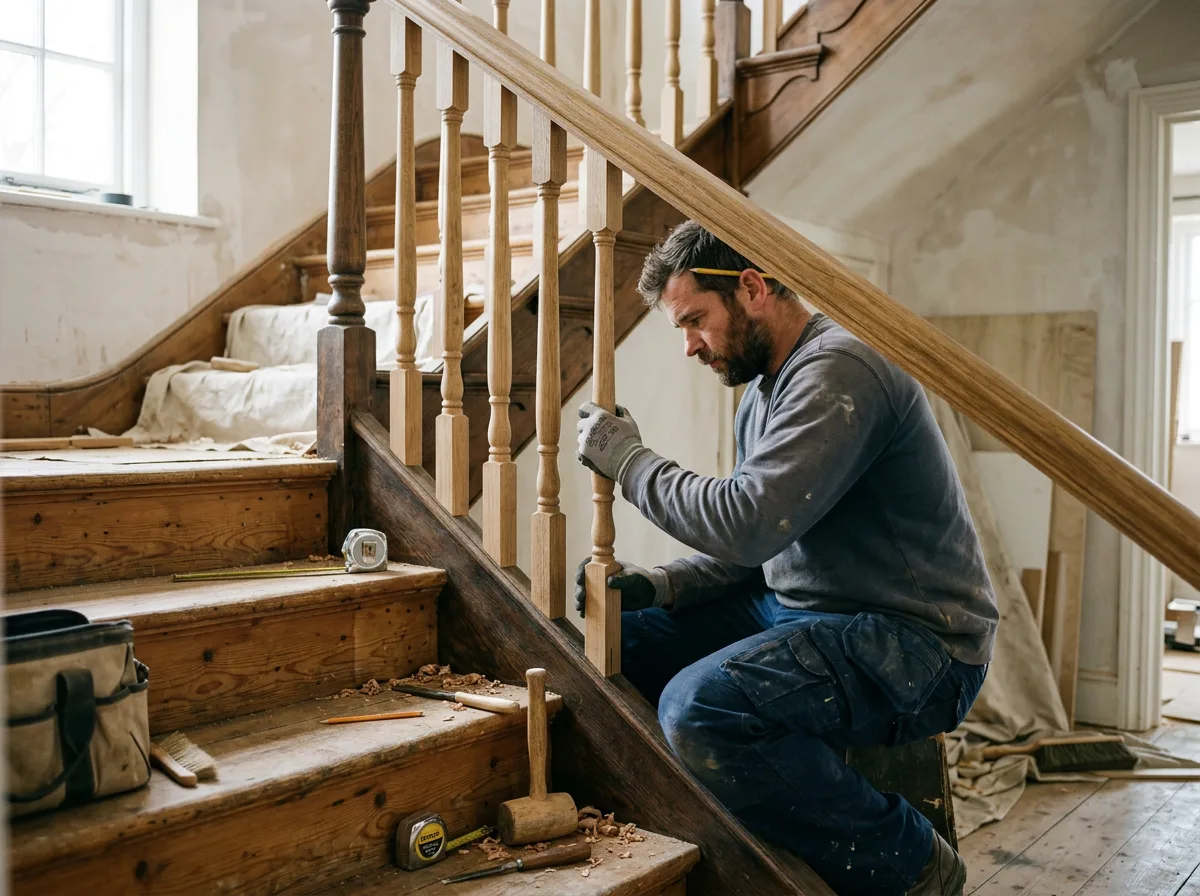
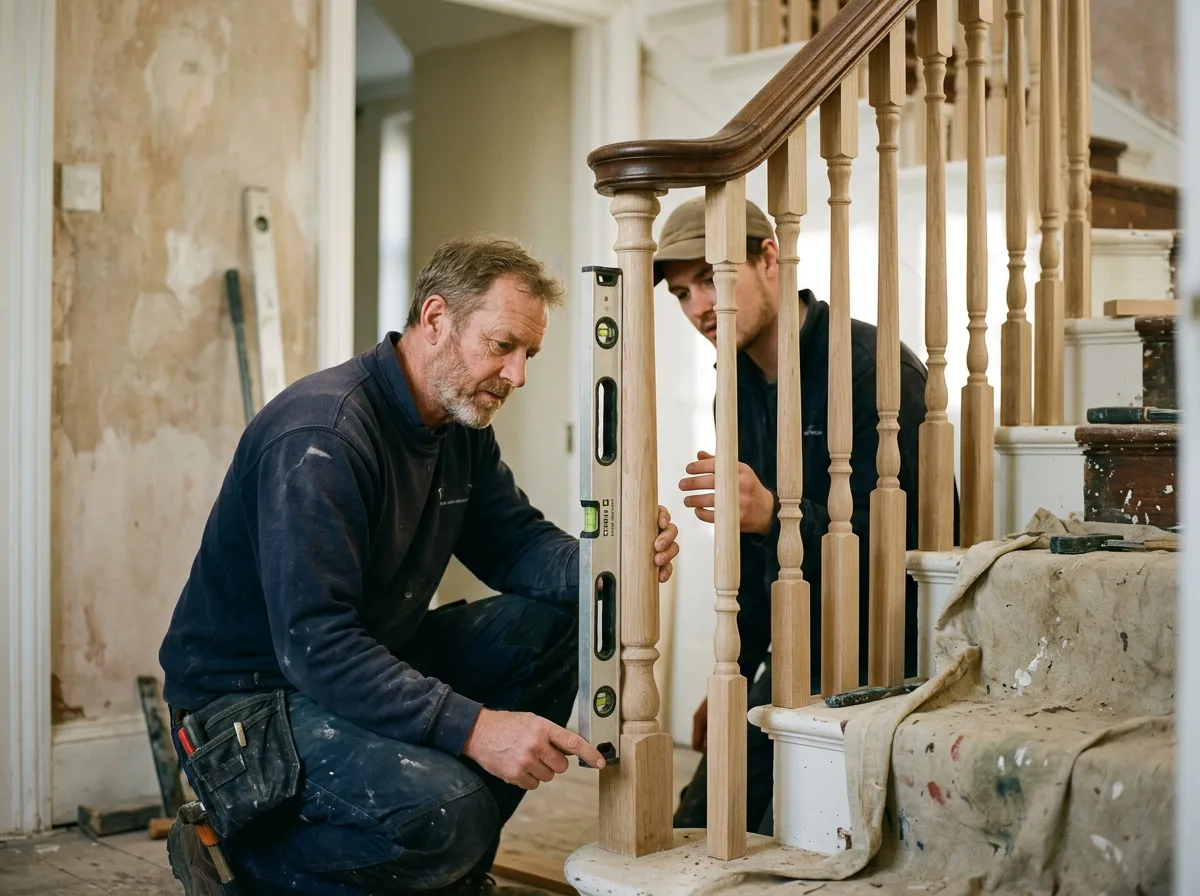
New spindles are hand-turned on the lathe to match the proportions and character of the originals, or to a profile chosen to complement the staircase where none of the old ones survive in good enough condition to copy exactly. Each one is test-fitted before it is permanently glued and pinned into place, checked for plumb with a spirit level, and set against its neighbours so the whole run reads as a single, graceful line rather than a row of individually fitted parts. Any newel posts staying in place are worked around with the same care, so the new spindles sit comfortably against them rather than fighting the existing joinery.
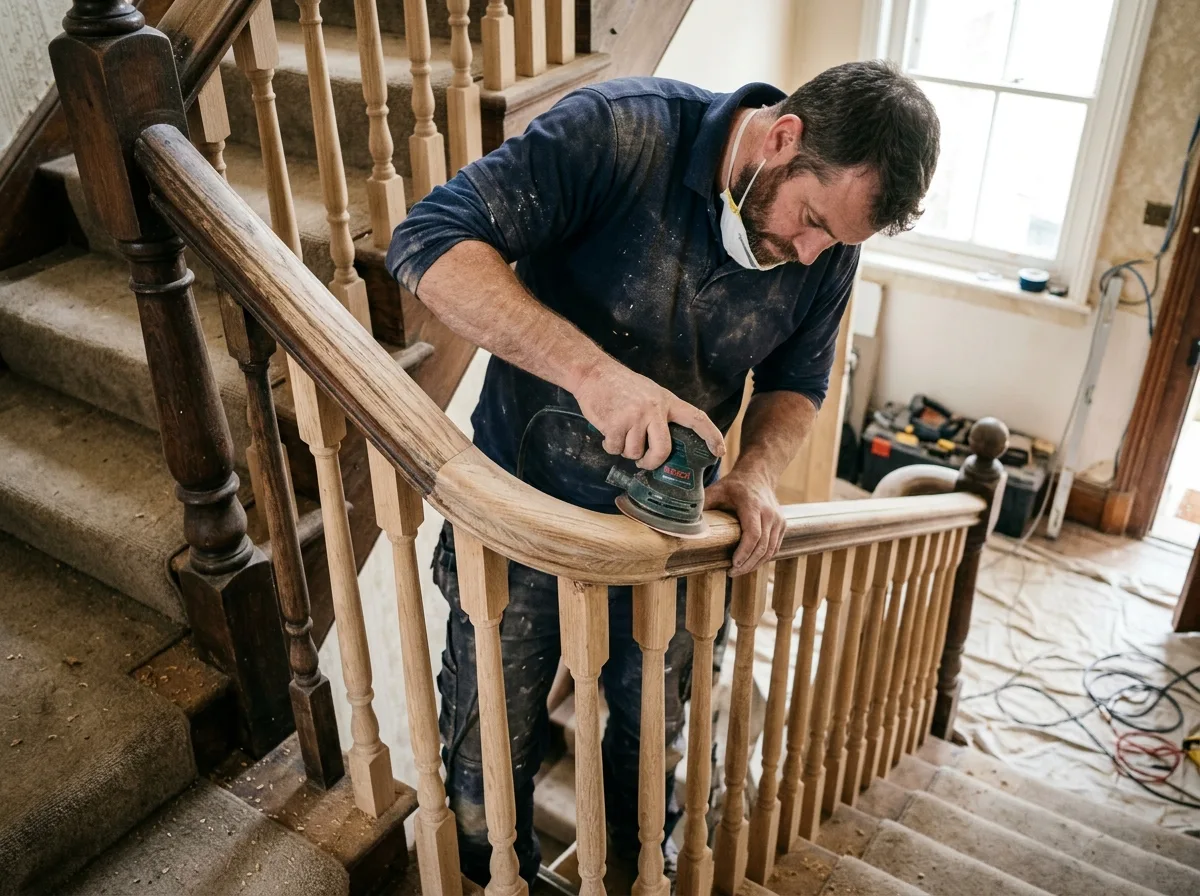
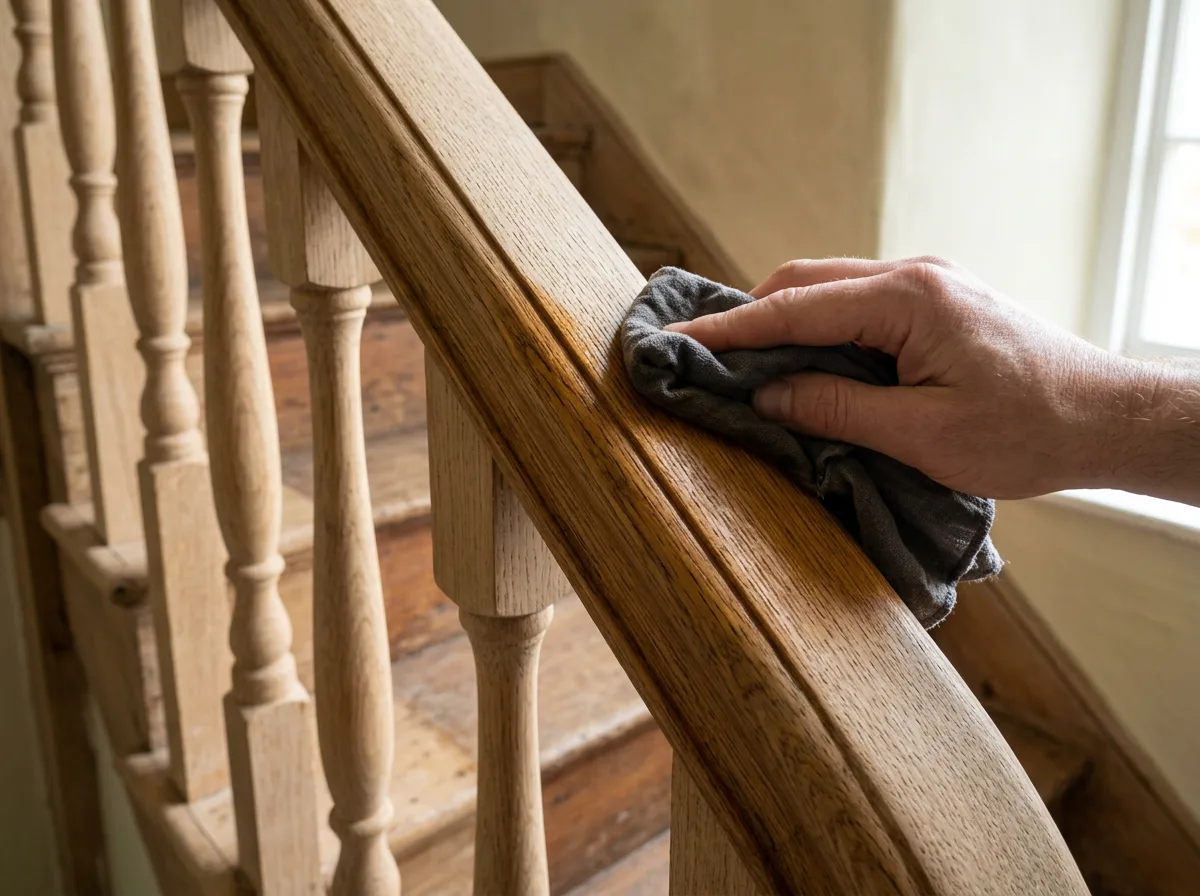
The handrail is restored in parallel: sanded back through progressively finer grades past years of old varnish, wax, and grime, until honest bare timber is exposed. From there it is built back up with oil, worked into the grain in thin coats until the surface glows rather than simply shines, and left to cure properly before the staircase goes back into daily use. The finished balustrade is tested by hand along its full length — every spindle checked for firmness, the handrail checked for a smooth, splinter-free run — before we consider the job complete.
The Work, Step By Step
A Closer Look
A closer look at the kind of restoration and craftsmanship involved in reviving a worn staircase balustrade.
Specification
Materials & Approach
- Solid oak spindles, hand-turned to a profile matched to the existing run or chosen to complement the staircase's period
- Handrail sanded back to bare timber and finished with a penetrating hardwax oil, worked into the grain in thin coats
- Spindles fixed with a combination of quality wood glue and concealed pins, rather than exposed fixings, for a clean finished line
- New work set out and checked against the existing newel posts, so height, spacing and proportion all sit comfortably together
- Every spindle checked for plumb with a spirit level before final fixing, not simply fitted by eye
- Dust from sanding contained and cleared as part of the job, with no cosmetic filler used in place of a proper mechanical fix
Common Questions
Balustrade Restoration — Frequently Asked Questions
Can the spindles be replaced without replacing the whole staircase?
Yes — in almost every case this is a balustrade upgrade, not a staircase replacement. If the treads, risers, and strings are structurally sound, which they usually are, each spindle can be eased out and replaced individually while the staircase itself stays exactly where it is. It is the single biggest reason this kind of restoration is such good value: you get a transformed feature without any structural work at all.
Will new spindles actually match the style and period of my existing staircase?
That is the whole point of hand-turning rather than ordering an off-the-shelf profile. We work from the existing run, or from a single surviving original spindle where some have already been lost or damaged, so the new profile echoes the character of the period rather than looking like a modern substitute dropped into an older hallway.
How long does a full balustrade restoration take?
A single flight with a modest number of spindles is typically a few days' work once the new spindles have been turned. A longer run, a return staircase, or a handrail that needs extensive sanding and rebuilding with oil can take the better part of a week. We give you a realistic timeline as part of the written quote, not an open-ended estimate.
How much disruption should I expect while the work is carried out?
Less than most people expect. Spindles are replaced one at a time rather than all at once, so the staircase remains usable throughout almost the entire project, and dust from sanding the handrail is contained and cleared as we go. A full staircase replacement would mean losing the use of your stairs for the whole job — this does not.
Should the handrail be oiled or varnished?
Both are legitimate choices, and it comes down to the look and the maintenance you want. An oiled finish is more forgiving to refresh — a light re-oiling every so often keeps it glowing — and it shows wear more honestly over time. A varnished finish gives a harder, more uniform sheen but is less straightforward to spot-repair if it is later scuffed or chipped. We talk through both during the site visit.
Can you match new spindles to existing newel posts that are staying in place?
Yes — the newel posts are almost always the anchor point for the whole design, so the new spindle profile, the handrail height, and the finish are all worked out to sit comfortably against whatever newel posts are staying. Where a newel post itself is tired or damaged, that can be restored or replaced alongside the spindles as part of the same visit.
What happens to the old spindles once they are removed?
They are removed carefully and taken away as part of the job, along with all other waste timber, unless you would like to keep one or two as a memento or a template for a future repair elsewhere in the house. Nothing is left behind for you to dispose of.
Do you offer a guarantee on balustrade restoration work?
Yes — all restoration work is covered by our standard workmanship guarantee, confirmed in writing with your quote. If a spindle or joint were ever to come loose under normal use, we would come back and put it right.
Related Projects
More Staircase Carpentry
A Beautiful Oak Staircase, Reborn with Turned Spindles and a Carved Newel Post
A complete oak transformation — turned spindles, a carved newel post, and a handrail that feels as good as it looks.
An Elegant Oak Overlay for Tired, Dated Staircase Treads
Worn, dated treads cloaked in solid oak cladding, without the cost or mess of a full staircase rebuild.
A Hand-Carved Oak Newel Post, Fit for a Grand Hallway
A bespoke, hand-carved newel post commissioned as the anchoring centrepiece of a staircase.
Get Started
Request a Free Quote for Your Balustrade
Got a Balustrade That Deserves the Same Treatment?
Tired spindles and a dull handrail don't mean a new staircase — usually just a beautifully turned restoration. Get a free quote or arrange a site visit.