Staircase Carpentry — Upgrades
An Elegant Oak Overlay for Tired, Dated Staircase Treads
Worn, dated treads cloaked in solid oak cladding, without the cost or mess of a full staircase rebuild.
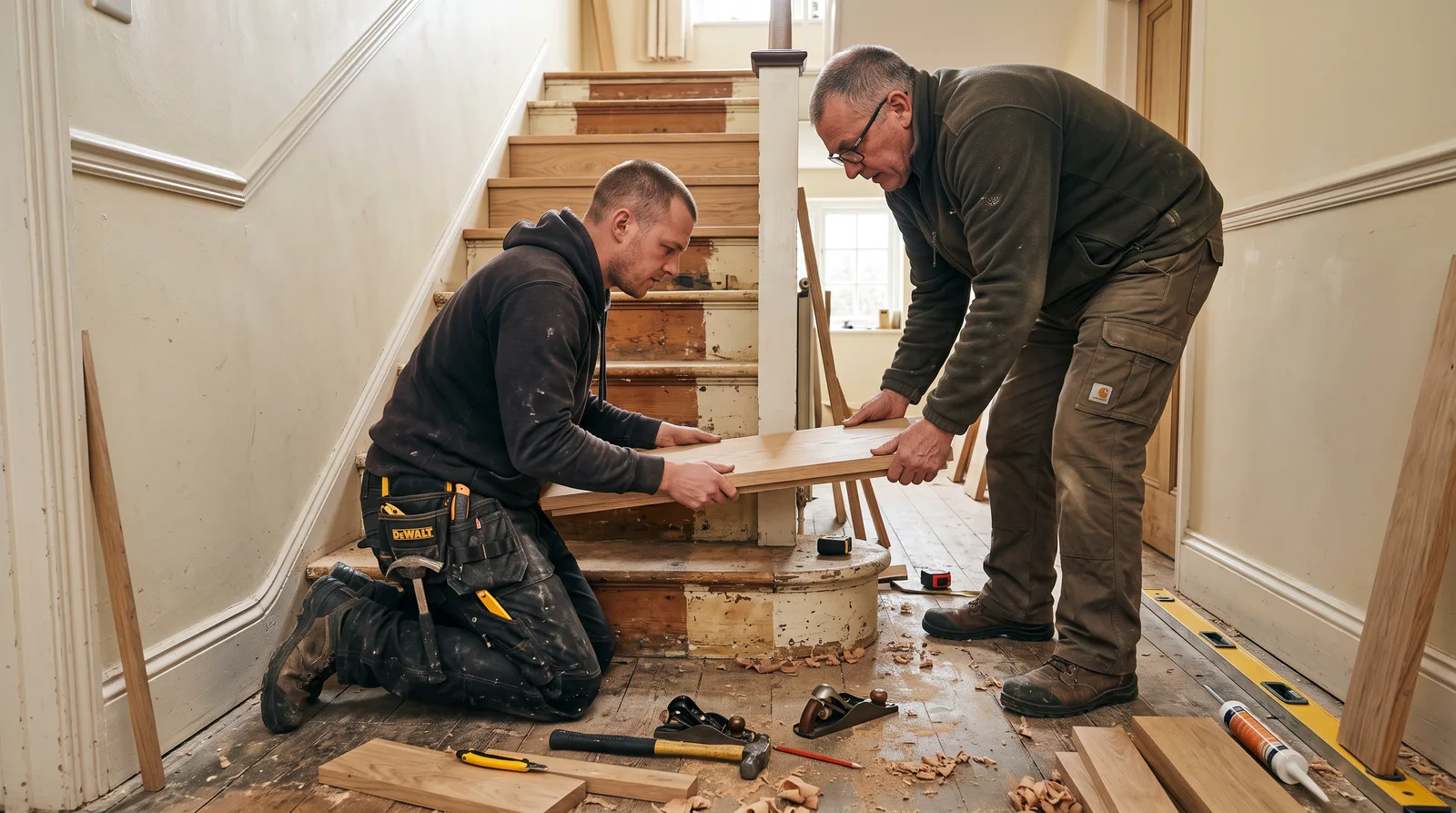
Local to Berkshire
Experienced Carpenters
32 years in the trade
Fully Insured
High-Quality Finish
The Brief
An Elegant Transformation, Without the Rebuild
This is the kind of staircase upgrade project we take on regularly across Berkshire: a perfectly sound staircase let down by treads that have simply had their day — chipped paintwork, dated carpet scars, timber gone dull and tired after decades of footfall. The structure beneath is fine. It is only the face of the staircase that no longer does the house justice.
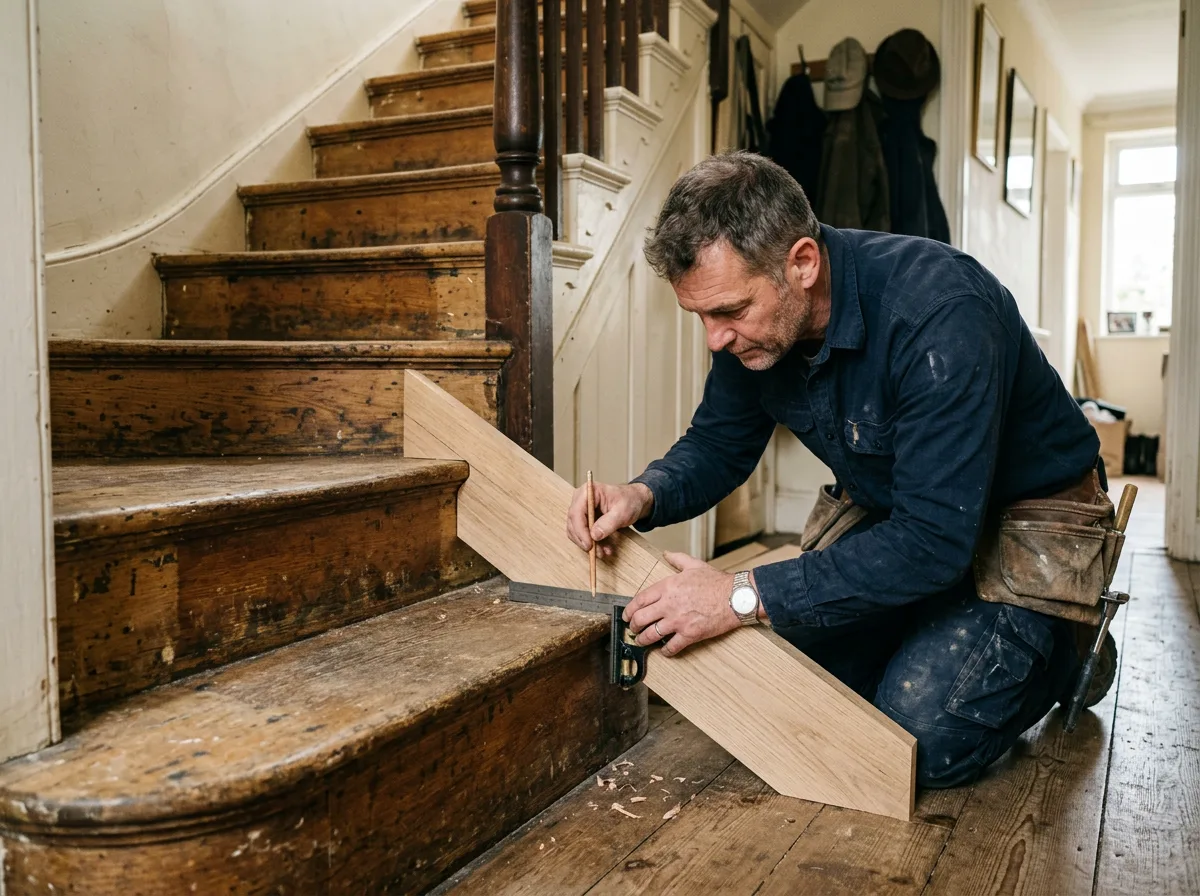
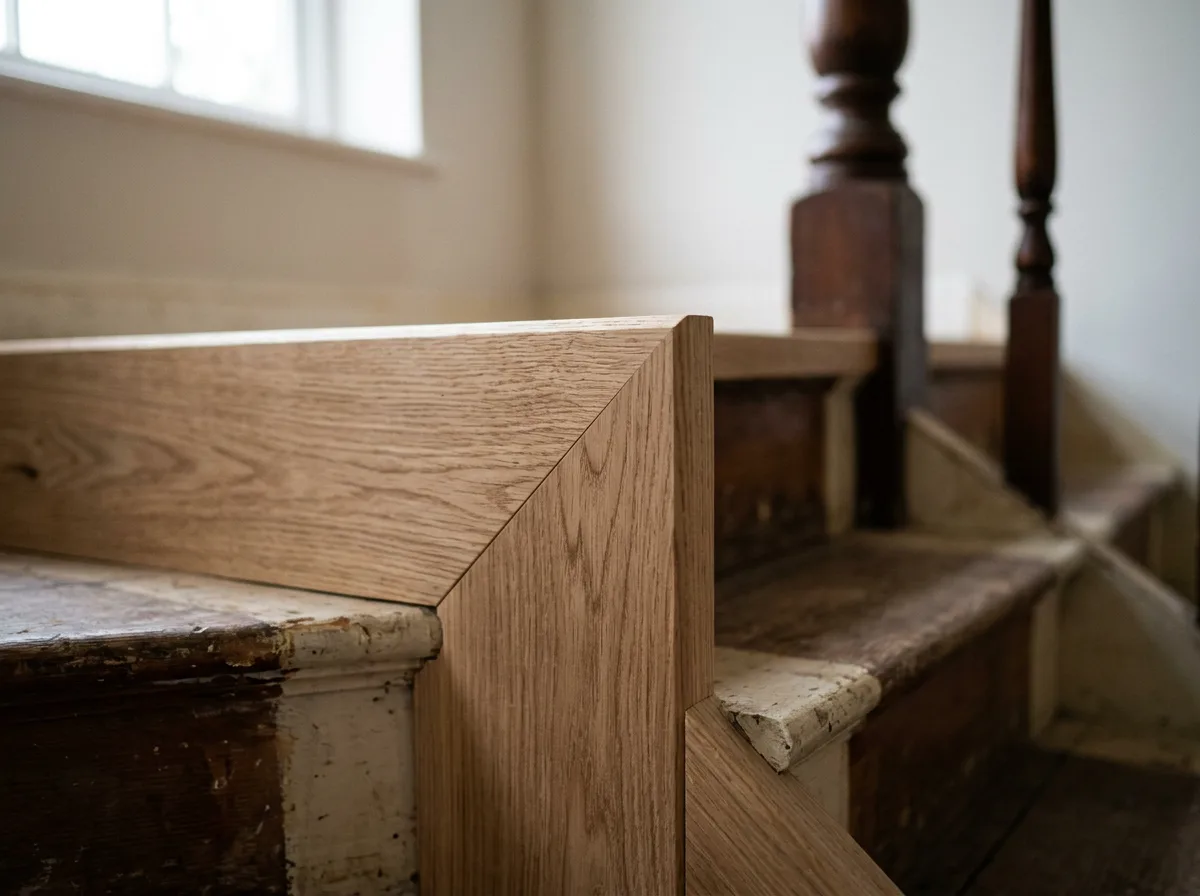
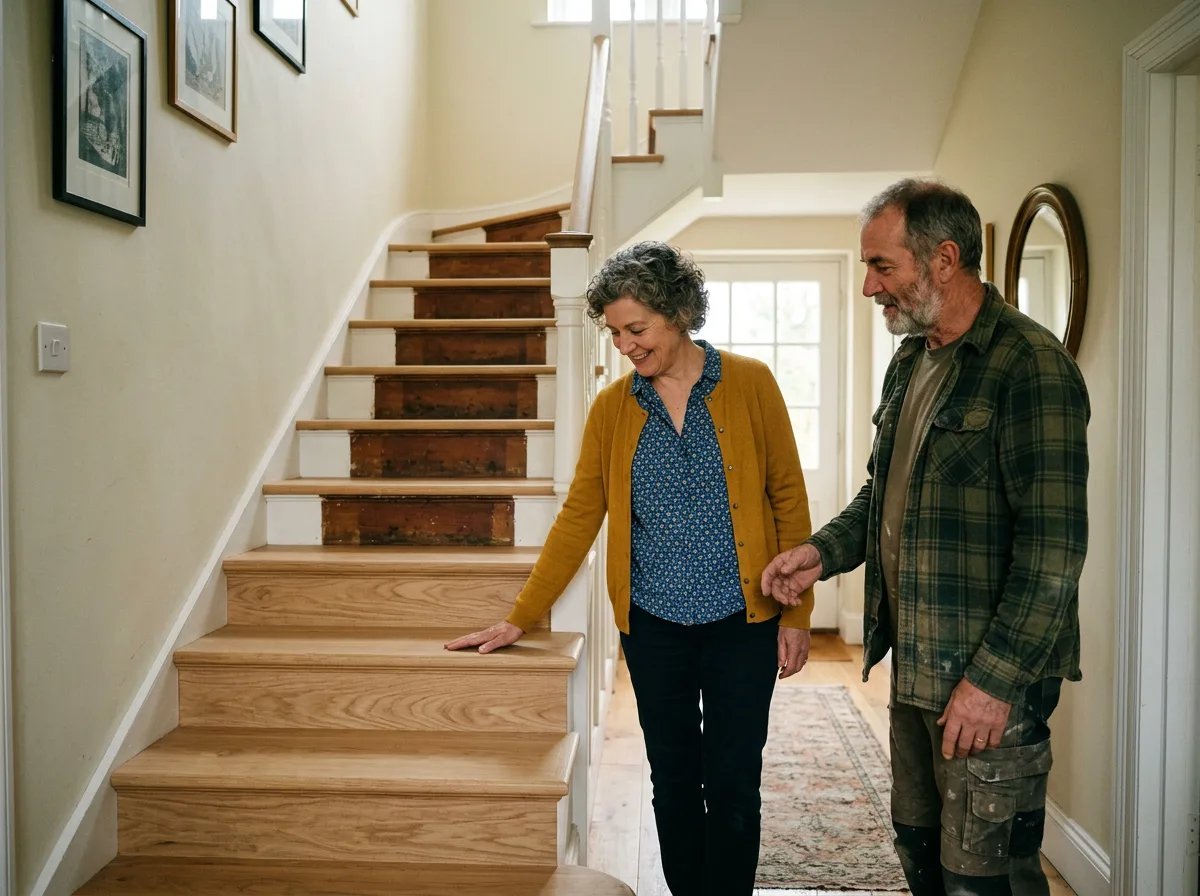
Rather than tearing the staircase out and starting again, a tread cladding overlay lets us lay a new, solid oak surface straight over the existing treads and risers. Each piece is measured and scribed individually, cut to a precise fit, then glued and fixed so the overlay reads as one continuous, graceful run rather than a patch job. The joints are mitred and finished so cleanly that the join all but disappears into the grain.
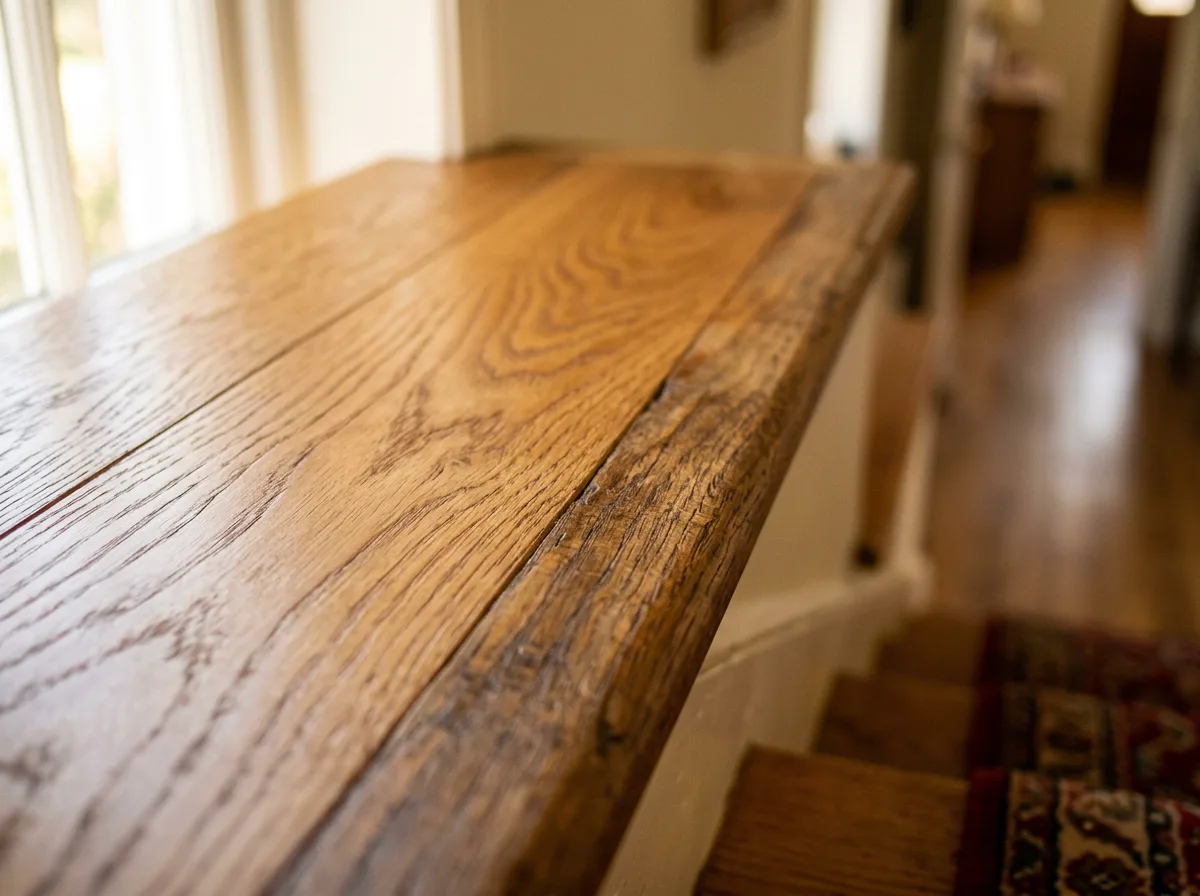
Once sanded and finished, the result is a staircase with the beautiful warmth and texture of solid oak throughout — exquisite underfoot and every bit as refined to look at — achieved in a fraction of the time, cost, and mess of a full rebuild. It is a chic, practical upgrade for a hallway that deserves better than its tired old treads.
This page illustrates the type and standard of staircase upgrade work we carry out — not a specific named address or client. Every project is scoped and quoted individually after a free site visit.
The Process
From Tired Treads to a Spectacular Oak Finish
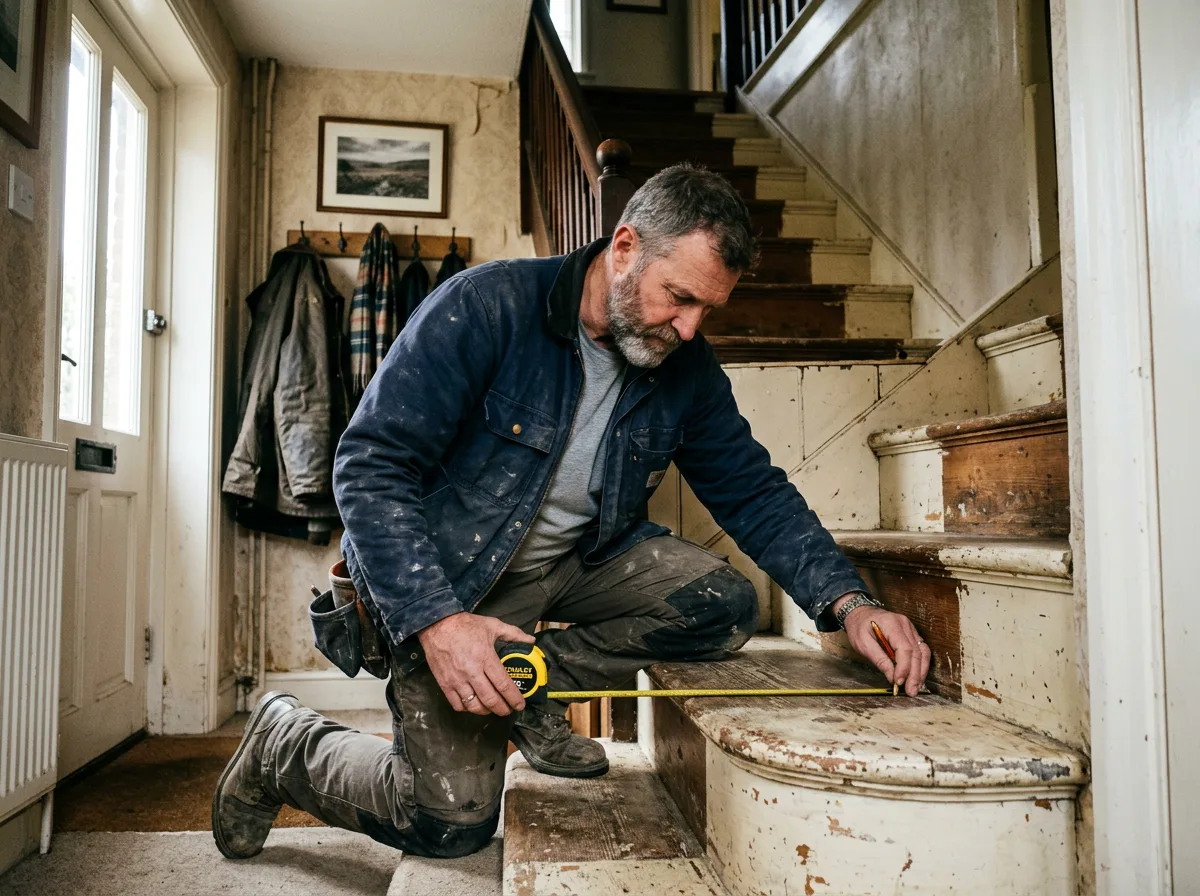
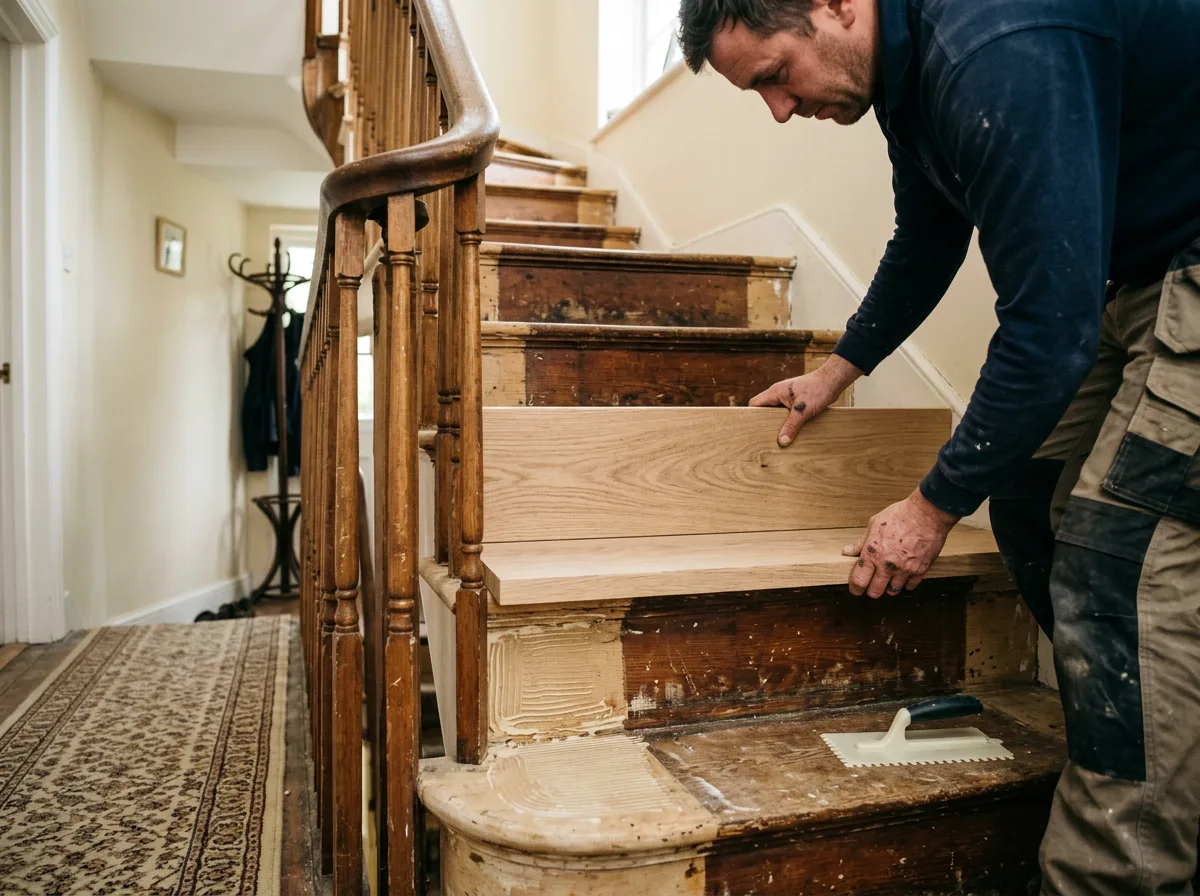
The work begins with careful measuring, tread by tread and riser by riser, because few older staircases are as uniform as they first appear — a slight twist in a string, decades of paint build-up, or an old repair can all throw a nominal dimension out by a few millimetres. Each oak cladding piece is then scribed individually to the exact profile it needs to meet, with the nosing allowed for so the new tread edge sits proud and correct underfoot, exactly where the foot expects to land.
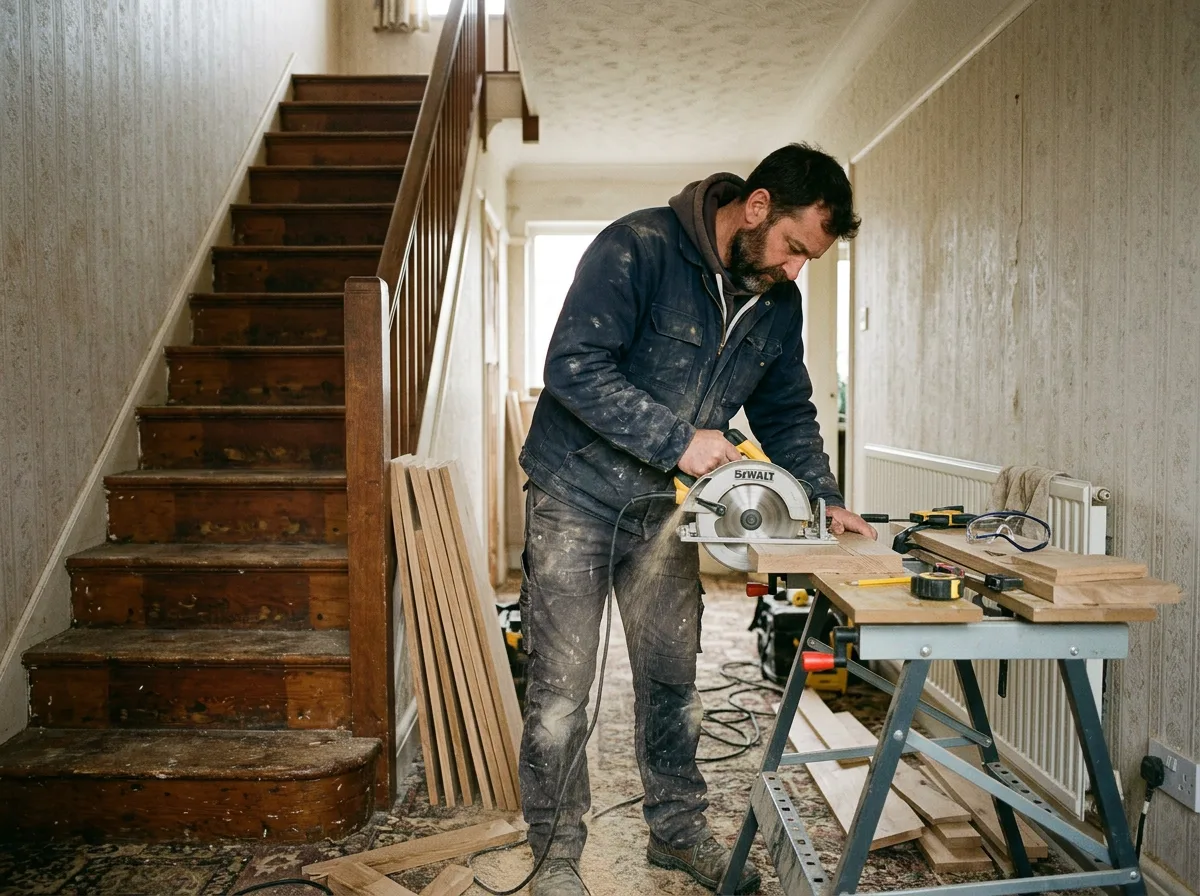
Once cut, the oak pieces are dry-fitted and checked before any adhesive goes anywhere near the staircase — a graceful finish depends entirely on getting this stage right. Each piece is then bonded over the old tread and riser with a construction-grade adhesive, pinned or screwed through to the solid timber beneath for a permanent mechanical fix, and the tread-to-riser joints mitred and tightened so the run reads as one continuous oak surface rather than a series of applied panels.
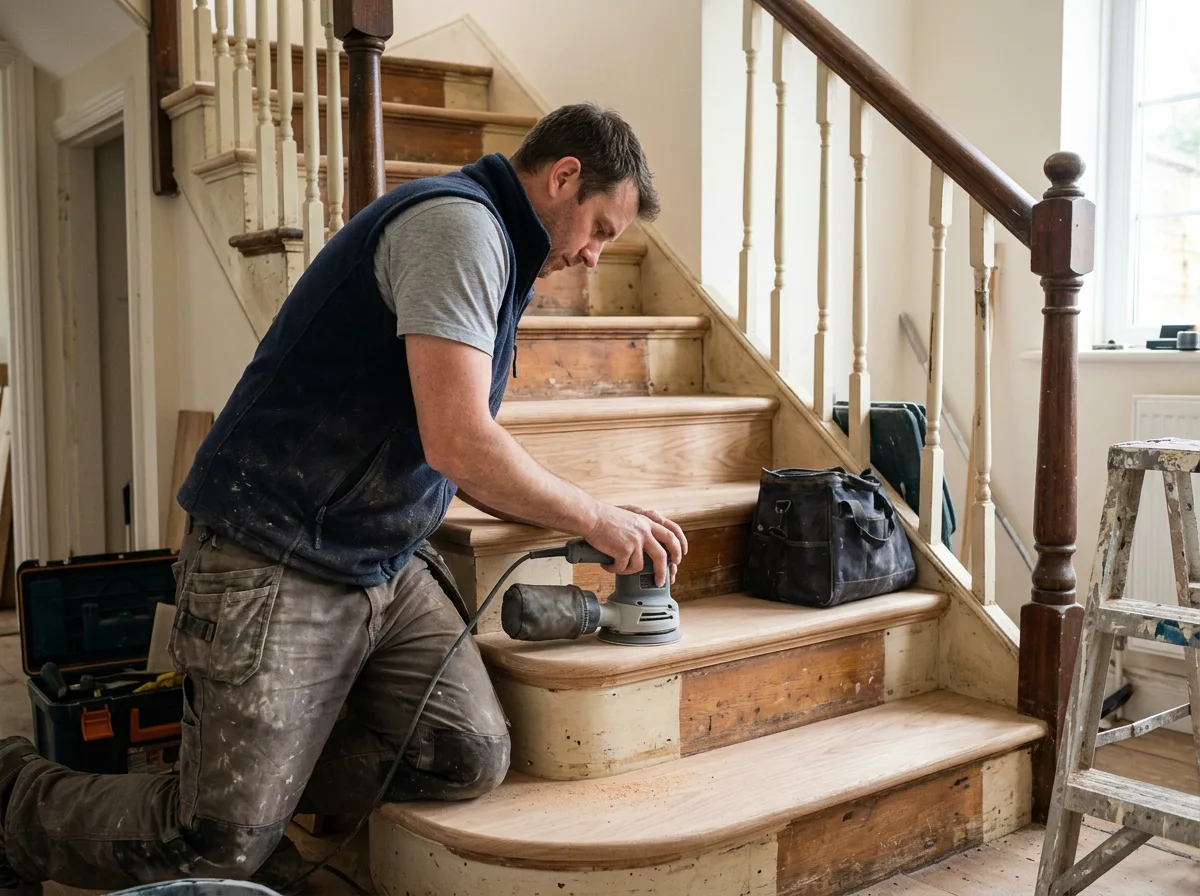
Finishing is where the transformation becomes obvious: each tread is sanded progressively smooth and level, arrises softened slightly so the staircase feels considered rather than sharp-edged, and an oil or lacquer finish applied to bring out the oak's natural grain and colour. The staircase is then tested underfoot, tread by tread, before being handed back into daily use — spectacular to look at, and solid in exactly the way a staircase should be.
The Work, Step By Step
A Closer Look
A closer look at the kind of measuring, cladding, and finishing involved in overlaying a dated staircase in solid oak.
Specification
Materials & Approach
- Solid oak cladding, selected and sequenced for a consistent grain and colour run up the flight
- A construction-grade adhesive suited to timber-on-timber bonding, used alongside a mechanical fix rather than in place of one
- A rounded or bullnose nosing profile scribed to each tread, so the step edge feels natural and correctly proportioned underfoot
- Mitred tread-to-riser joints, fitted so the run reads as one continuous oak surface rather than a series of separate panels
- An oiled or lacquered finish, chosen to suit the household and to bring out the natural grain and tone of the oak
- Existing handrail and balustrade retained and worked around wherever they remain structurally sound
Common Questions
Oak Tread Overlay — Frequently Asked Questions
How does an oak tread cladding overlay compare in cost to a full staircase replacement?
Significantly less. Because the existing staircase structure, stringers, and in most cases the handrail and balustrade are retained, the work involved is a fraction of a full rebuild — there is no need to strip the staircase out, no structural remodelling, and far less waste to dispose of. A free site visit lets us confirm what is achievable on your specific staircase before any figures are discussed.
How long are the stairs actually out of use during the work?
Less than most people expect. Because each tread is clad individually, the staircase is rarely made entirely unusable — we work methodically up the flight, and a temporary safe route is usually maintained throughout. A typical straight flight can be substantially completed within a few days, with exact timing confirmed as part of the written quote.
Can an oak overlay go over treads that are already damaged or uneven?
In most cases, yes — that is rather the point of the overlay approach. Minor unevenness, old carpet-gripper holes, chipped nosings, and worn paintwork are all things the new oak surface is designed to sit over and conceal. Where a tread has genuine structural damage or rot beneath the surface, that is addressed and made good first, before any cladding is fitted, so the new oak is never laid over a problem rather than a solution.
Will the new oak treads match my existing handrail and balustrade?
Where the existing handrail and spindles are sound, they are typically retained as-is, and the new oak tread colour and finish can be matched or deliberately contrasted to suit — a lighter oak against a painted balustrade, for example, is a popular and elegant combination. Where the handrail itself needs attention, that can be scoped as part of the same project.
How durable is an oak tread overlay compared with the original treads?
Solid oak is a genuinely hard-wearing timber, and a well-fitted overlay — properly glued, fixed, and finished — performs every bit as durably as a traditional staircase tread, because that is structurally what it becomes once bonded in place. The main difference is cosmetic: you gain the appearance and feel of a new oak staircase without the rebuild.
Does an oak tread overlay come with any guarantee?
Yes — all our staircase upgrade work is covered by our standard workmanship guarantee, confirmed in writing as part of your quote. If a joint, fixing, or finish were ever to fail under normal domestic use, we would return and put it right.
Can the oak treads be finished to match other oak flooring or joinery in the house?
Generally, yes. Oak takes stain and oil finishes consistently, so where there is existing oak flooring, skirting, or joinery elsewhere in the house, we can usually match the tone and sheen closely enough that the staircase reads as part of the same scheme rather than a separate addition.
Is the work noisy or disruptive for the rest of the household?
There is cutting, sanding, and finishing involved, as with any joinery work, but it is carried out tidily and in stages rather than as one prolonged disruption. Dust sheets and extraction are used throughout, and because the staircase itself usually remains partially usable, day-to-day life in the house is far less interrupted than with a full rebuild.
Related Projects
More Staircase Carpentry
A Beautiful Oak Staircase, Reborn with Turned Spindles and a Carved Newel Post
A complete oak transformation — turned spindles, a carved newel post, and a handrail that feels as good as it looks.
A Spectacular Turned Balustrade Restoration
A tired balustrade, stripped back and reborn with hand-turned oak spindles and a glowing handrail.
A Hand-Carved Oak Newel Post, Fit for a Grand Hallway
A bespoke, hand-carved newel post commissioned as the anchoring centrepiece of a staircase.
Get Started
Request a Free Quote for Your Staircase
Got Tired Treads That Deserve an Oak Overlay?
A solid oak tread cladding overlay can transform a dated staircase without the cost or disruption of a full rebuild. Get a free quote or arrange a site visit.