Staircase Carpentry — Upgrades
A Beautiful Oak Staircase, Reborn with Turned Spindles and a Carved Newel Post
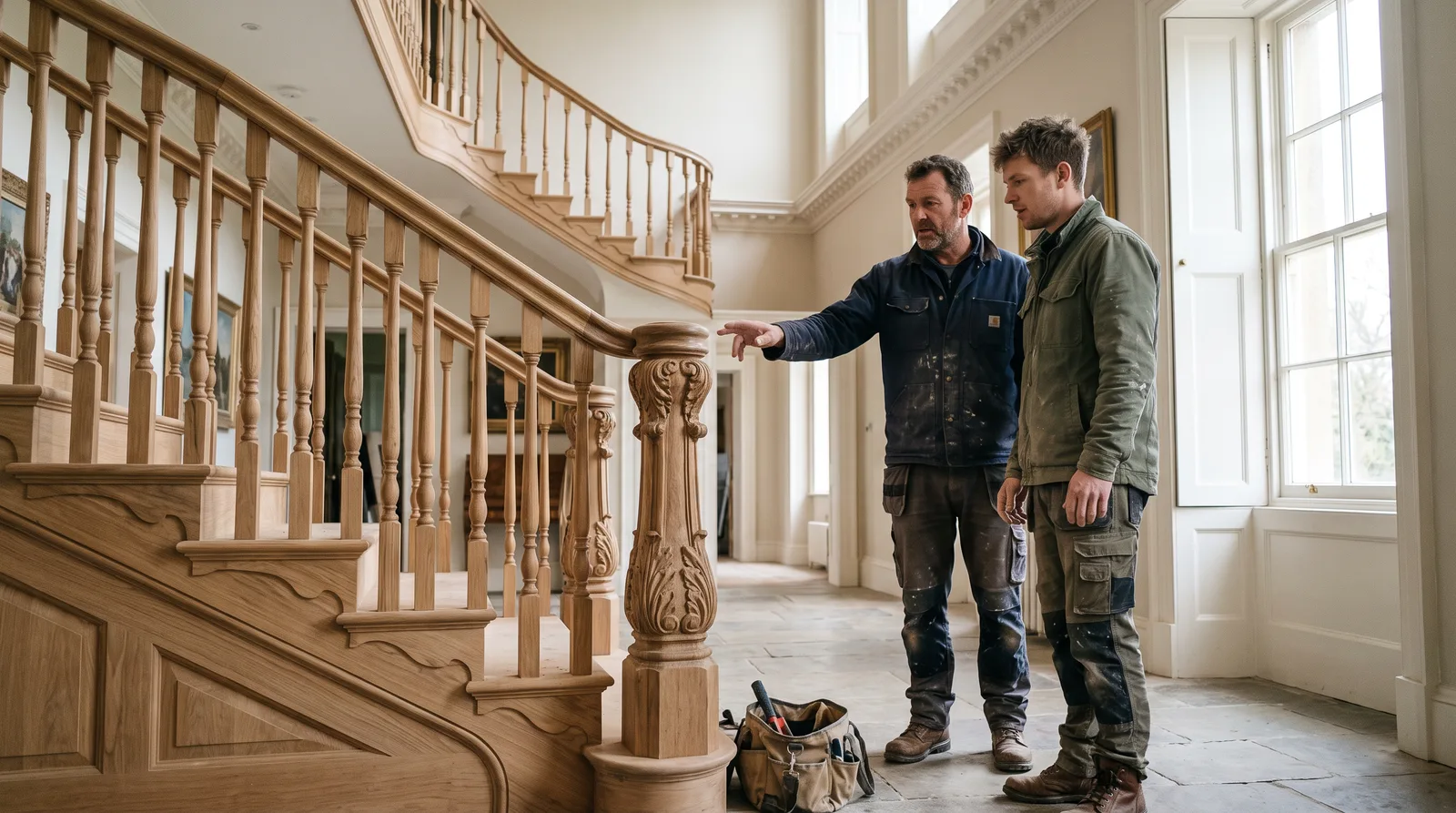
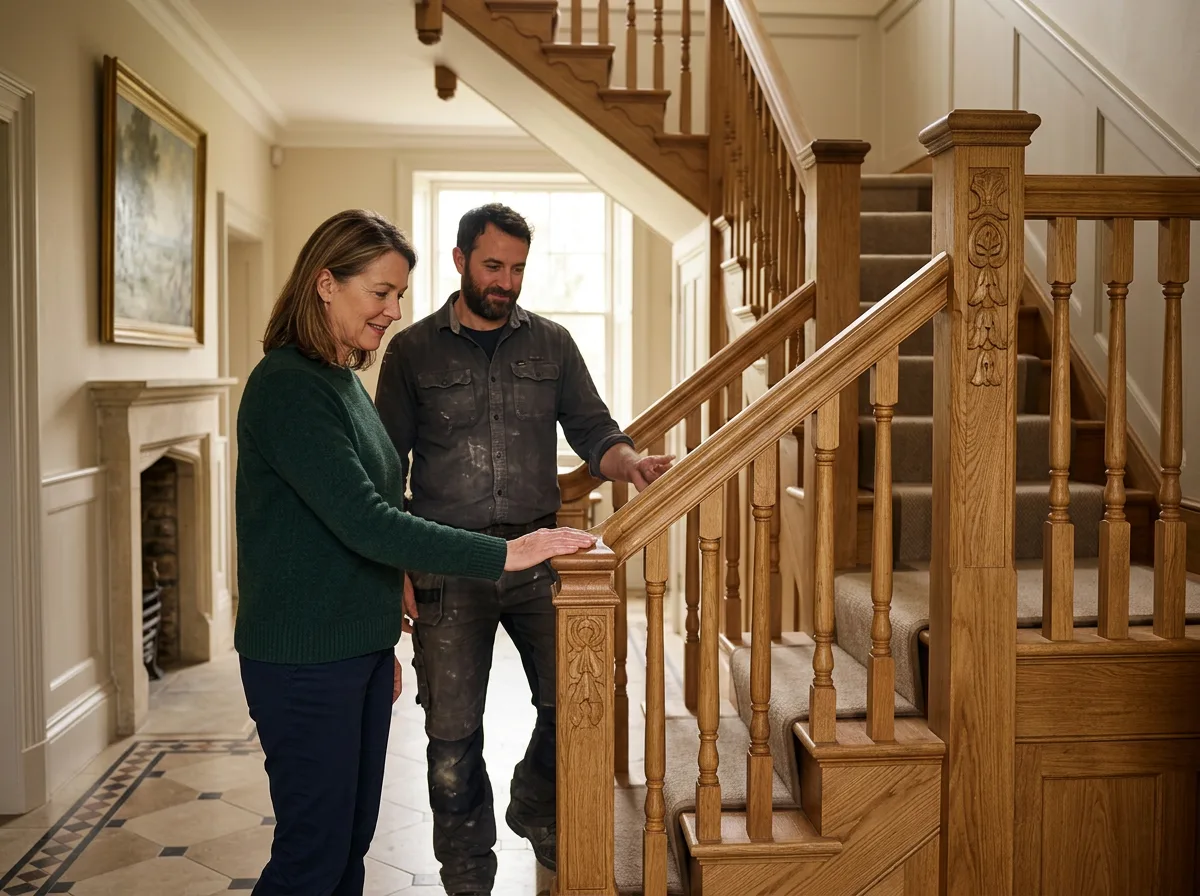
A complete oak transformation — turned spindles, a carved newel post, and a handrail that feels as good as it looks.
Local to Berkshire
Experienced Carpenters
32 years in the trade
Fully Insured
High-Quality Finish
The Brief
From Tired Balustrade to the Centrepiece of the Hall
This is the kind of staircase upgrade project we take on across Berkshire: a staircase that is structurally sound but visually tired, its original balustrade long past its best, standing in a hallway that deserves something altogether more spectacular. The brief is rarely complicated — a solid oak staircase, turned spindles with real presence, and a newel post carved with the kind of detail that makes people pause at the bottom of the stairs. The result is a transformation, not a patch-up.
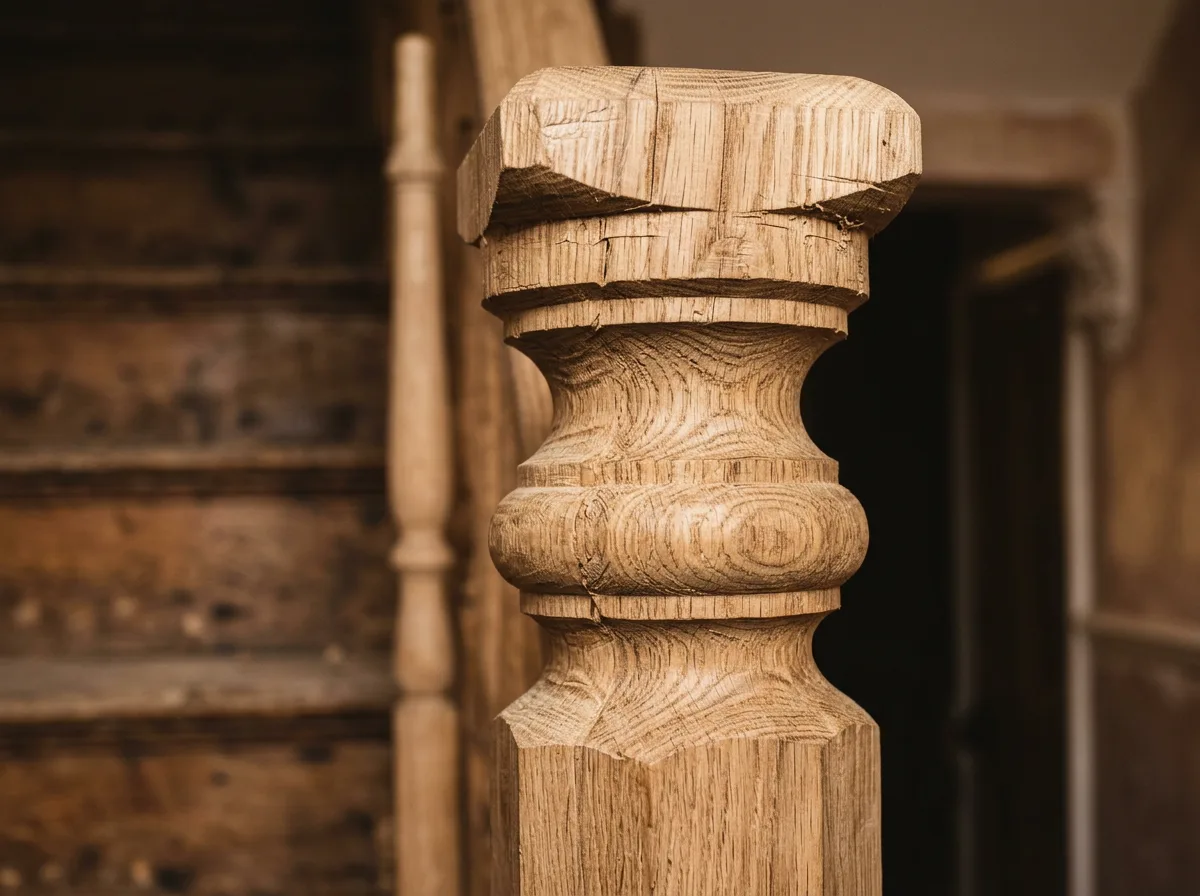
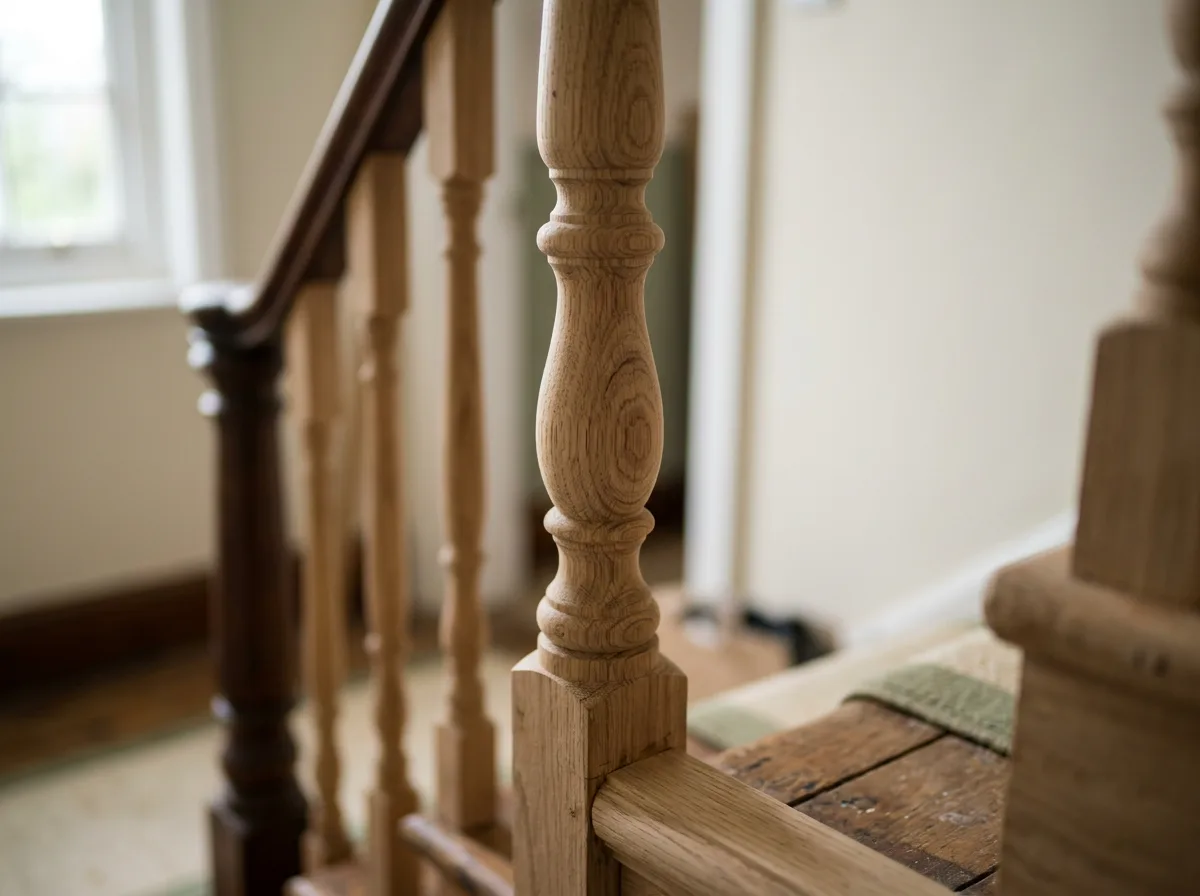
The craft is in the turning and the carving. Each spindle is set on the lathe and turned to a graceful, consistent profile, then fitted with care so the whole run of the balustrade reads as one elegant line rather than a row of individual pieces. The newel post is the real showpiece — hand-carved in solid oak, its proportions and detailing chosen to anchor the staircase and give the hallway a genuine sense of occasion.
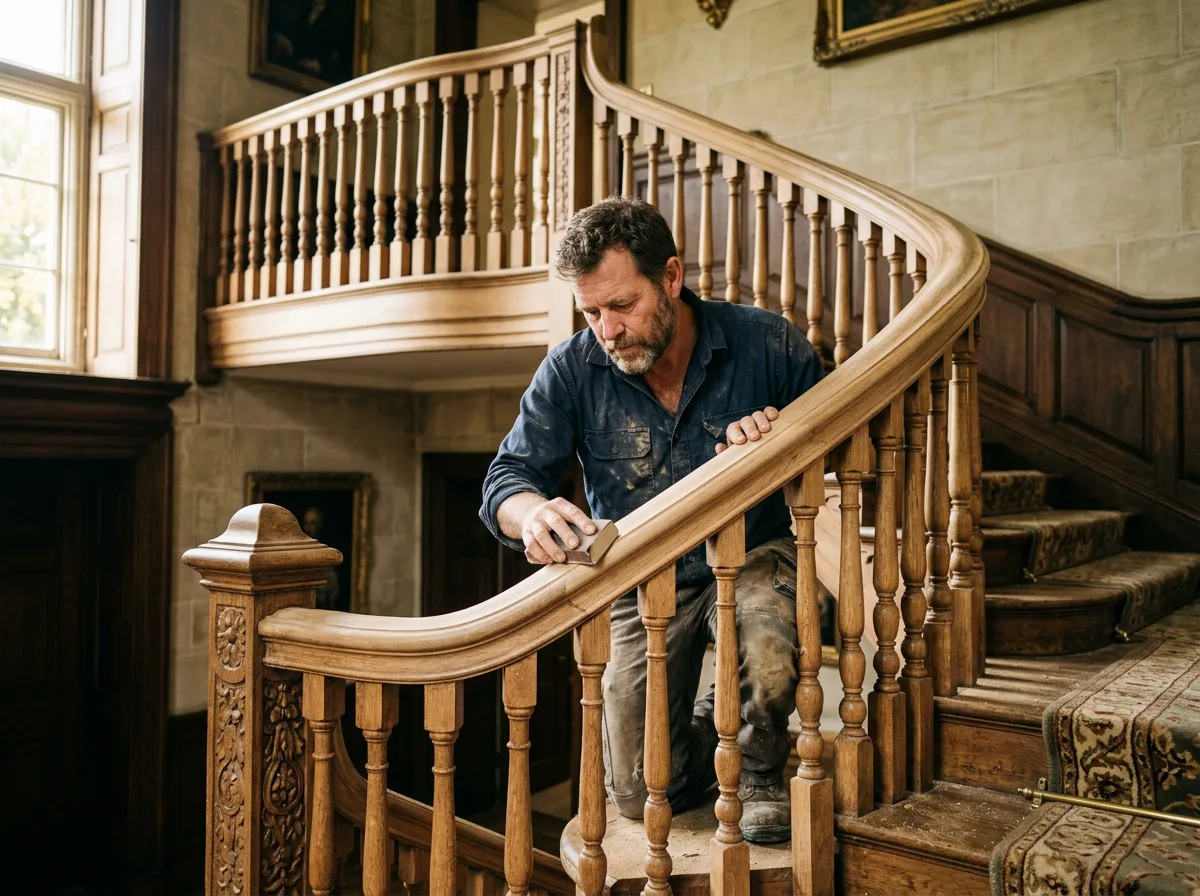
Every joint is fitted tight, every surface sanded through to a fine finish, and the new handrail oiled and waxed until it feels as exquisite under the hand as the staircase looks to the eye. It is refined, considered work — the kind of upgrade that turns a staircase from something merely functional into the chic focal point of the home.
This page illustrates the type and standard of staircase upgrade work we carry out — not a specific named address or client. Every project is scoped and quoted individually after a free site visit.
The Process
Turning, Carving and Fitting a New Balustrade
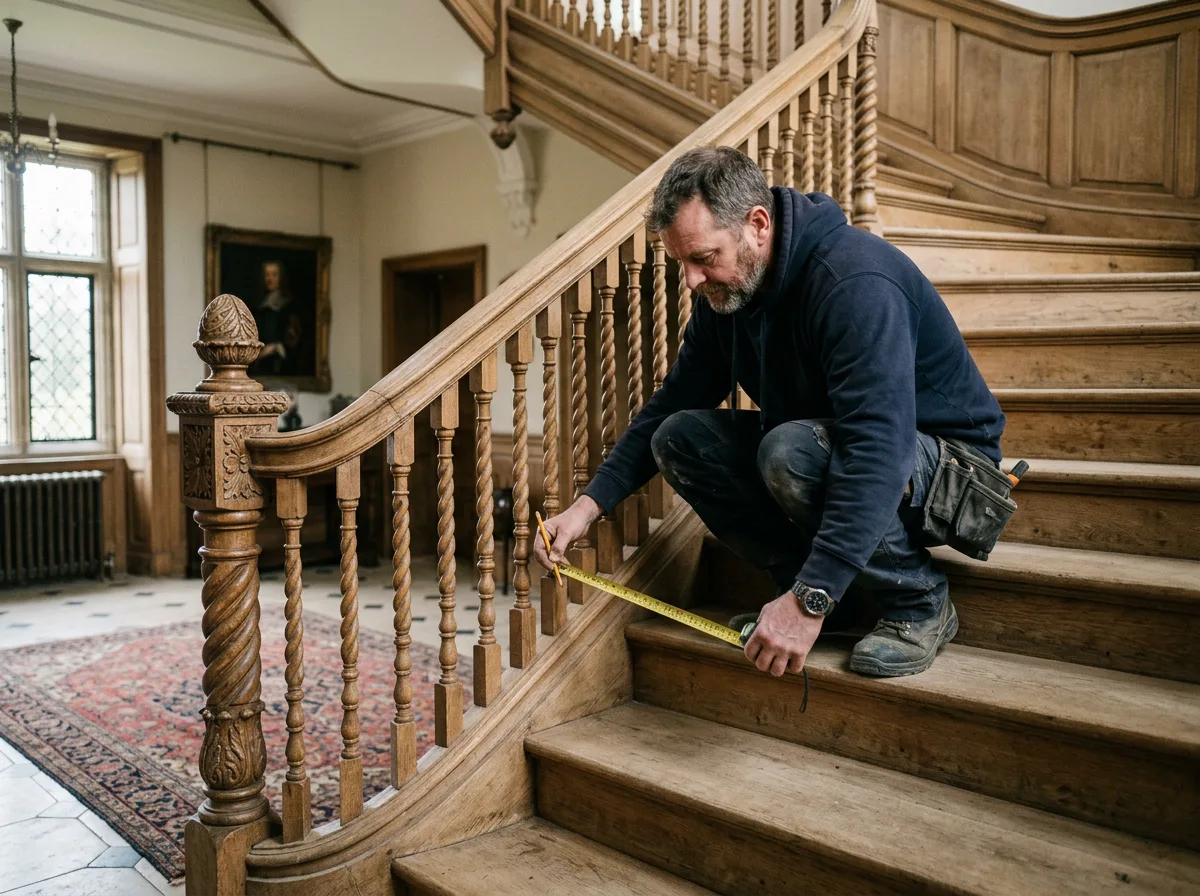
Everything begins with careful measuring and setting-out on the existing staircase — the pitch of the stairs, the spacing between spindles, and the height and rake of the handrail are all recorded before a single piece of oak is touched in the workshop. This is what allows a balustrade made up of dozens of individually turned components to go back onto the staircase and read as one continuous, graceful line rather than a collection of parts.
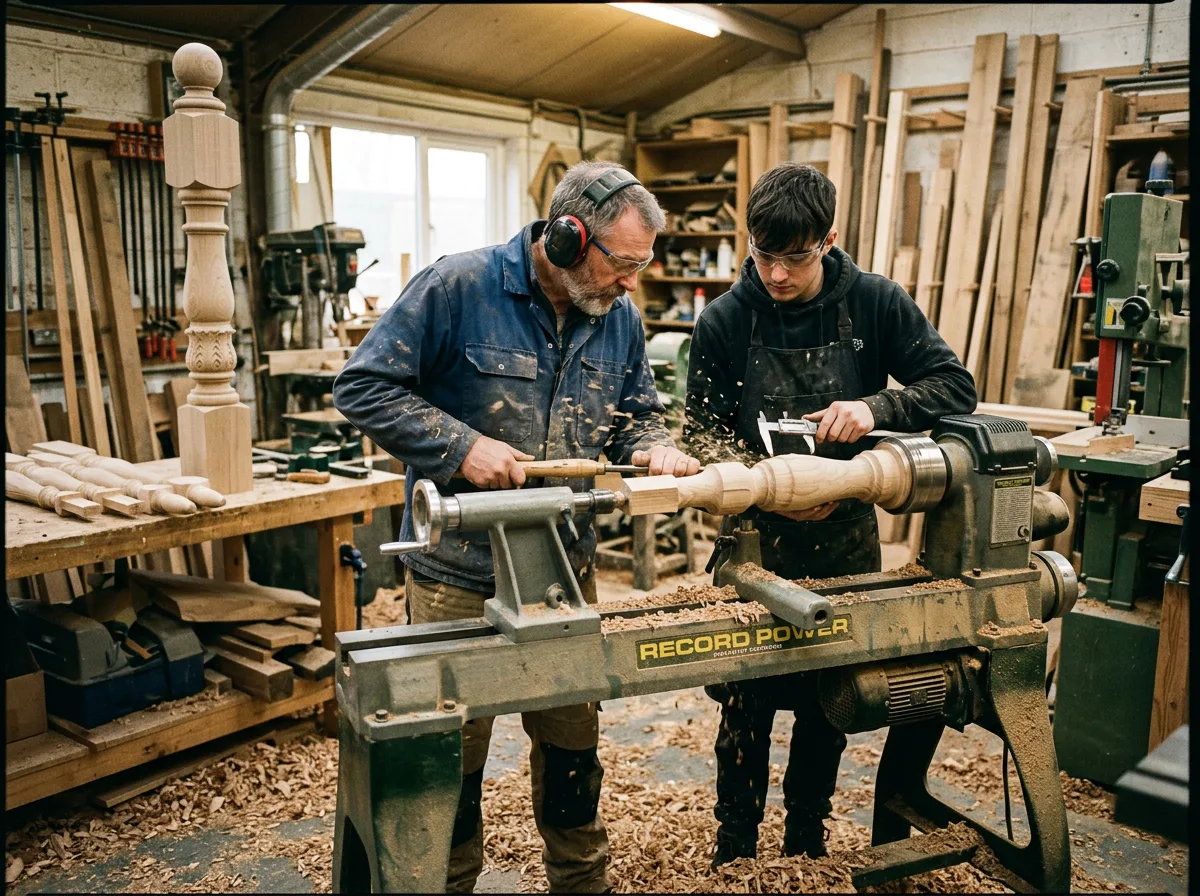
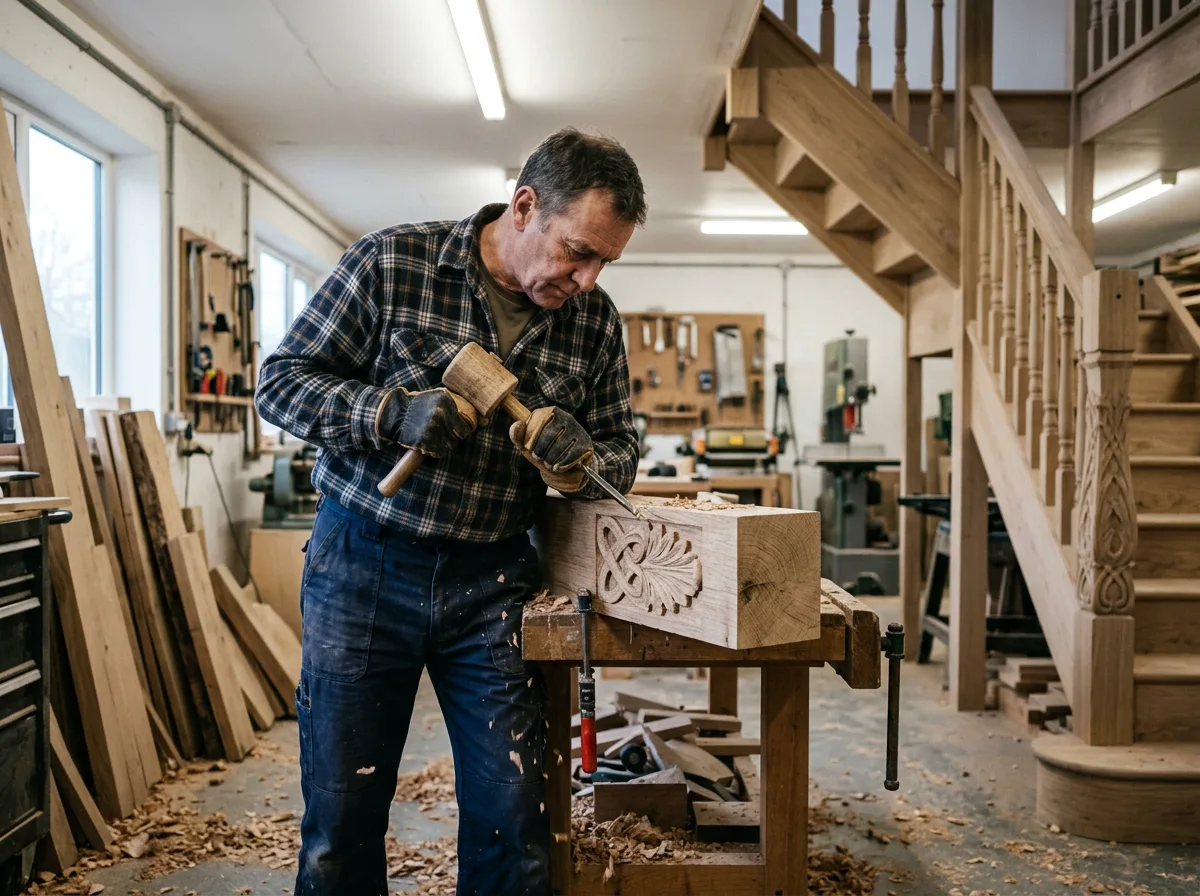
The spindles themselves are turned on the lathe, each one worked down from a square length of solid oak to a consistent profile, checked constantly against a master pattern so that every spindle along the run matches its neighbours exactly. The newel post is the more painstaking piece of work: carved largely by hand, its proportions kept generous enough to properly anchor the staircase, its detailing worked in gradually rather than rushed, because a newel post that is slightly wrong in scale unbalances the whole balustrade in a way that is hard to miss.
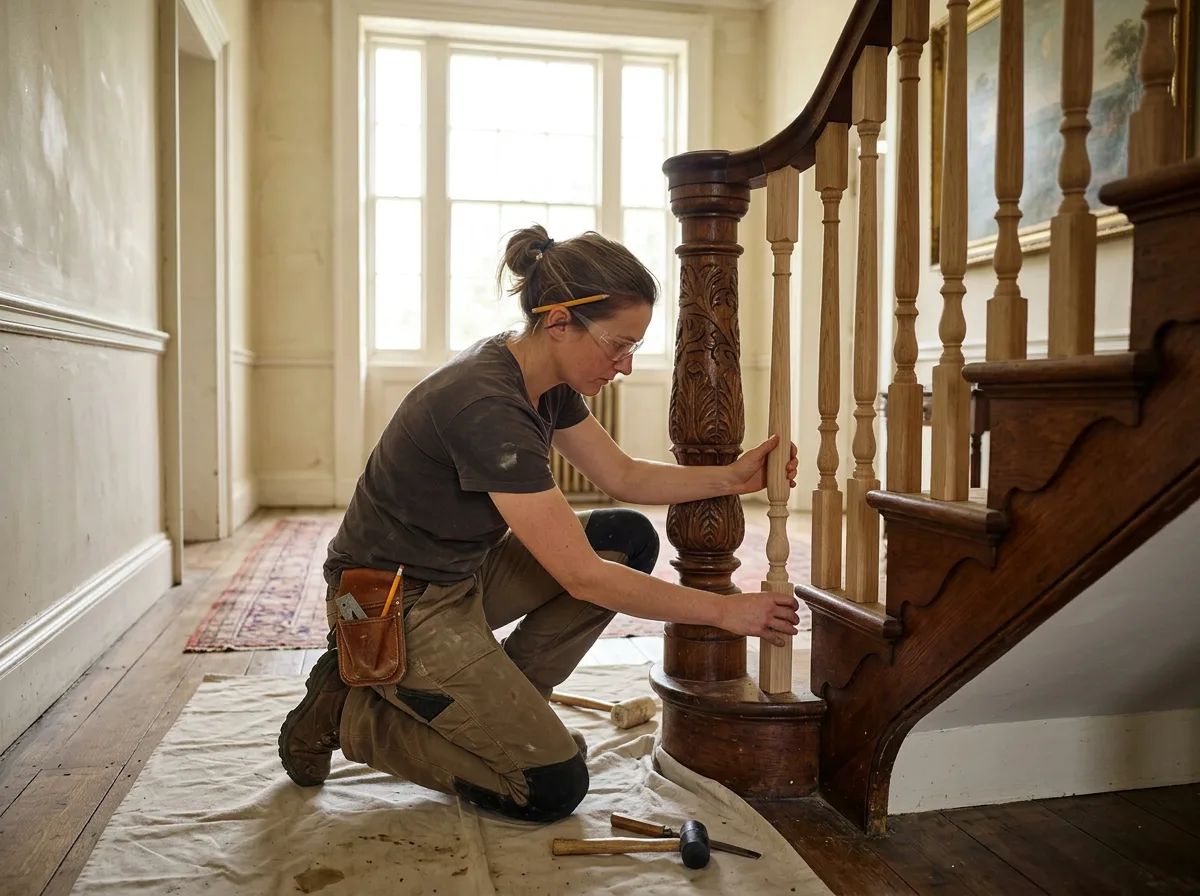
Fitting is done methodically, tread by tread, with every spindle checked for plumb and every joint pulled up tight before the next is set. Once the full run is in place, the handrail is sanded through progressively finer grits until the surface is glass-smooth, then finished with an oil that feeds the grain and deepens the natural colour of the oak rather than sitting on top of it. The last stage is simply living with it for a day or two before final checks — testing every spindle by hand and every length of handrail underfoot — to be certain the finished balustrade is as solid as it is beautiful.
The Work, Step By Step
From Tired Balustrade to Carved Oak Showpiece
A closer look at the turning, carving and fitting involved in a full staircase balustrade transformation.
Specification
Materials & Approach
- Solid oak throughout — spindles, newel post and handrail, selected for grain and consistency
- Spindles turned on the lathe to a matched, consistent profile along the full run of the balustrade
- Newel post hand-carved to proportions chosen to suit the staircase and hallway
- Mortice-and-tenon and dowelled joinery used in preference to surface-fixed brackets wherever the staircase allows
- Handrail sanded through progressively finer grits and finished with a penetrating oil that feeds the grain
- Finish and profile matched to existing staircase timber and surrounding joinery where relevant
Common Questions
Staircase Balustrade Upgrades — Frequently Asked Questions
How much does a full staircase balustrade transformation like this typically cost?
It depends on the number of spindles, the complexity of the newel post carving, and the length of handrail involved, as well as the condition of the existing staircase underneath. Every project is measured and scoped individually, so the fairest way to get an accurate figure is a free site visit rather than a ballpark guess.
Does the whole staircase need to be removed to fit new spindles and a newel post?
Usually not. Where the treads, strings and structure beneath are sound, we work with the existing staircase and replace only the balustrade — the spindles, newel post and handrail. A full strip-out is only needed where the structure itself needs attention, which a site visit will establish early on.
How long does a project like this take from start to finish?
Turning and carving the new spindles and newel post in the workshop typically takes longer than the fitting itself. Once the components are ready, fitting, sanding and finishing on site is usually a matter of a few days rather than weeks, though exact timescales depend on the scale of the balustrade.
How disruptive is the work while it is being carried out?
Less than most homeowners expect. The bulk of the turning and carving happens off site in the workshop, so the time spent with tools in the hallway is kept to the fitting, finishing and final sanding stages. We work methodically, tread by tread, so the staircase remains usable throughout wherever possible.
Can new oak spindles and a newel post be matched to our existing staircase and woodwork?
Yes — matching is a core part of the brief. We take the species, grain and proportions of the existing staircase and surrounding joinery into account when turning new spindles and carving the newel post, so the finished balustrade sits naturally within the house rather than looking like an obvious addition.
What does it take to maintain an oiled oak staircase like this?
An oiled finish is low-maintenance but not no-maintenance. A light re-oiling every year or two, more often on the handrail where hands make the most contact, keeps the timber looking rich and protects it from everyday wear. We talk you through the right products and frequency once your finish is chosen.
Can you work with a staircase that has an unusual or awkward shape?
Yes — winders, curved strings and half-landings all simply mean more careful measuring and setting-out before anything is turned or carved. Oak balustrades have been fitted to irregular staircases for centuries; the geometry just needs to be worked out properly first, which is exactly what the initial site visit is for.
Do you offer any guarantee on the finished balustrade?
All our staircase upgrade work is covered by our standard workmanship guarantee, confirmed in writing as part of your quote. If a joint, spindle or handrail fixing were ever to come loose under normal use, we would come back and put it right.
Related Projects
More Staircase Carpentry
An Elegant Oak Overlay for Tired, Dated Staircase Treads
Worn, dated treads cloaked in solid oak cladding, without the cost or mess of a full staircase rebuild.
A Spectacular Turned Balustrade Restoration
A tired balustrade, stripped back and reborn with hand-turned oak spindles and a glowing handrail.
A Hand-Carved Oak Newel Post, Fit for a Grand Hallway
A bespoke, hand-carved newel post commissioned as the anchoring centrepiece of a staircase.
Get Started
Request a Free Quote for Your Staircase
Dreaming of a Staircase Like This?
Turned spindles, a carved newel post and a beautiful new handrail — a full balustrade transformation is more achievable than most homeowners expect. Get a free quote or arrange a site visit.