Staircase Carpentry — Upgrades
A Hand-Carved Oak Newel Post, Fit for a Grand Hallway
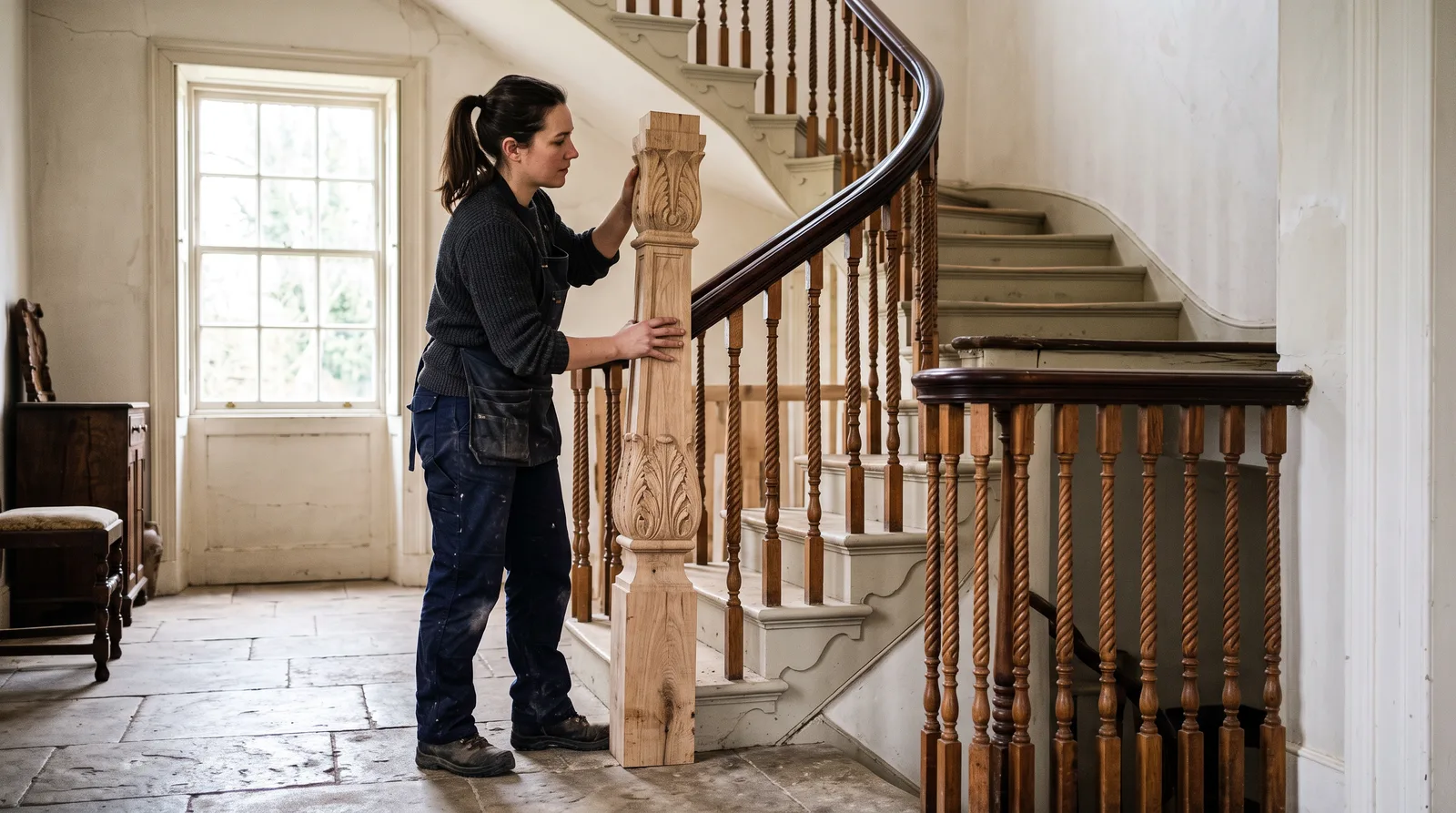
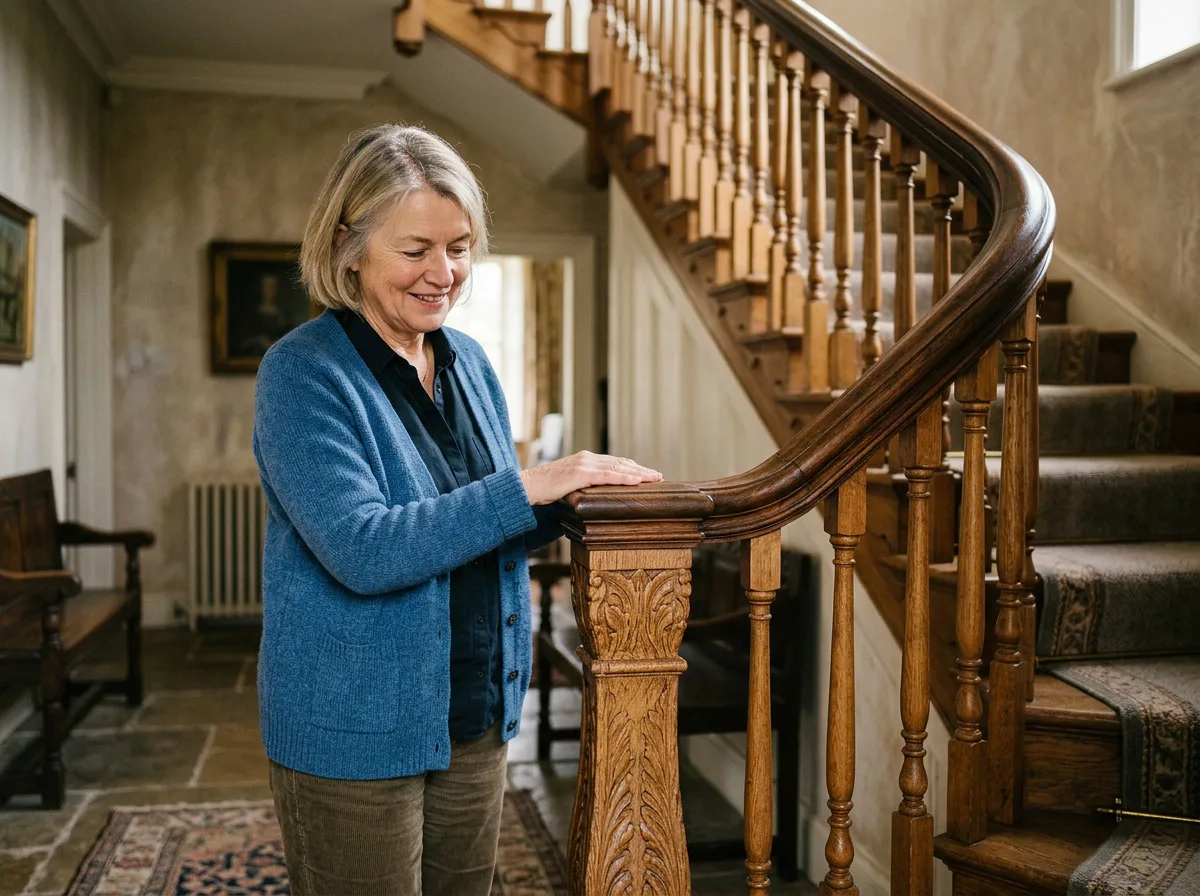
A bespoke, hand-carved newel post commissioned as the anchoring centrepiece of a staircase — the kind of quietly spectacular detail that elevates an entire hallway.
Local to Berkshire
Experienced Carpenters
32 years in the trade
Fully Insured
High-Quality Finish
The Brief
A Centrepiece, Carved by Hand
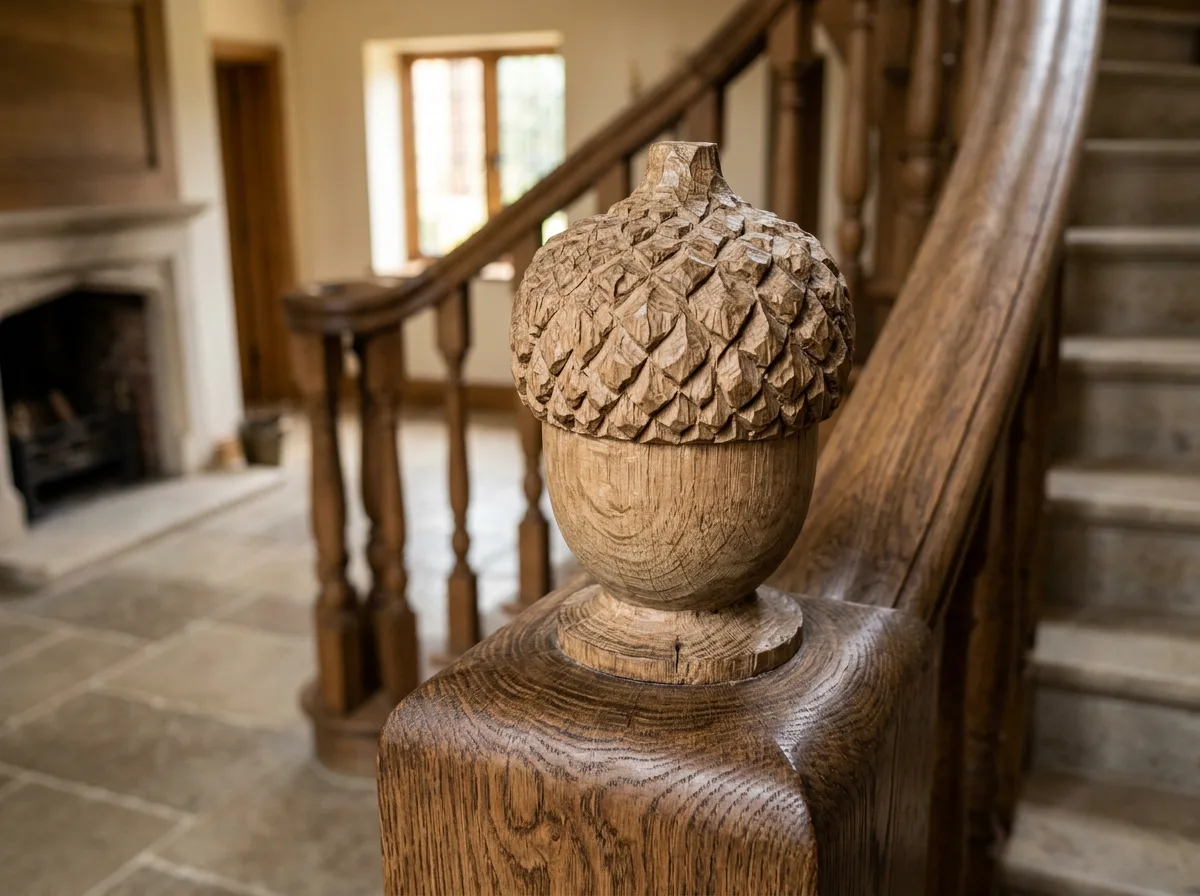
This is the kind of bespoke commission we relish: a grand hallway staircase that deserved a newel post with genuine presence, not something lifted off a shelf. The brief was simple in spirit and exacting in execution — a solid oak post, hand-carved with the kind of graceful, traditional detailing that announces itself the moment you step through the front door, and an acorn finial carved to sit proudly atop it.
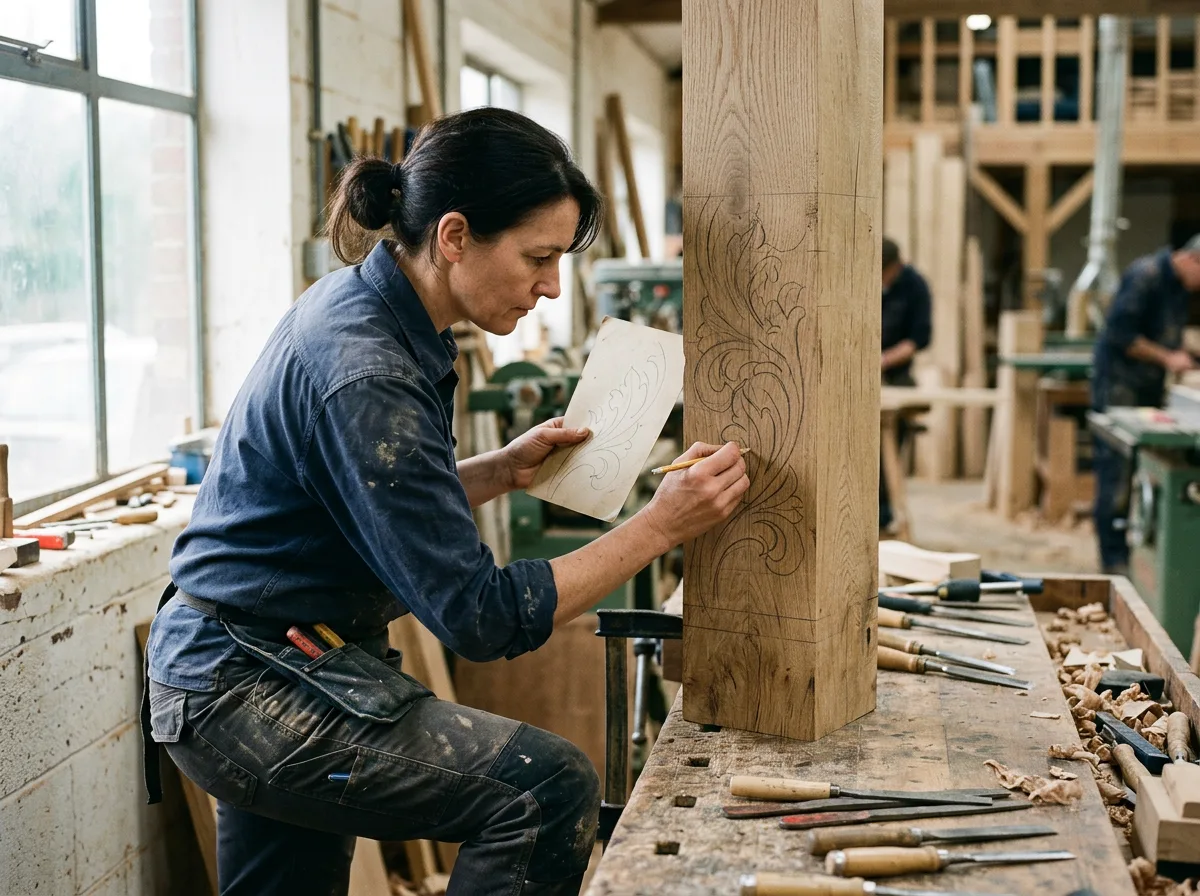
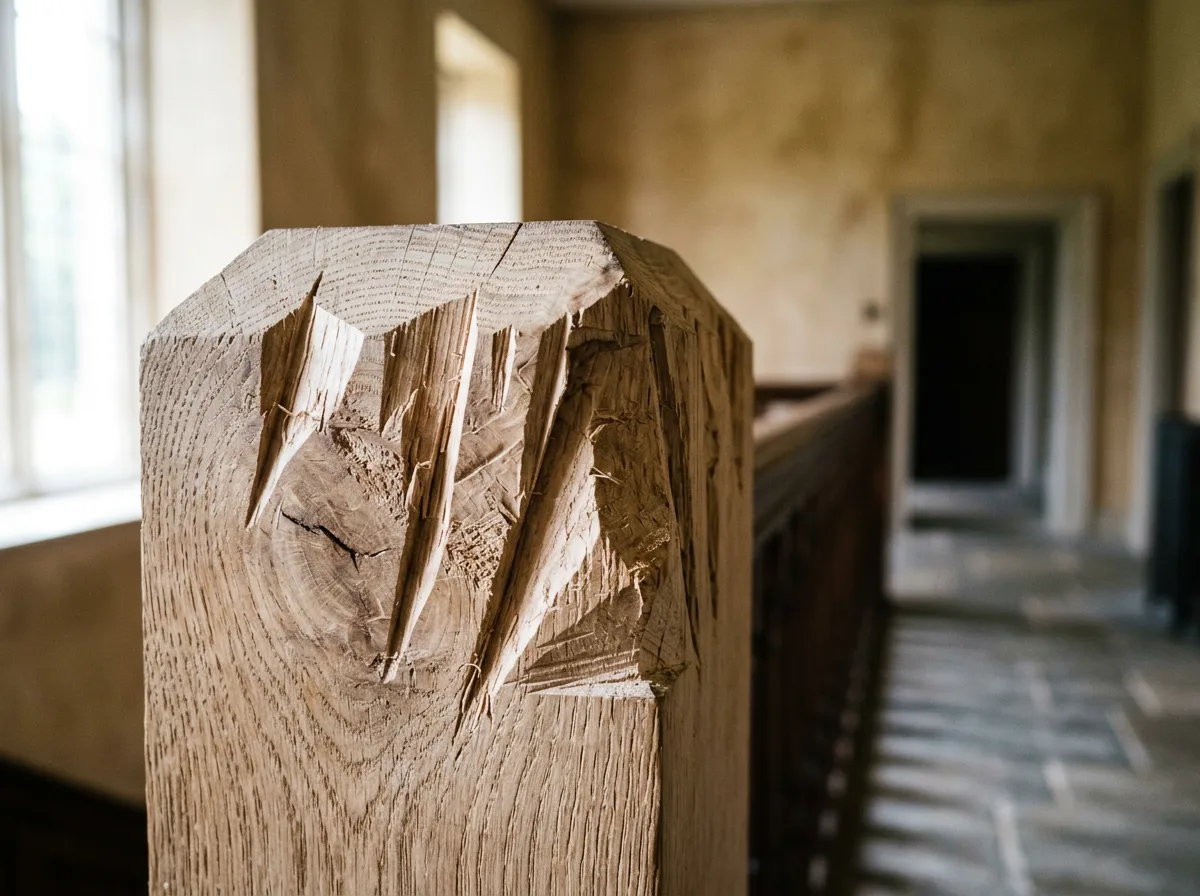
Work like this begins long before a chisel touches timber. The design is sketched directly onto a substantial oak blank, proportioned to suit the pitch of the stairs and the scale of the hallway, so the finished post reads as though it has always belonged there. From that point it is patient, exquisite handwork — each flute, bead and curve of the finial cut freehand, checked constantly against the drawing, refined pass by pass until the carving has real depth and life to it.
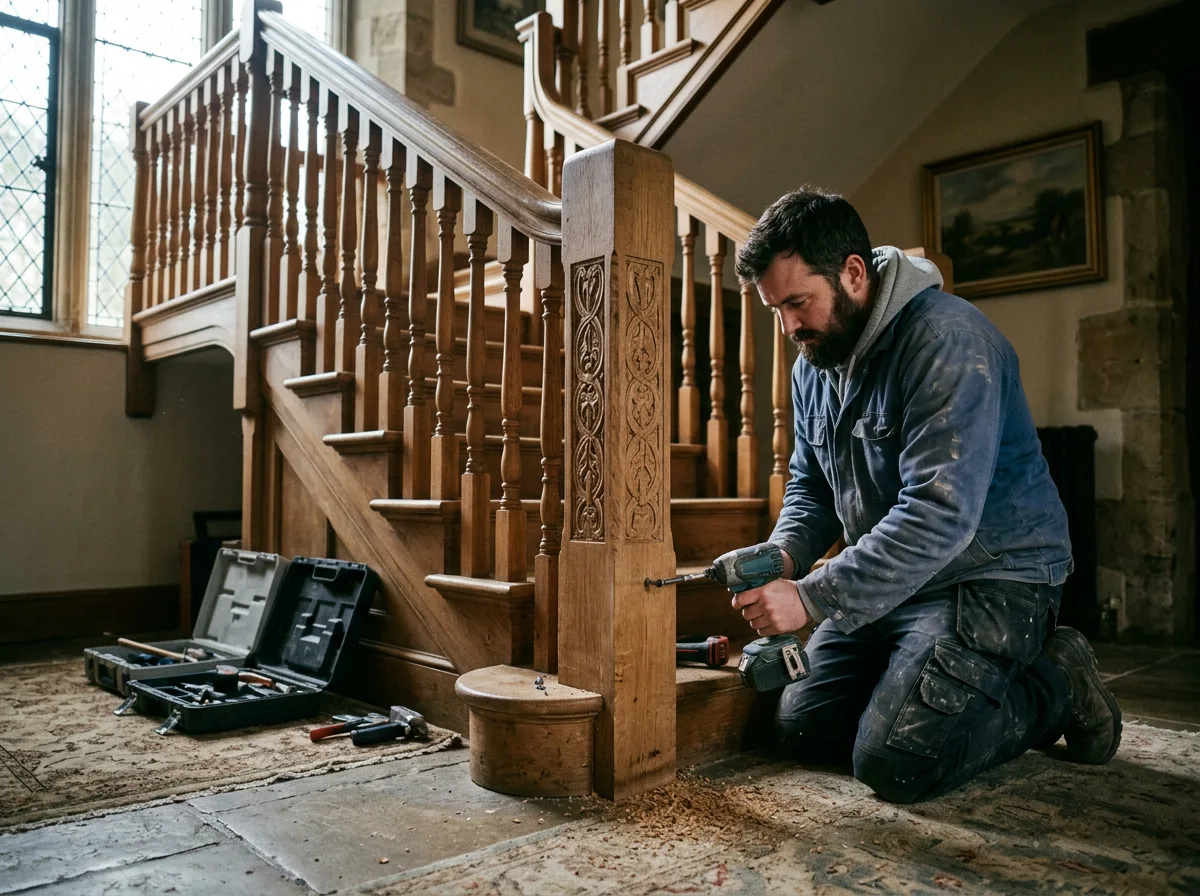
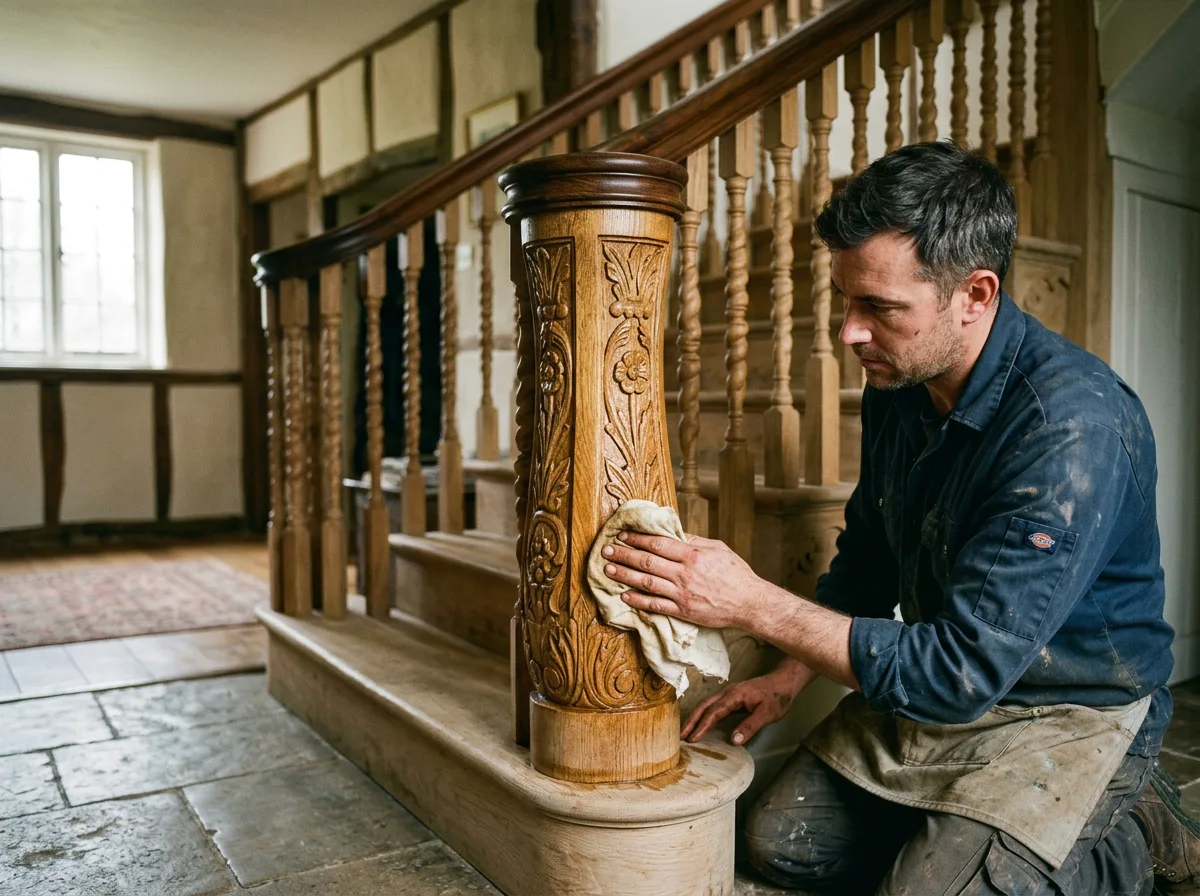
Once the carving is complete, the post is test-fitted, bolted securely into the stair structure, and finished with a hand-applied oil that brings the oak's figure to life without masking it. The result is a staircase that feels transformed: elegant, solid underfoot and hand at the newel, and a hallway centrepiece a family will rest a hand on for generations.
This page illustrates the type and standard of bespoke staircase carpentry work we carry out — not a specific named address or client. Every project is scoped and quoted individually after a free site visit.
The Process
From Oak Blank to Carved Centrepiece
Every carved newel post starts on paper, not in the workshop. We measure the existing stair string, handrail height and pitch precisely, then sketch the carving design full-size directly onto the face of a substantial, straight-grained oak blank — proportioning each flute, bead and the sweep of the finial so the finished post sits in correct scale with the staircase around it, rather than looking like an ornament bolted on as an afterthought. Nothing is cut until that drawing is right.
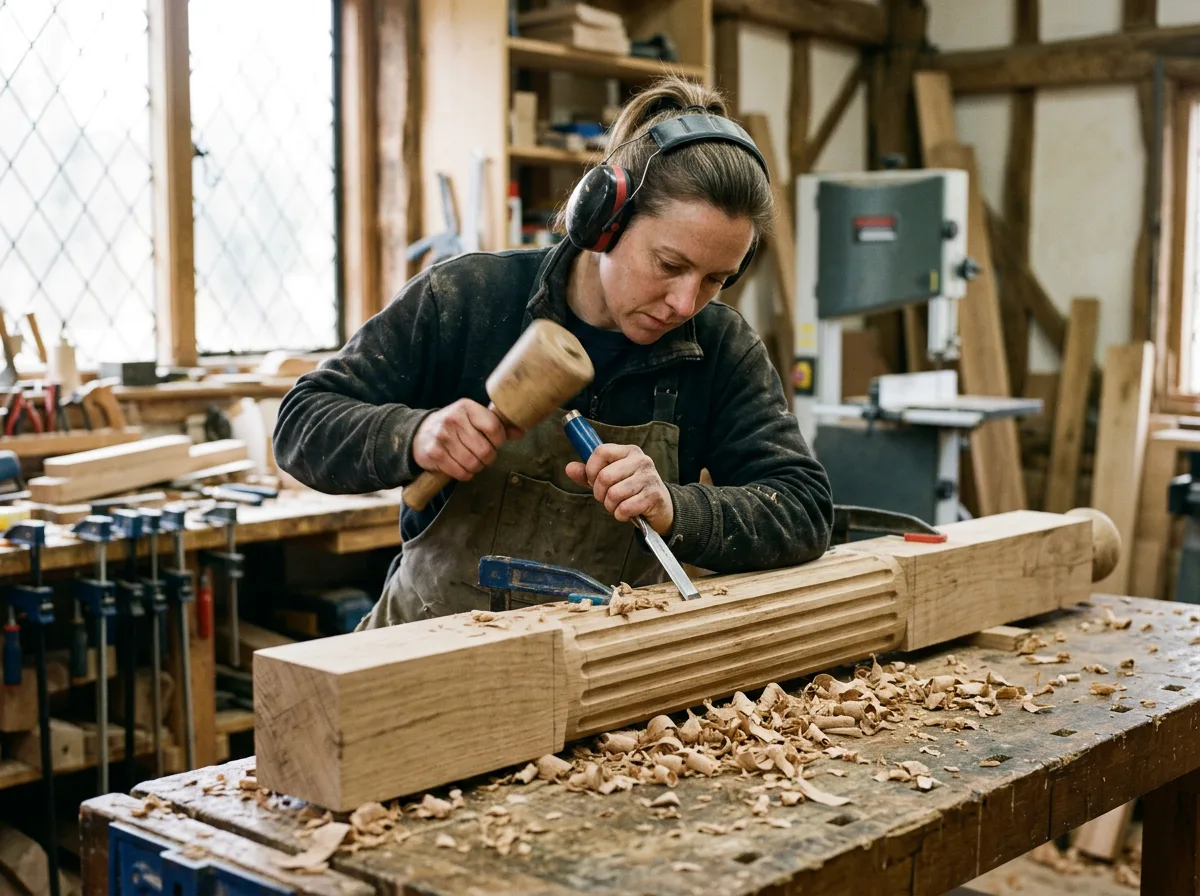
The carving itself is slow, deliberate work. The main lines are roughed out first with larger gouges to establish the overall form, then the detail is brought up in progressively finer passes — each curve of the acorn finial, each flute along the shaft, cut freehand and checked constantly against the original sketch rather than copied mechanically. It is this freehand refinement, pass after pass, that gives a hand-carved post the subtle variation and crispness that a machine-turned equivalent can never quite achieve.
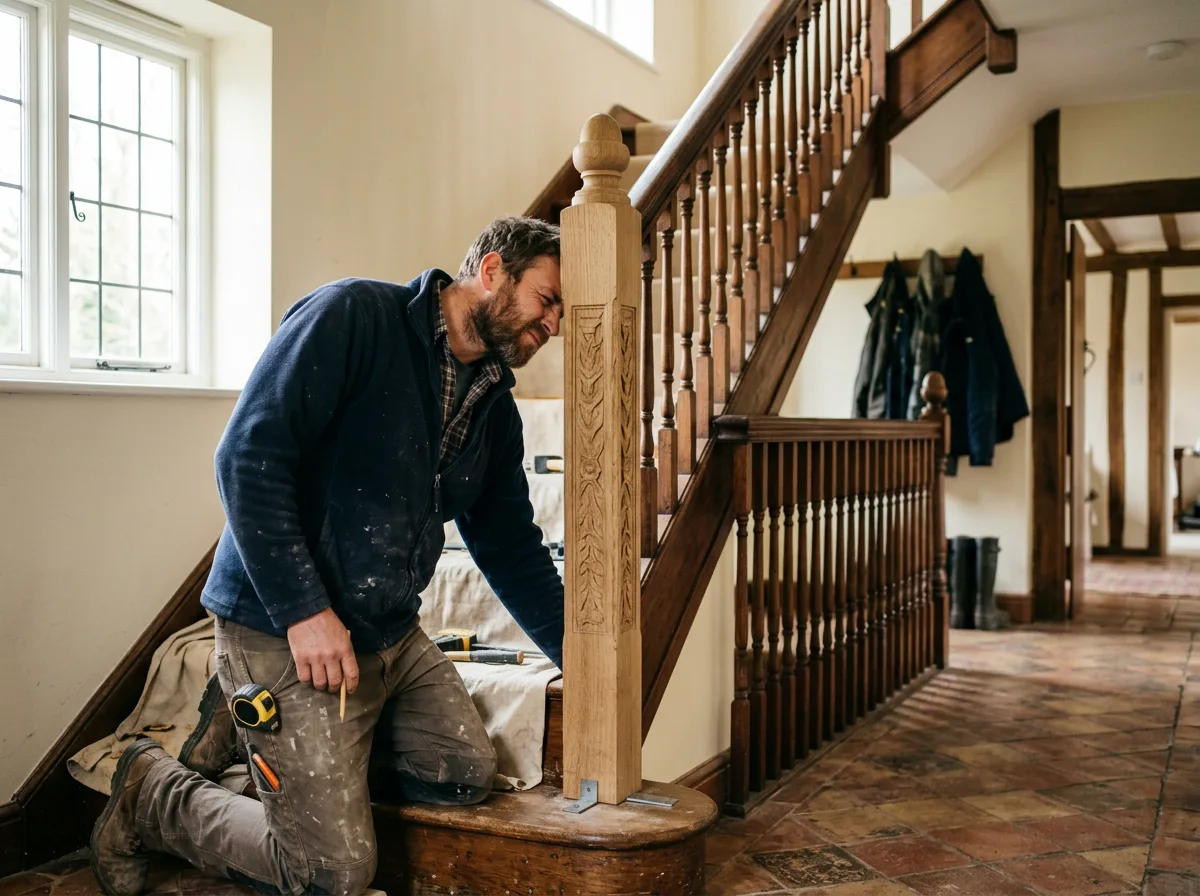
Once the carving is finished, the post is brought to the staircase and test-fitted against the string, baserail and first newel cap, with any final scribing carried out on site to guarantee a tight, exact junction. It is then bolted through into the stair structure so it carries genuine load, not merely decoration, before a hand-applied oil is worked into every carved surface — a finish chosen specifically to let the oak's figure and the depth of the carving show through, rather than sitting under a thick, flattening lacquer.
The Work, Step By Step
A Closer Look
A closer look at the design, carving and fitting involved in a bespoke hand-carved newel post.
Specification
Materials & Approach
- Solid, kiln-dried oak, selected straight-grained and free of significant knots or shakes to suit fine carving
- Design sketched full-size directly onto the blank and proportioned to the specific staircase before any carving begins
- Traditional motifs such as acorn finials and fluted shafts, or a bespoke carved detail agreed with the client
- All carving cut freehand with gouges and chisels, refined in progressively finer passes rather than machine-turned
- Post bolted securely into the existing stair structure to carry genuine structural load, not fitted as decoration alone
- Finished with a hand-applied oil that protects the timber while allowing the carved detail and grain figure to show through
Common Questions
Carved Newel Post — Frequently Asked Questions
Can the carving design be matched to the style or period of our existing staircase?
Yes — this is where the commission really starts. We look at the mouldings, proportions and general character of the existing staircase and hallway, and sketch a carving design that feels native to the house, whether that means a traditional acorn finial and classic fluting, or a cleaner, more contemporary carved motif. The aim is always a post that looks as though it has belonged there since the staircase was first built.
How long does it take to hand-carve a newel post?
A single carved newel post typically takes several days of dedicated carving time once the design is agreed and the oak blank is prepared, though the exact figure depends on the complexity of the motif — a simple fluted post is quicker than one with a fully carved finial and multiple decorative elements. We confirm a realistic timeframe as part of the written quote, not an open-ended estimate.
Can a new carved newel post be fitted without disturbing the rest of the staircase?
In the great majority of cases, yes. The existing newel post is carefully removed, the new post is scribed and cut to match the stair string, handrail and baserail exactly, and it is bolted back into the same structural fixing points. Handrail and spindles either side are refitted to the new post rather than replaced, so the disruption is kept to the one element being upgraded.
What grade of oak do you use for a carved newel post?
We specify solid, kiln-dried European or American oak of a grade suitable for carving — straight-grained, free of significant knots or shakes, and substantial enough in section to carry both the structural load of the staircase and the depth of detail the design calls for. A carving this visible is only as good as the timber underneath it.
Will the carved oak move, crack or split over time?
Some seasonal movement is entirely normal in solid oak and is nothing to worry about — a fine hairline check in the grain occasionally appears as the timber settles into a centrally heated home, and it has no effect on strength or structure. We use correctly dried timber and a traditional hand-applied oil finish specifically to minimise this, and talk you through what to expect before the post is fitted.
Do you carve a motif of our choosing, or only from a set range of designs?
Both are possible. Many clients are drawn to classic motifs — the acorn finial being a particular favourite — but we are equally happy to carve a bespoke motif, a family crest, or a detail that echoes something elsewhere in the house, provided it is practical to execute in solid oak at that scale.
How is the finish applied, and does it need maintaining?
The finished carving is hand-oiled rather than lacquered, which lets the oak breathe and allows the figure of the grain to show through the detail rather than sitting under a plastic-looking film. An oiled finish is simple to maintain — an occasional light reapplication every few years keeps the post looking as rich as the day it was fitted, particularly in hallways that see a lot of handling.
Do you offer a guarantee on bespoke carved staircase work?
Yes — all bespoke carving and fitting work is covered by our standard workmanship guarantee, confirmed in writing as part of your quote. If the fixing were ever to work loose under normal use, we would return and put it right.
Related Projects
More Staircase Carpentry
A Beautiful Oak Staircase, Reborn with Turned Spindles and a Carved Newel Post
A complete oak transformation — turned spindles, a carved newel post, and a handrail that feels as good as it looks.
An Elegant Oak Overlay for Tired, Dated Staircase Treads
Worn, dated treads cloaked in solid oak cladding, without the cost or mess of a full staircase rebuild.
A Spectacular Turned Balustrade Restoration
A tired balustrade, stripped back and reborn with hand-turned oak spindles and a glowing handrail.
Get Started
Request a Free Quote for Your Staircase
Picturing a Carved Newel Post of Your Own?
From a single carved newel post to a full bespoke staircase upgrade, we scope and quote every commission individually. Get a free quote or arrange a site visit.