Staircase Carpentry — Flooring
An Elegant Engineered Overlay for Worn Stair Treads
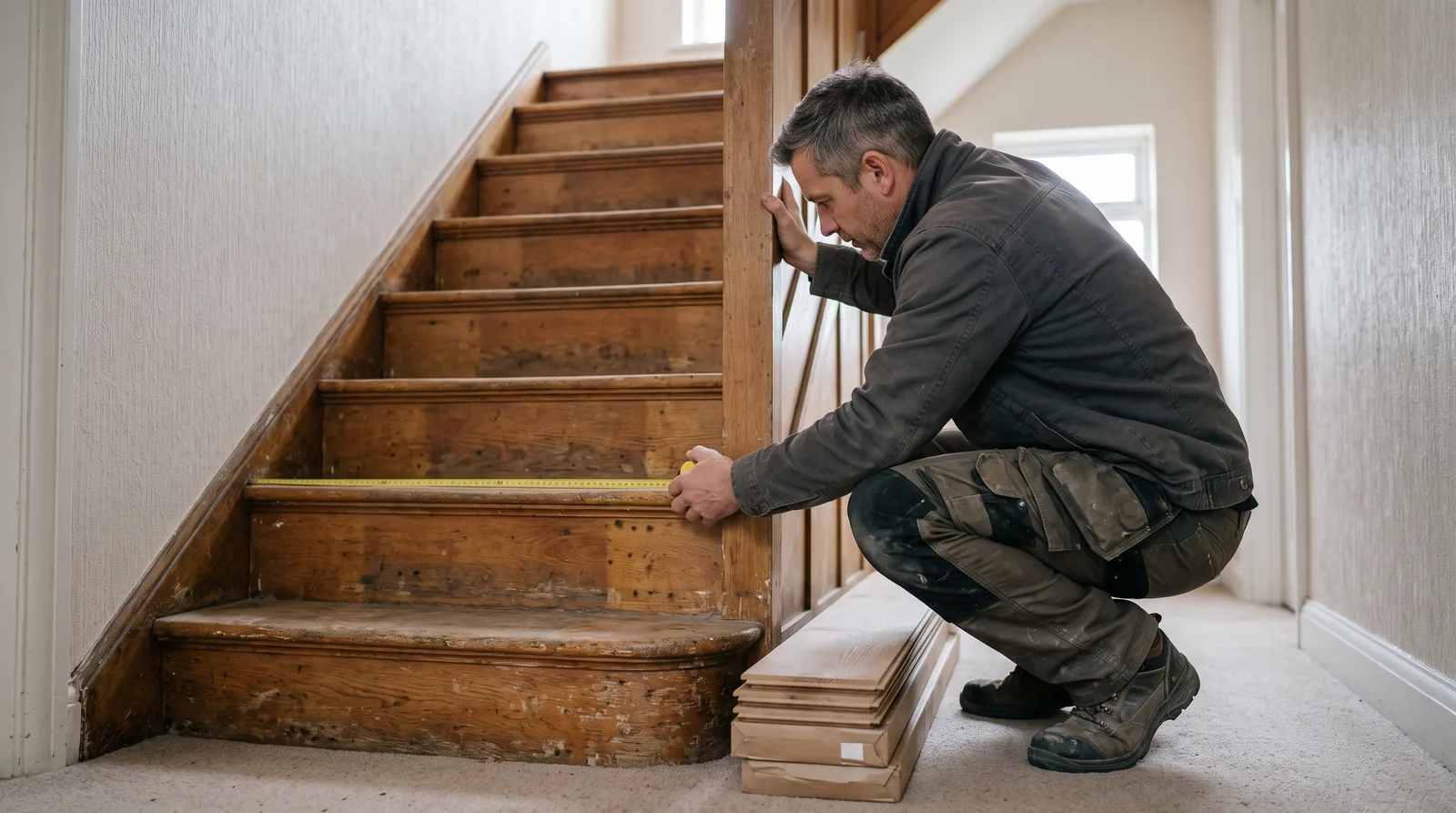
Tired, worn treads and risers transformed with a precise engineered hardwood overlay — a standalone staircase refresh, with none of the cost or disruption of a full rebuild.
Local to Berkshire
Experienced Carpenters
32 years in the trade
Fully Insured
High-Quality Finish
The Brief
A Fresh Face for a Tired Staircase
This is the kind of staircase project we take on regularly across Berkshire: treads worn pale and scuffed by years of daily footsteps, risers looking dated beside the rest of a freshly kept home, yet the staircase itself still structurally sound underneath it all. Rather than tearing the whole thing out, an engineered hardwood overlay gives the staircase an elegant new face — cladding every tread and riser in a beautiful, durable timber finish, while leaving the staircase exactly where it stands.
It is a standalone staircase job, deliberately scoped to the stairs alone rather than a wider hallway reflooring project, which keeps the work quick, tidy and contained. Each tread is measured and cut individually, the overlay pieces glued and fixed into place with a crisp, graceful nosing along every front edge, then sanded and finished so the whole run reads as one chic, continuous surface rather than a patchwork of repairs.
The result is a staircase that looks, and feels underfoot, entirely transformed — a refined engineered hardwood finish replacing years of wear in a matter of days, with the existing structure, strings and spindles left undisturbed.
This page illustrates the type and standard of stair tread overlay work we carry out — not a specific named address or client. Every project is scoped and quoted individually after a free site visit.
The Process
From Worn Treads to a Spectacular New Surface
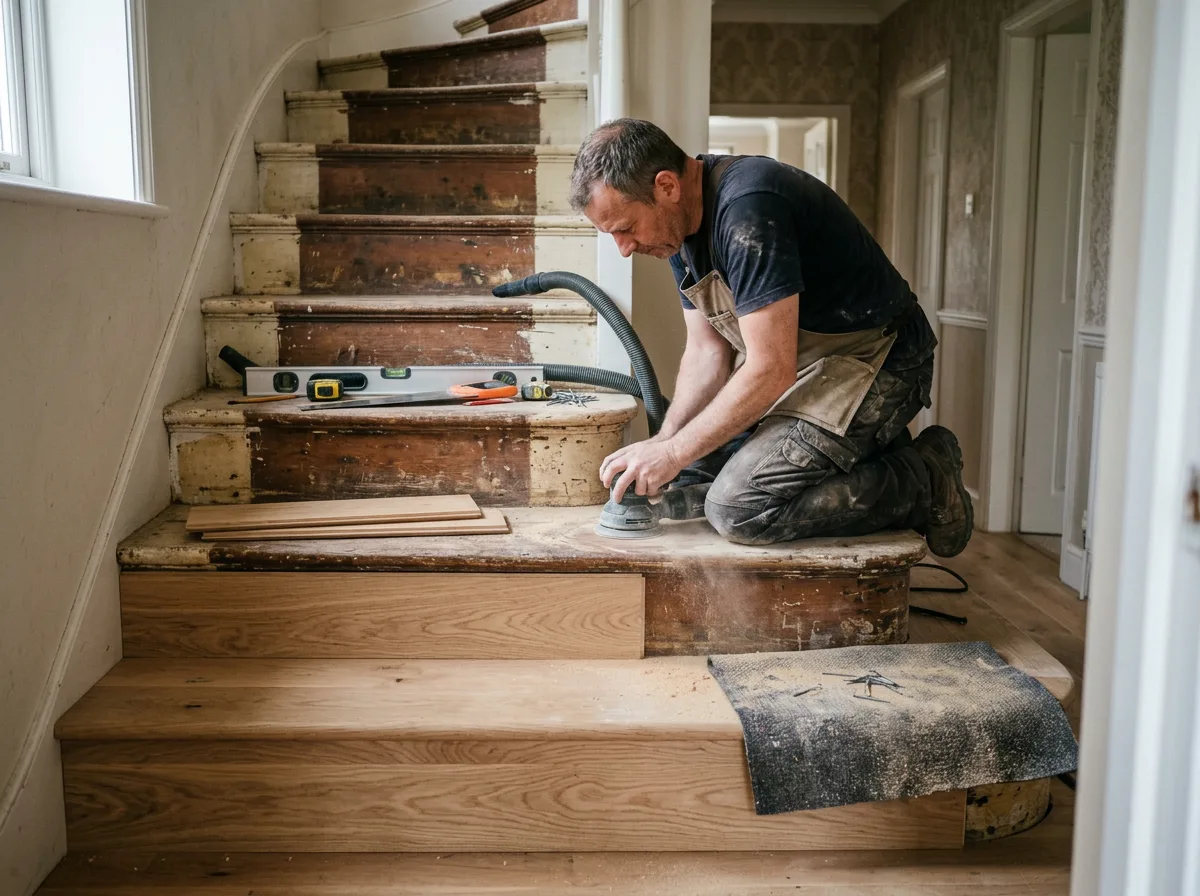
The work begins entirely with preparation. Every tread surface is cleaned back, any old paint, varnish or loose fibres removed, and the timber levelled and lightly keyed so the new overlay has a sound, stable surface to bond to. Any genuinely loose joints are tightened at this stage too, since an overlay is only ever as good as what lies beneath it — a beautiful new surface over a wobbly tread would be a poor trade.
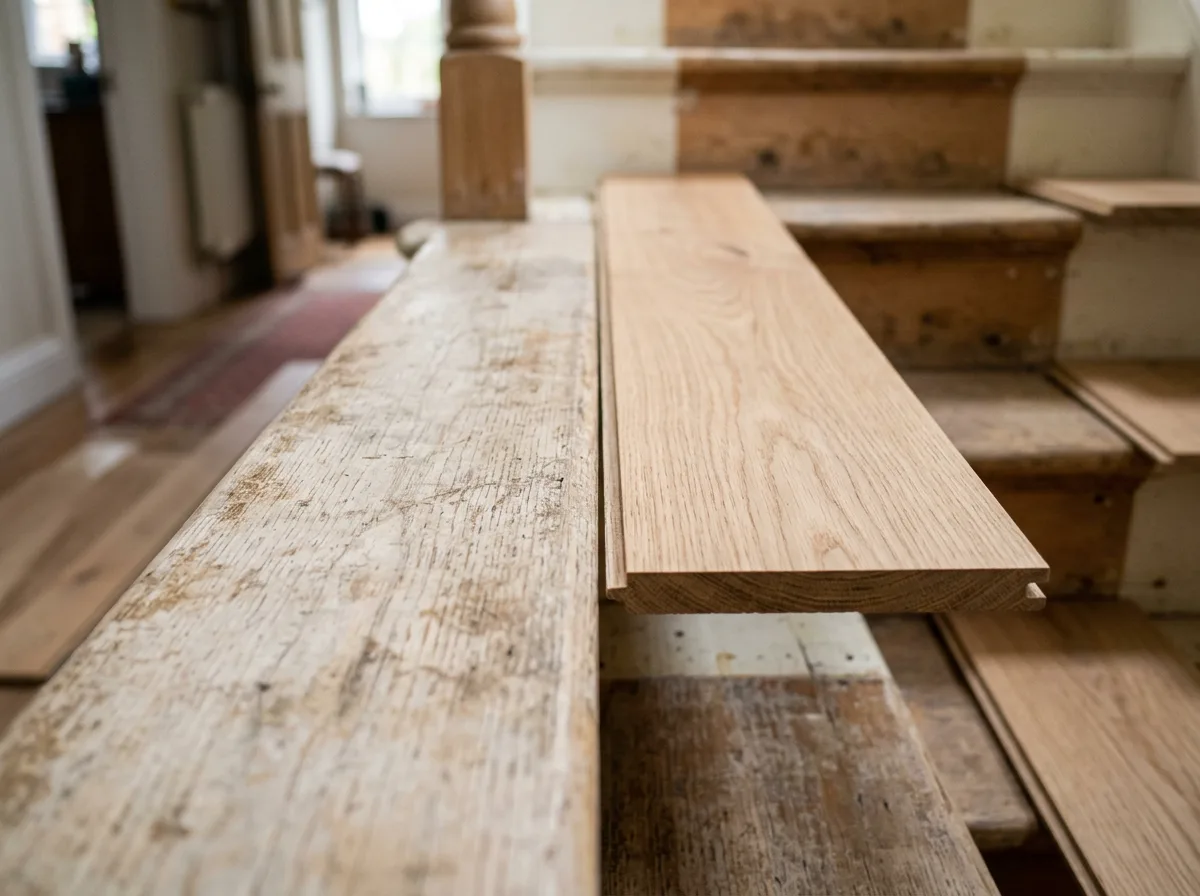
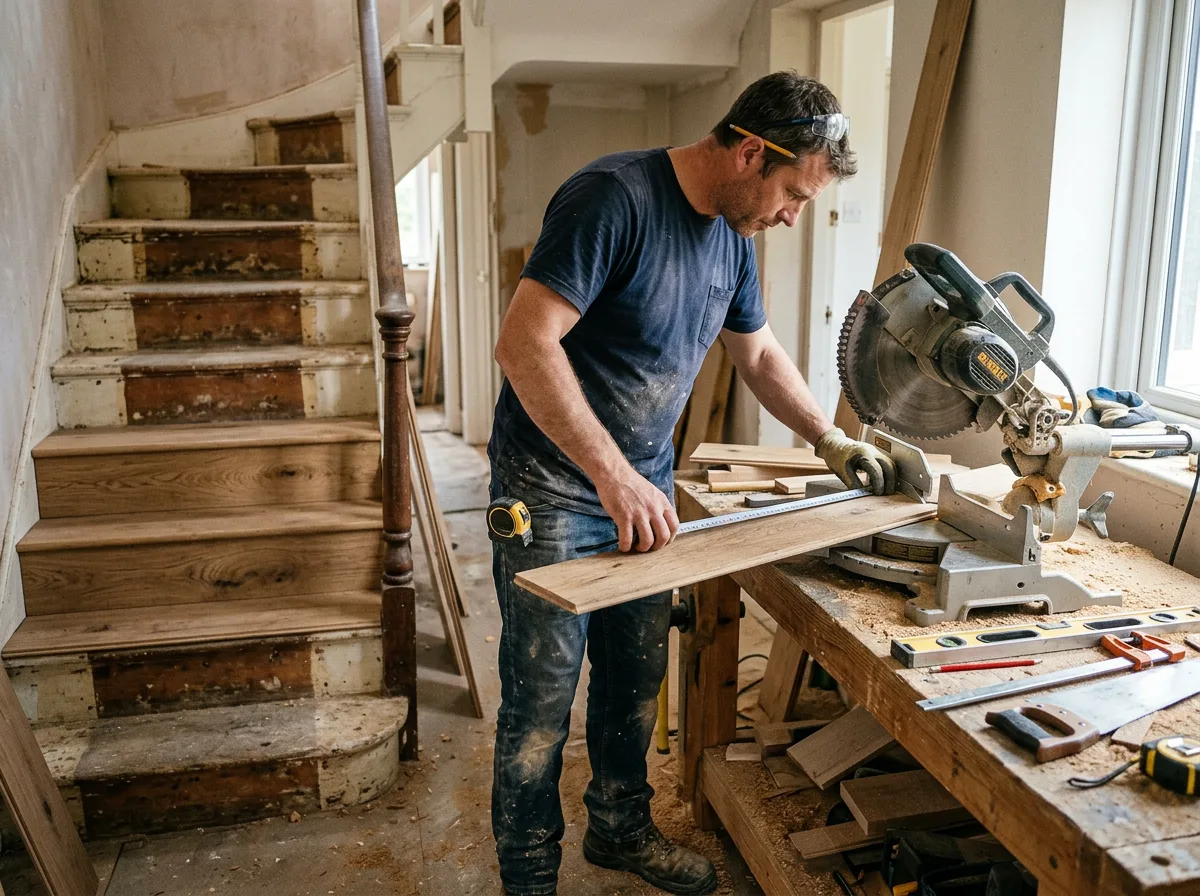
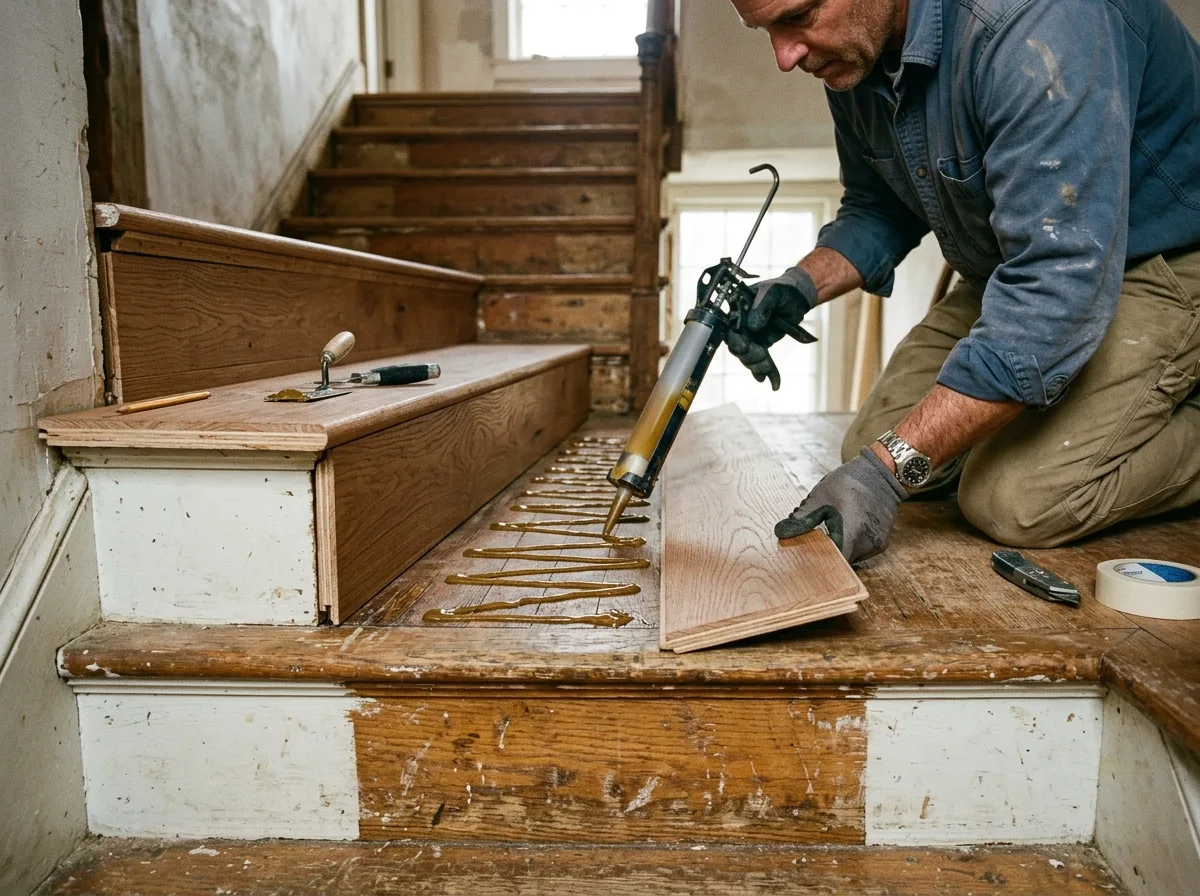
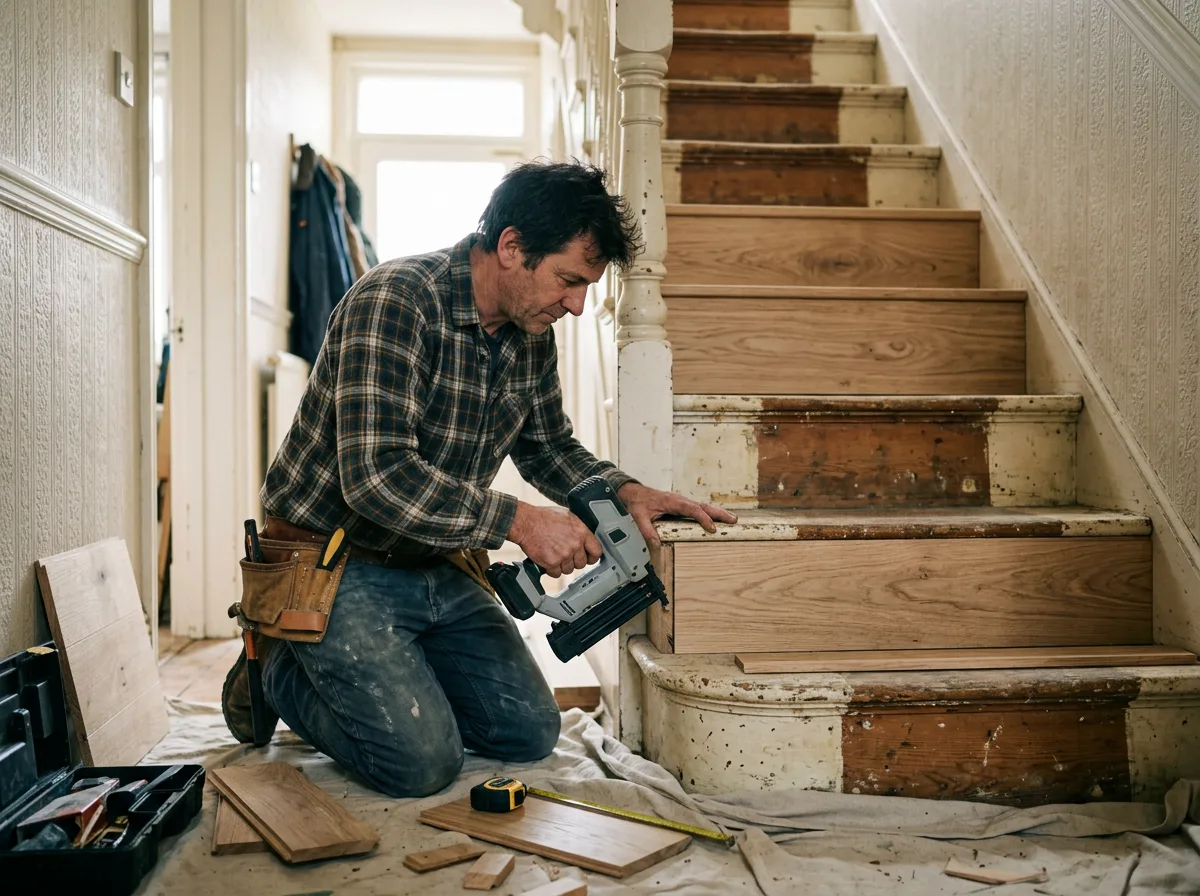
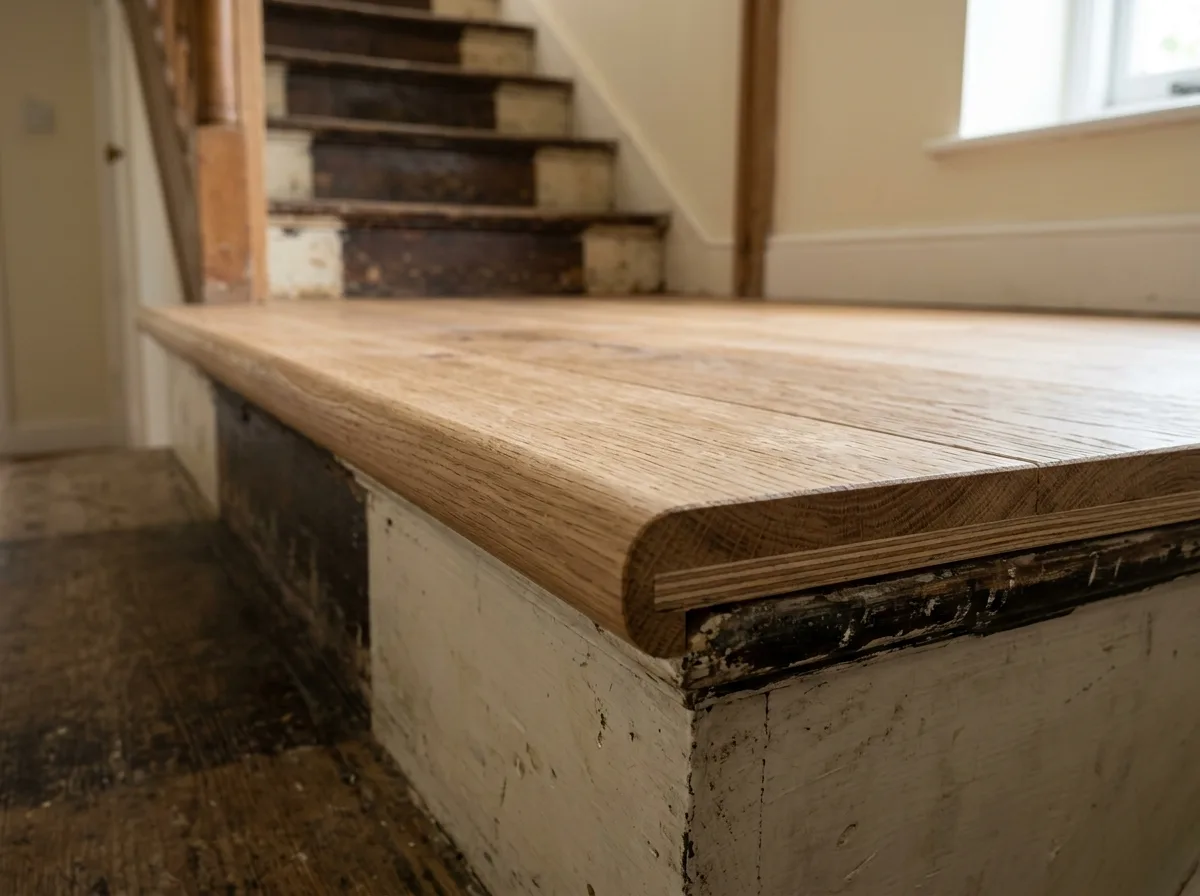
Each tread and riser is then measured individually, because few staircases are perfectly uniform from top to bottom, and the engineered hardwood overlay pieces are cut to that exact profile rather than forced to fit. The tread pieces are glued and mechanically fixed down first, followed by the matching riser overlay fitted flush above, so the two surfaces meet cleanly with no visible step or gap between them. A graceful nosing profile is then fitted along the front edge of every tread — the part of the staircase that takes the most wear and the most scrutiny from the eye, so it is cut and bedded with particular care.
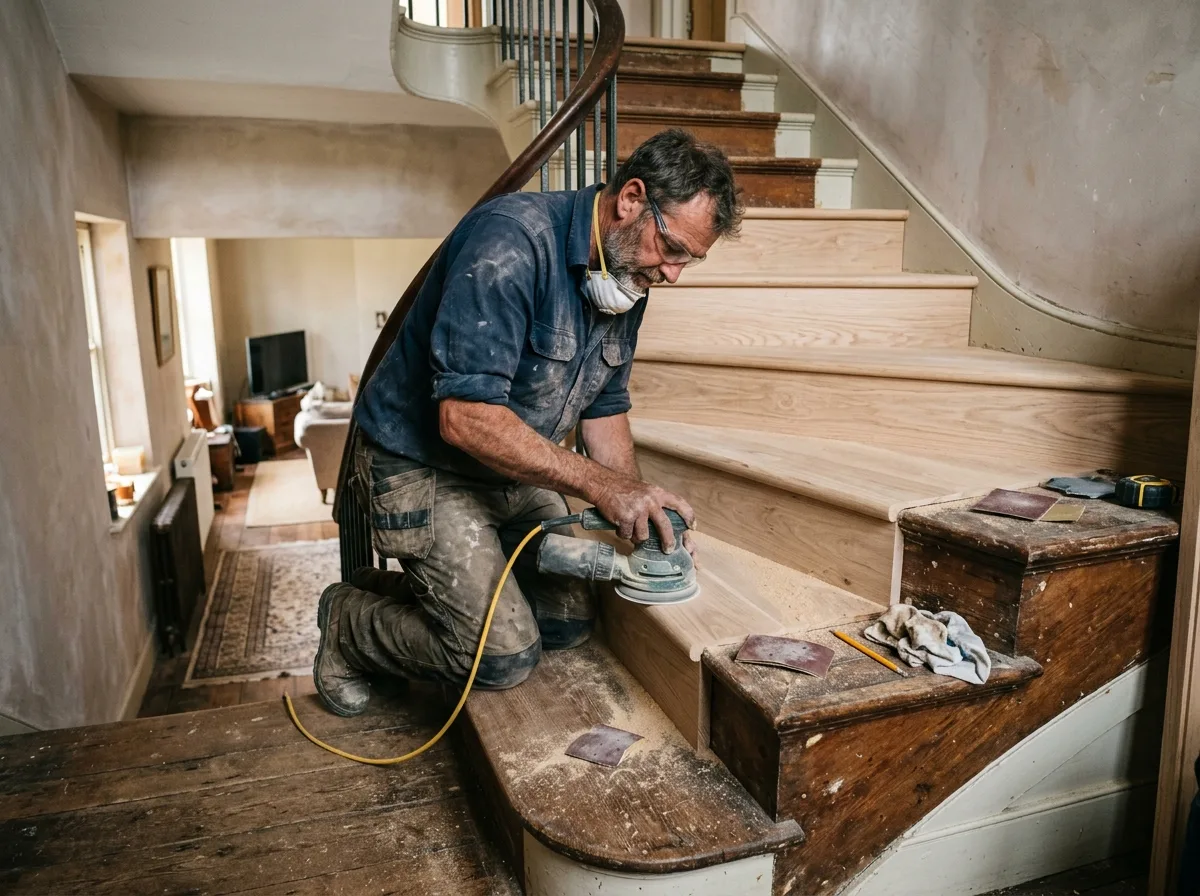
With every tread and riser in place, the full run is sanded back as one continuous surface, easing out any minor inconsistencies between individual pieces, before the finish — stain, oil or lacquer, matched to your preference and the rest of the home — is applied and left to cure. The staircase is then tested underfoot on every tread before it goes back into daily use: solid, silent, and finished to a standard that reads as a single, spectacular surface rather than a staircase that has simply been patched over.
The Work, Step By Step
A Closer Look
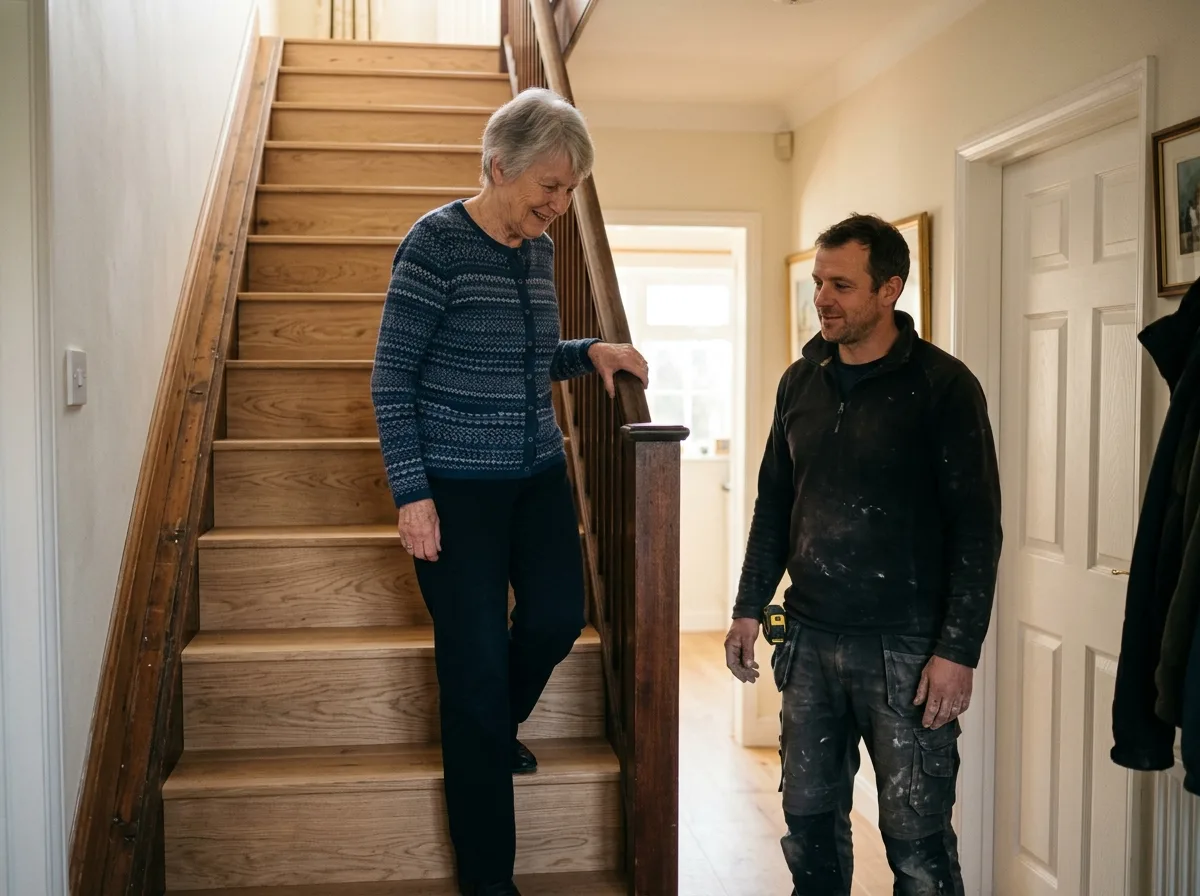
A closer look at the kind of preparation and fitting involved in overlaying a tired staircase with engineered hardwood.
Specification
Materials & Approach
- Engineered hardwood overlay boards, selected at a thickness suitable for direct bonding onto existing treads and risers without raising the step height unduly
- A flexible, high-strength wood adhesive used in combination with mechanical fixings, rather than adhesive alone, for a durable long-term bond
- A rounded, non-slip nosing profile fitted to the front edge of every tread, matched in timber and finish to the overlay itself
- Riser overlay pieces fitted flush to the tread above, for a continuous, gap-free visual line up the full run
- Finish — stain, hardwax oil or lacquer — selected to suit the existing staircase, skirting and handrail rather than imposed as a single default
- The existing staircase structure, strings, spindles, newel posts and handrail left entirely undisturbed throughout
Common Questions
Stair Tread Overlay — Frequently Asked Questions
Can the stairs be overlaid without re-flooring the hallway as well?
Yes — this is deliberately a standalone staircase job. The overlay is scoped and fitted to the treads, risers and nosings of the stairs alone, with a tidy finish at the top and bottom where the staircase meets the existing hallway floor. There is no need to touch or match the hallway flooring to carry out this work.
How long is the staircase actually out of use during the work?
A typical straight staircase can usually be completed within one to two days, depending on the number of treads and risers involved and whether a winder or half-landing is part of the run. We sequence the work from the top down so the staircase is only unusable for the shortest practical window, and we agree a clear timeframe with you before work starts.
Will the overlay match my existing skirting, handrail or spindles?
We select and, where helpful, stain the engineered hardwood overlay to sit comfortably alongside your existing skirting, handrail and spindles rather than clashing with them. The staircase structure itself — strings, spindles, newel posts and handrail — is left completely undisturbed; only the walked and visible tread and riser faces are overlaid.
Is an overlay as durable as replacing the treads entirely?
A correctly fitted engineered hardwood overlay, properly glued and mechanically fixed with a solid nosing edge, stands up extremely well to normal domestic use. It will not match the lifespan of a full structural tread replacement on a staircase with underlying timber problems, but for a staircase that is structurally sound and simply cosmetically worn, it offers a genuinely durable, long-term finish.
What happens to the old tread surface underneath?
The existing tread remains in place and continues to do its structural job — it is prepared, levelled and keyed, then the new engineered hardwood is bonded directly onto it. Nothing structural is removed, which is exactly why this approach is quicker, less disruptive and less costly than a full staircase rebuild.
Do you offer a guarantee on the overlay work?
Yes — all overlay work is covered by our standard workmanship guarantee, confirmed in writing as part of your quote. If an overlay piece or nosing were ever to work loose under normal use, we would return and put it right.
Will there be noise, dust or mess during the work?
Some cutting and sanding is unavoidable, but we work methodically, dust-sheet the surrounding area and clear away offcuts and dust as we go rather than leaving it until the end. Most homeowners find the disruption considerably less than they expect for the scale of the transformation.
Can this be done on a staircase with a winder or half-landing?
Yes — winders and half-landings simply mean each affected tread is measured and cut individually to its own shape, which takes a little longer but is well within the scope of this work. We assess the full run, including any winders, during the free site visit so the quote reflects exactly what is involved.
Related Projects
More Staircase Carpentry
A Beautiful Oak Staircase, Reborn with Turned Spindles and a Carved Newel Post
A complete oak transformation — turned spindles, a carved newel post, and a handrail that feels as good as it looks.
An Elegant Oak Overlay for Tired, Dated Staircase Treads
Worn, dated treads cloaked in solid oak cladding, without the cost or mess of a full staircase rebuild.
A Spectacular Turned Balustrade Restoration
A tired balustrade, stripped back and reborn with hand-turned oak spindles and a glowing handrail.
Get Started
Request a Free Quote for Your Staircase
Got Worn Stair Treads That Need Refreshing?
An engineered hardwood overlay can transform a tired staircase in days, without the cost or mess of a full rebuild. Get a free quote or arrange a site visit.