Garden Rooms & Timber Structures — Pergolas
An Elegant Timber Pergola, Dressed in Wisteria
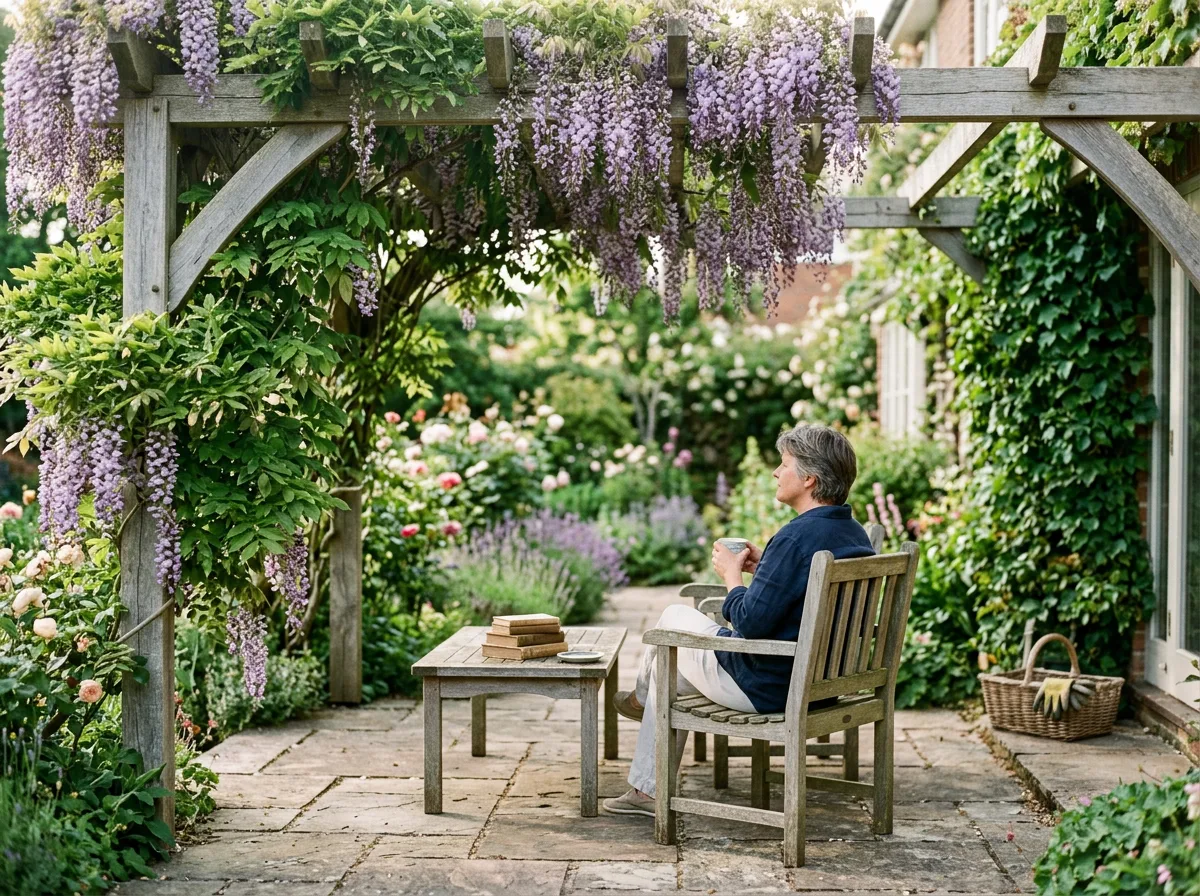
A handsome timber pergola, built over a garden patio and planted with wisteria from the outset — the kind of structure that only grows more beautiful with every passing summer.
Local to Berkshire
Experienced Carpenters
32 years in the trade
Fully Insured
High-Quality Finish
The Brief
A Structure Built to Be Climbed
This is the kind of pergola project we take on regularly across Berkshire: a bare, slightly underused patio, crying out for structure, shade and a little romance. The brief is rarely just "build a frame" — it is a frame built from the very first post with a mature, flowering wisteria in mind, strong enough to carry its eventual weight and shaped to show it off beautifully for decades.
An elegant pergola earns its keep twice over: as a handsome piece of garden architecture in its own right from the day it is finished, and later as the exquisite, dappled-shade centrepiece a well-trained wisteria turns it into. Getting both right means thinking as much about the plant's future growth as the timber's present dimensions.
It is a satisfying project precisely because it rewards patience — the finished structure looks spectacular on completion day, and then simply keeps improving, season after season, as the planting matures around it.
This page illustrates the type and standard of pergola work we carry out — not a specific named address or client. Every project is scoped and quoted individually after a free site visit.
The Process
From Bare Patio to Flowering Canopy
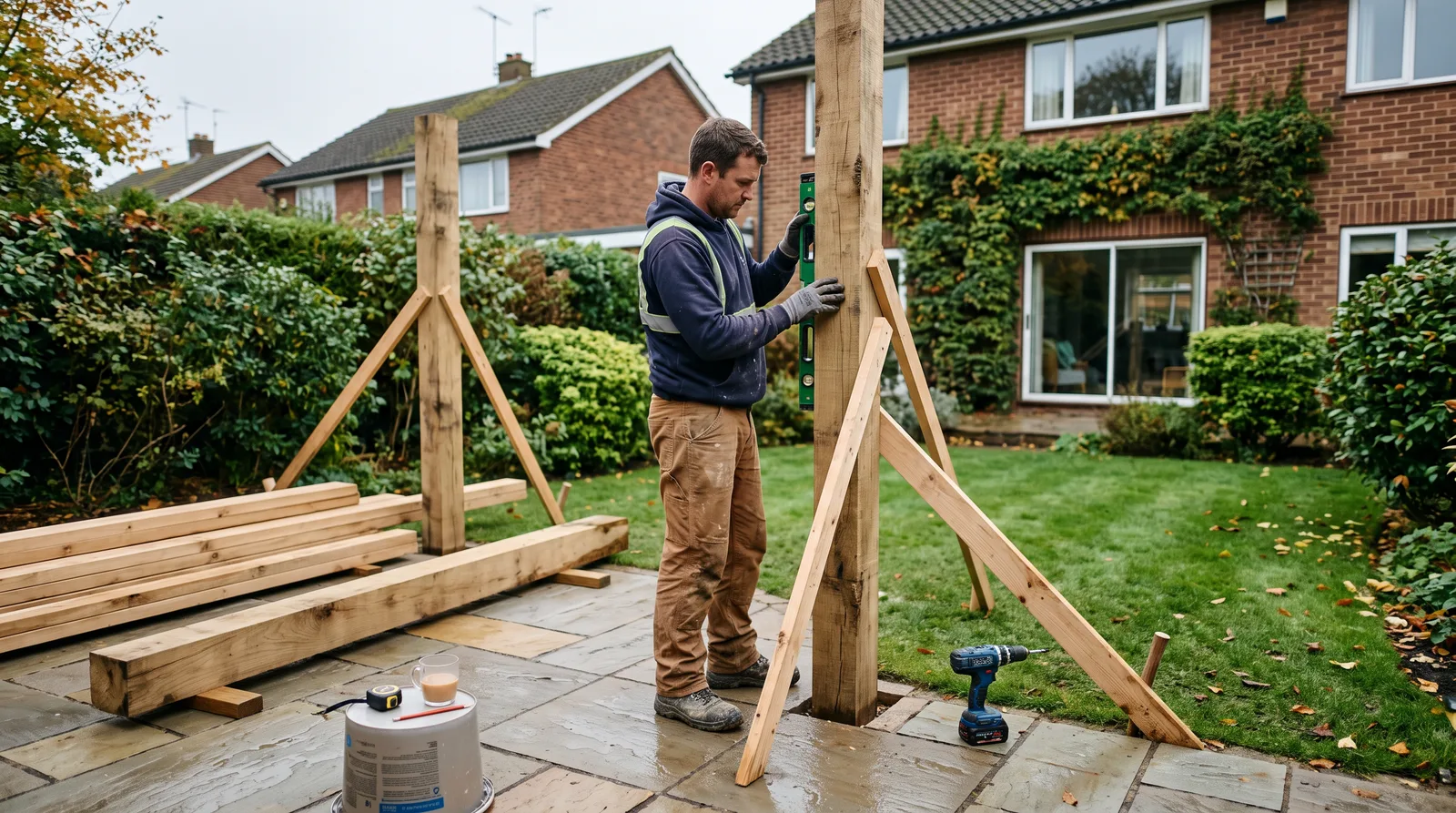
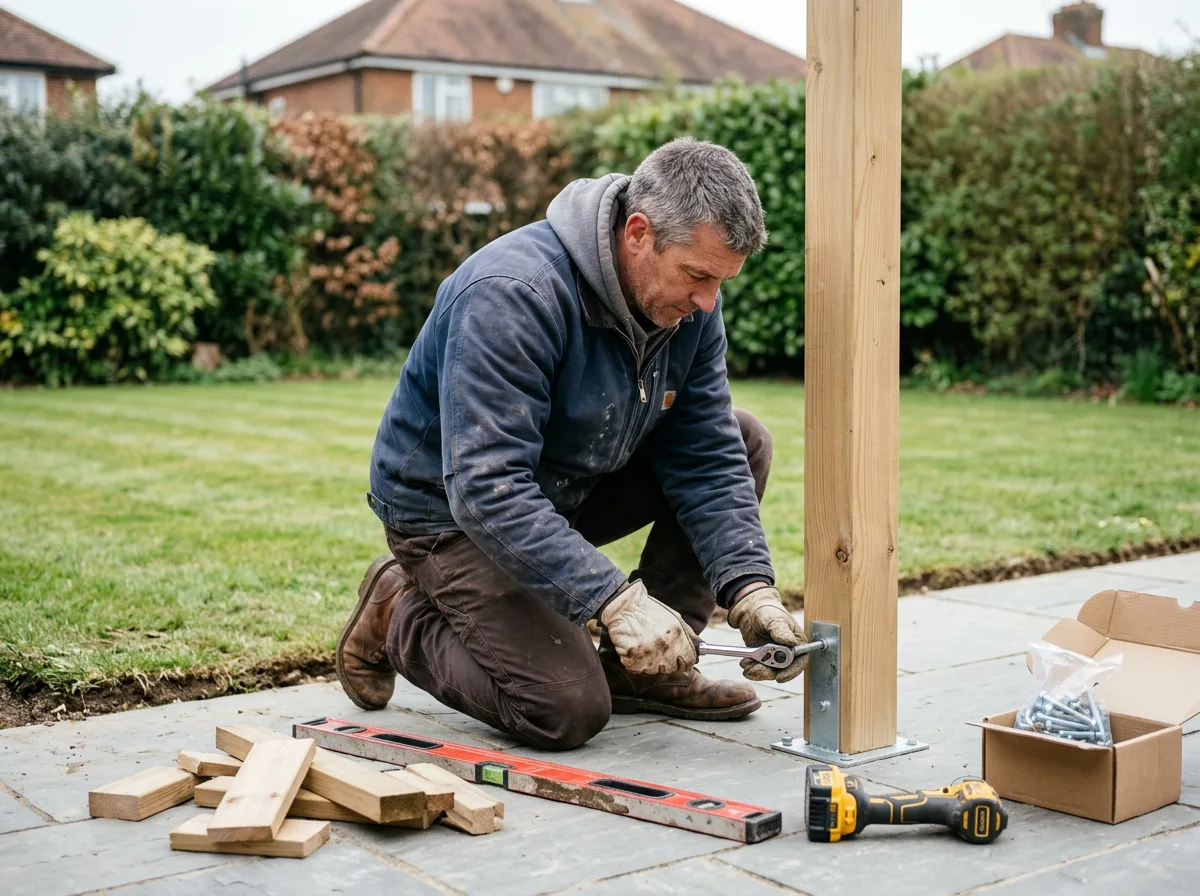
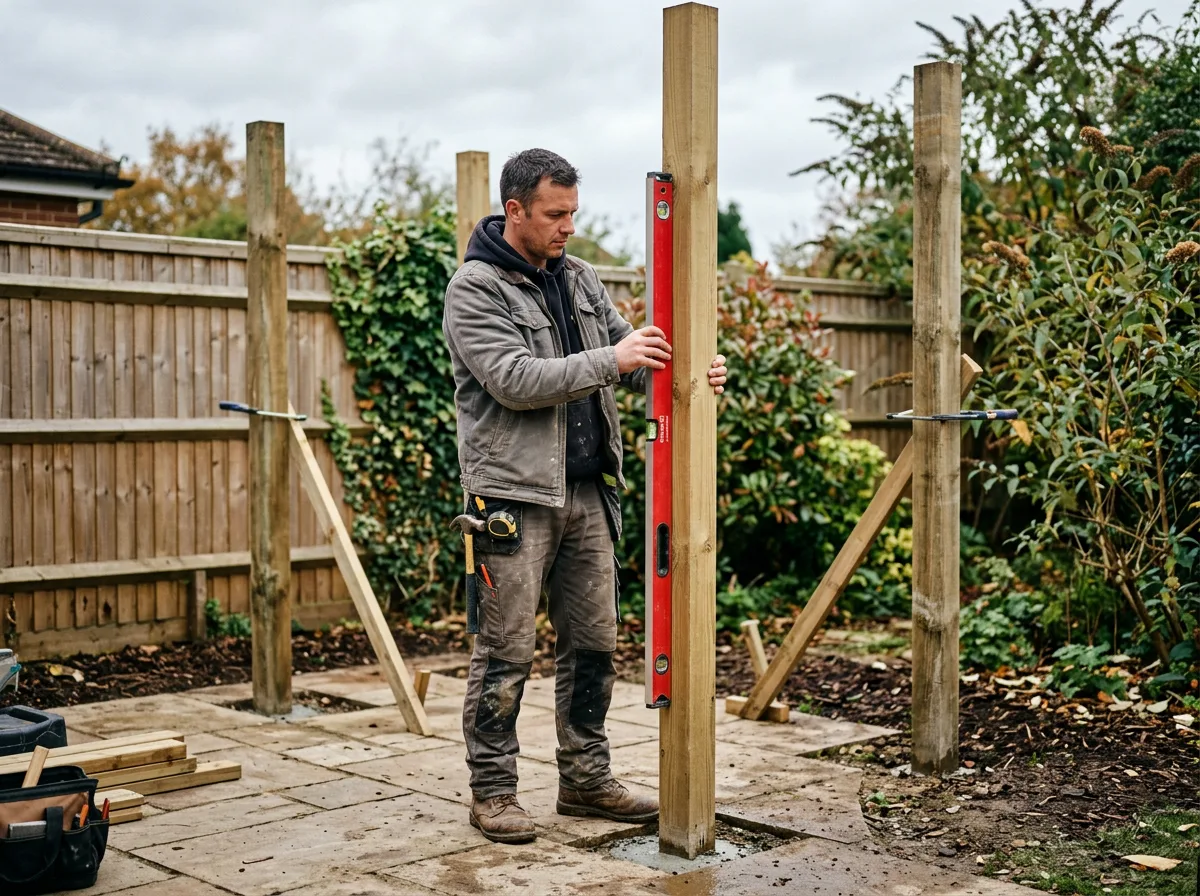
Everything starts with the posts, and the posts start with the ground. Over an existing patio, galvanised post-fix brackets are bolted down into the paving or a freshly poured concrete pad, keeping the timber clear of standing water; into open soil, posts are set into concrete footings below frost depth so the whole structure stands immovably square for the long term. Each post is checked and rechecked for plumb before anything is fixed above it, because a frame built on even slightly leaning posts never quite settles right.
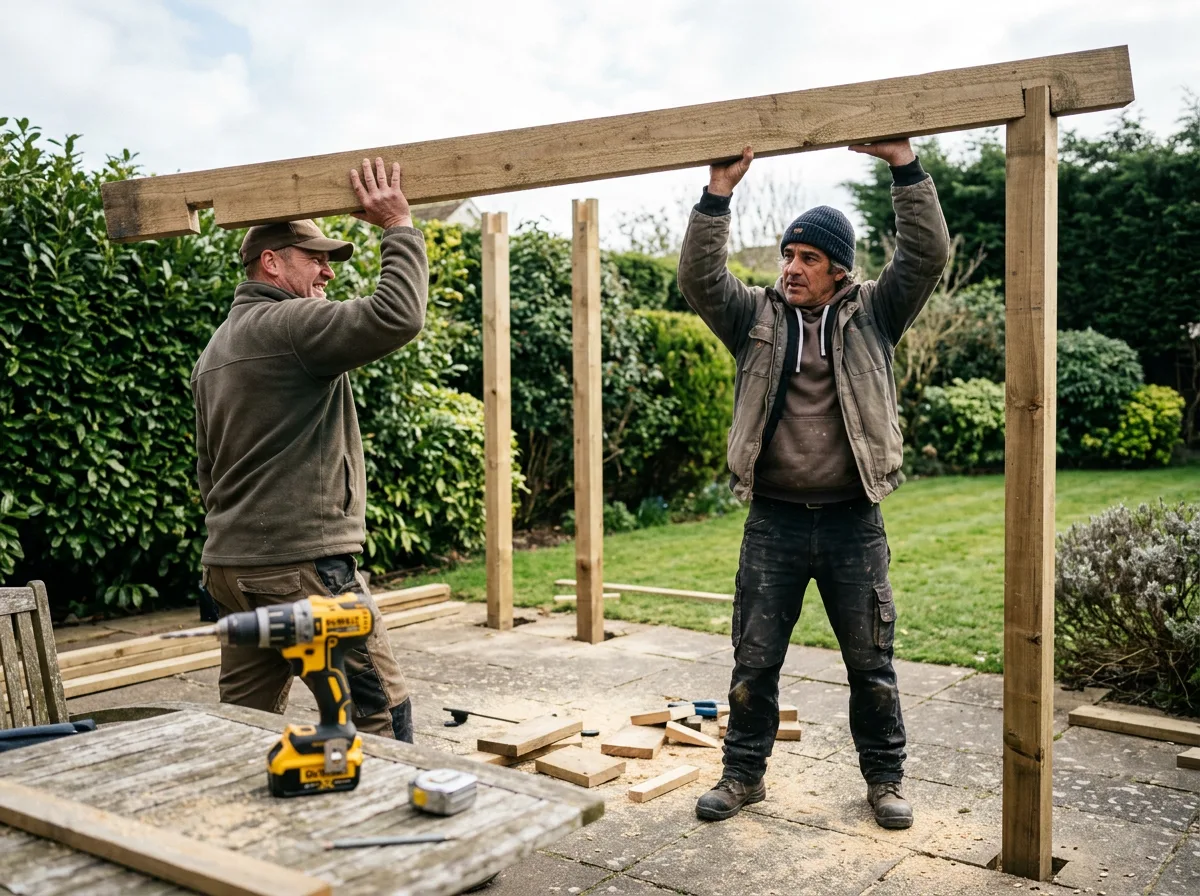
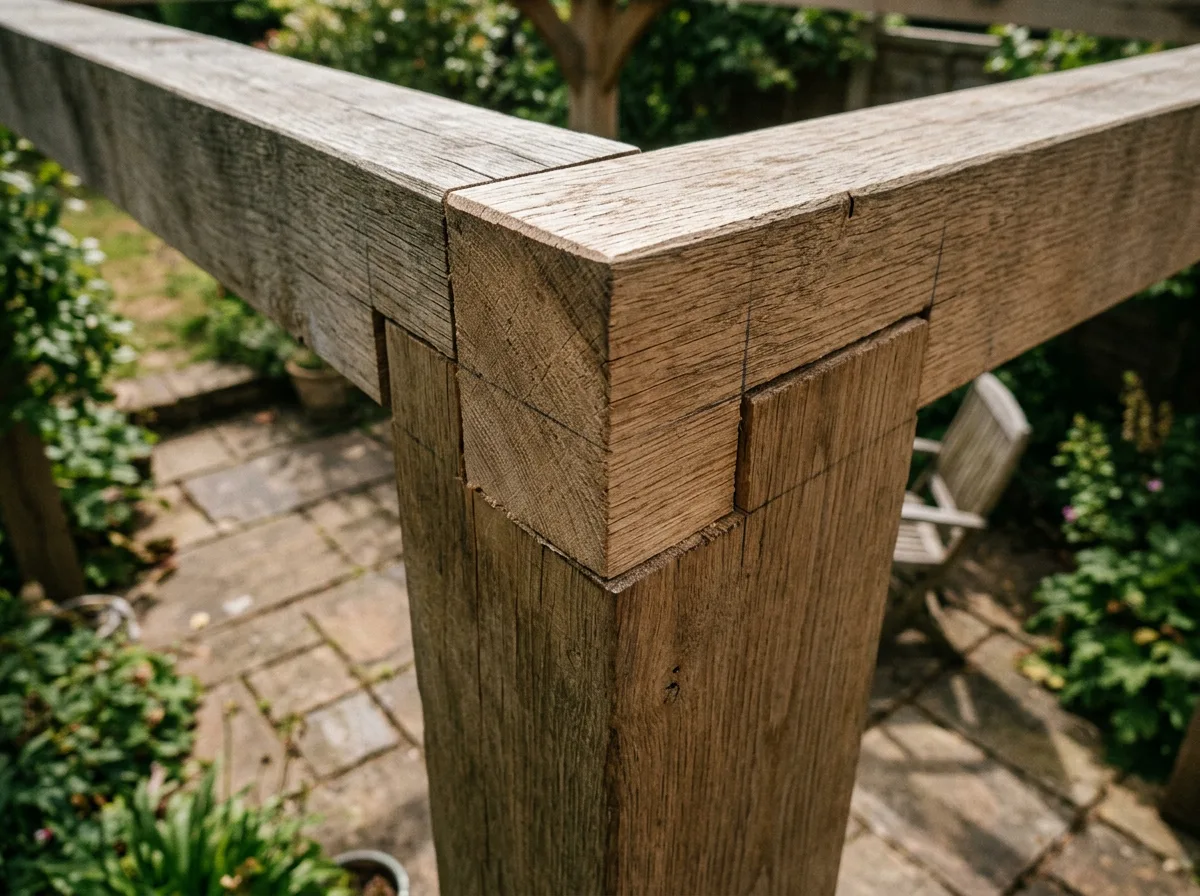
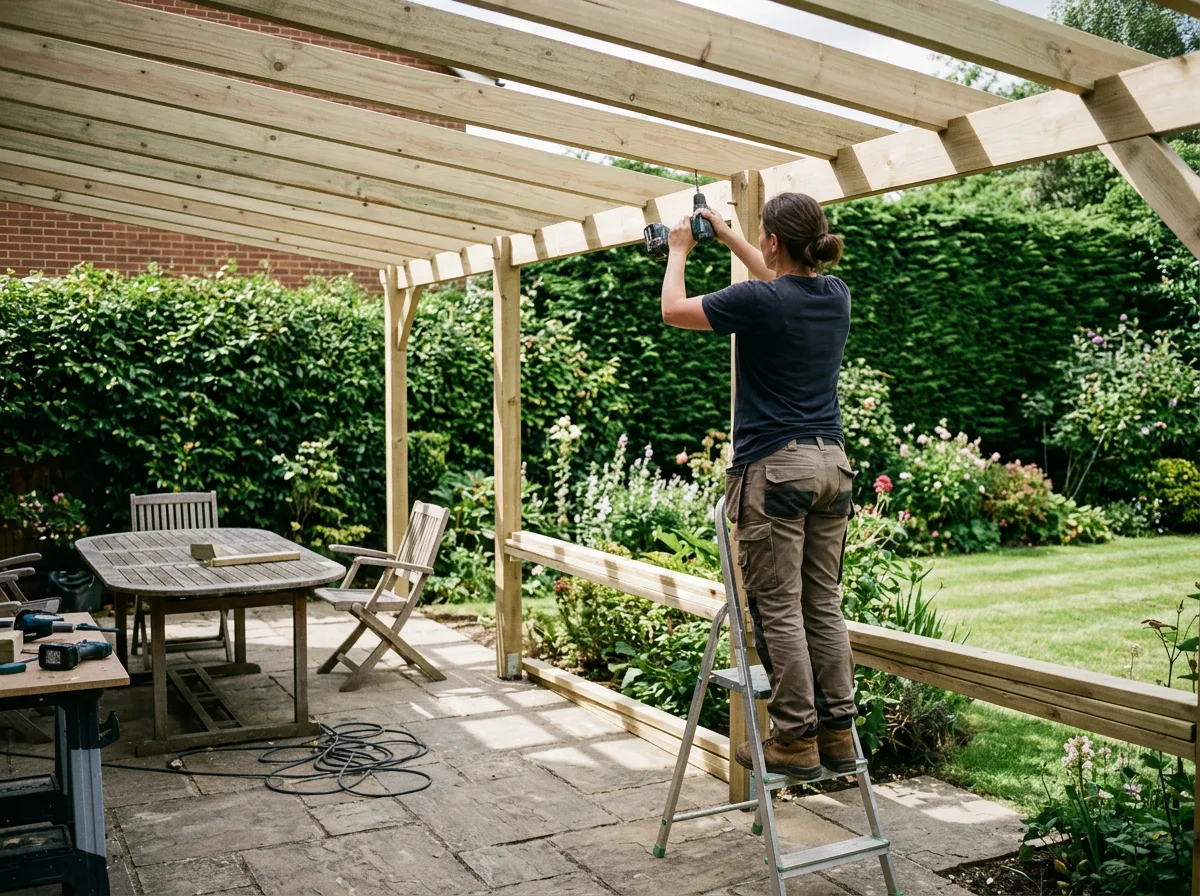
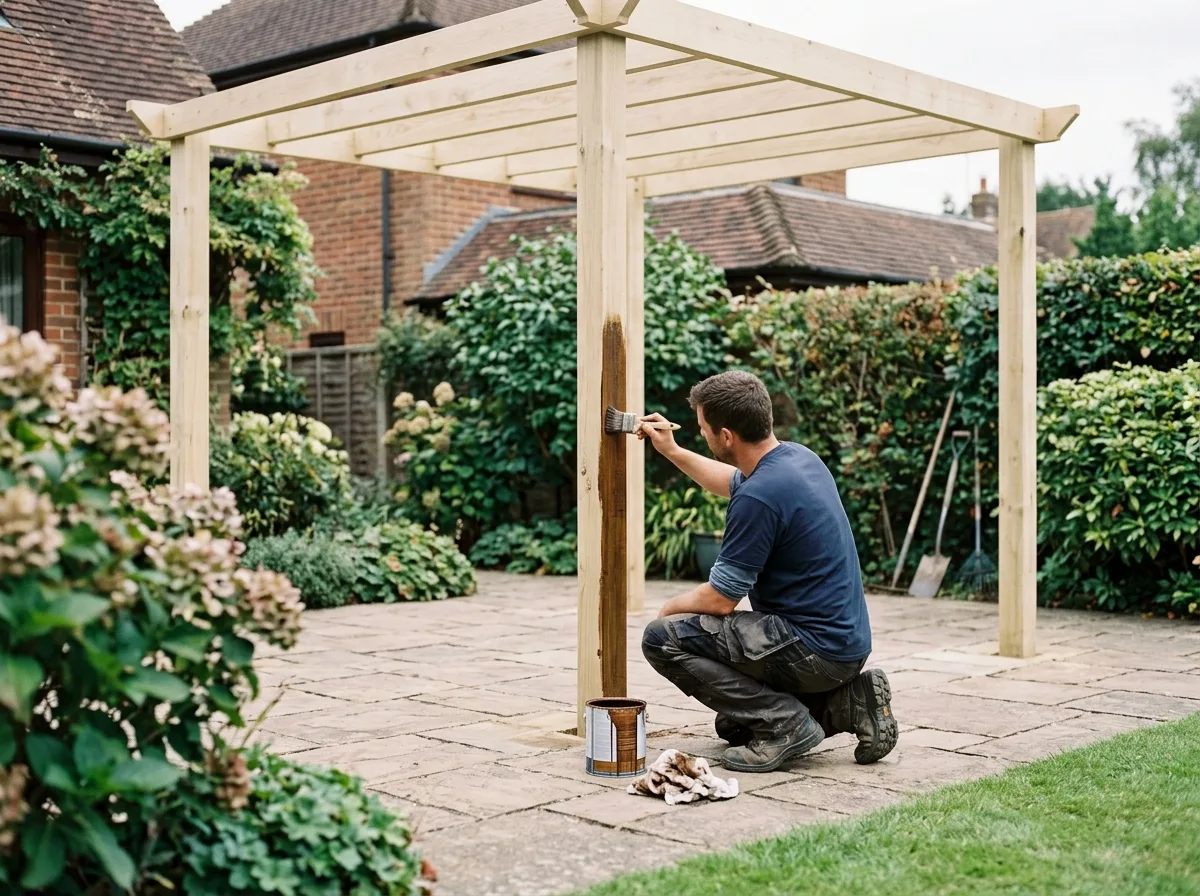
With the posts locked off, the main beams are lifted into place across their tops and the rafters fixed in turn, spaced evenly to cast the kind of soft, dappled shade a pergola is built for. The joints are where the craft really shows — notched post-to-beam connections, cut cleanly rather than simply bolted on the surface, give the finished structure the traditional, chiselled look that ages gracefully rather than looking like a kit from a catalogue. An exterior stain or oil is applied once the frame is complete, chosen to suit the garden and protect the timber from the weather for years to come.
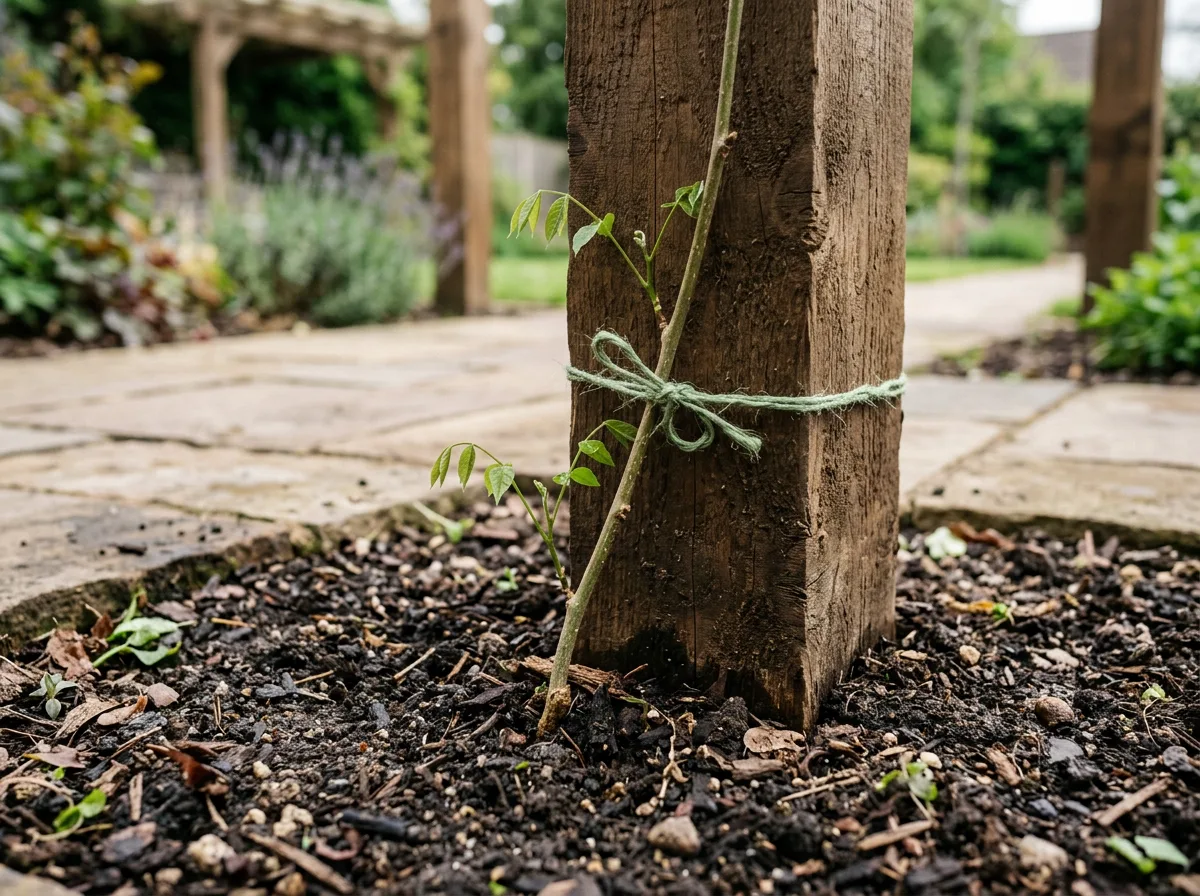
The final stage is the one that takes the longest to come good: choosing and training the climbing plant. A young wisteria is planted at the base of a chosen post and tied in from day one, guided onto the framework rather than left to find its own way, with an early prune to encourage the strong, woody growth that will eventually cover the whole structure. It takes a few seasons to become truly spectacular, but a pergola planted and trained properly from the start rewards that patience many times over.
The Build, Step By Step
A Closer Look
A closer look at the construction, detailing and planting involved in a timber pergola built to carry wisteria.
Specification
Materials & Approach
- Pressure-treated softwood or oak, chosen for sustained outdoor exposure and long-term strength
- Galvanised post-fix brackets for patio installations, or concrete footings set below frost depth into open ground
- Notched post-to-beam and beam-to-rafter joints, cut for a traditional, chiselled appearance rather than surface-bolted fixings
- Stainless steel or galvanised fixings throughout, selected to resist corrosion in an exposed garden setting
- Exterior timber stain or oil finish, chosen to suit the garden and reapplied periodically to protect the frame
- A young climbing plant, typically wisteria, planted and tied in at completion with an initial training prune
Common Questions
Pergola Building — Frequently Asked Questions
What timber lasts best for a pergola left outside all year round?
We generally specify pressure-treated softwood or oak for pergolas, chosen for how well each copes with constant exposure to weather. Pressure-treated softwood offers excellent value and a long service life when detailed correctly, while oak develops a beautiful silvery-grey patina over time and needs very little upkeep. Both are suitable for a structure that will carry the weight of a mature climbing plant for decades.
How are the posts actually fixed into the ground or patio?
It depends on what the pergola is standing on. Into open ground, posts are typically set into concrete footings below frost depth for a permanent, immovable fix. Over an existing patio, we use galvanised post-fix brackets or shoes bolted down into the paving or a new concrete pad, which keeps the timber itself up off standing water and extends its life considerably.
How long before wisteria actually covers a new pergola?
Wisteria is a vigorous climber but not an instant one — most establish a reasonable framework of growth within two to three years, with a fuller, more spectacular covering typically arriving by year four or five. We train and tie in the young plant from the outset so it climbs the structure the way you want, rather than wandering.
Does a pergola need much maintenance once it is built?
Very little on the structure itself — an exterior stain or oil reapplied every few years keeps the timber looking its best and protects it from the weather. The wisteria needs more attention than the carpentry: a proper prune twice a year, in summer and again in winter, keeps growth controlled and encourages the best flowering.
Can a pergola be built to support a heavy, mature climbing plant?
Yes, and this is exactly why we build the frame itself to carry significant future weight rather than just the plant as it is on day one. A mature wisteria becomes genuinely heavy and woody over years of growth, so beam and rafter sizes, and the post fixings beneath them, are specified with that eventual load in mind from the start.
Will a pergola need planning permission?
Most garden pergolas fall comfortably within permitted development rights, particularly when sited away from boundaries and kept to a modest height. Conservation areas, listed buildings, and anything larger or closer to a boundary can change that, so we always check your specific circumstances as part of the initial site visit rather than assuming.
How long does a typical pergola build take?
A standard patio pergola is usually built within two to three days once posts, beams and rafters are set out and fixed. Planting and training the wisteria happens on completion, with the first prune and tie-in included so it starts climbing the right way from day one.
Do you offer a guarantee on pergola carpentry?
Yes — all structural carpentry is covered by our standard workmanship guarantee, confirmed in writing with your quote. Should any joint, fixing or post ever work loose under normal use, we return and put it right.
Related Projects
More Garden Rooms & Timber Structures
A Spectacular Garden Room, Built from Foundation to Finish
A complete garden room build, start to finish — foundations, frame, and a beautifully finished interior.
An Elegant Cedar-Clad Garden Room Exterior
A garden room exterior finished in silvering cedar cladding, built to age gracefully for decades.
A Chic Garden Room Home Office Retreat
A sleek, light-filled garden room fitted out as a dedicated home office, steps from the back door.
Get Started
Request a Free Quote for Your Pergola
Dreaming of a Pergola Dressed in Wisteria?
A beautiful timber pergola, built to carry a mature climbing plant for decades, starts with a free site visit. Get a free quote or arrange a visit.