Fire Doors
A Fire Door, Fitted to Full Compliance
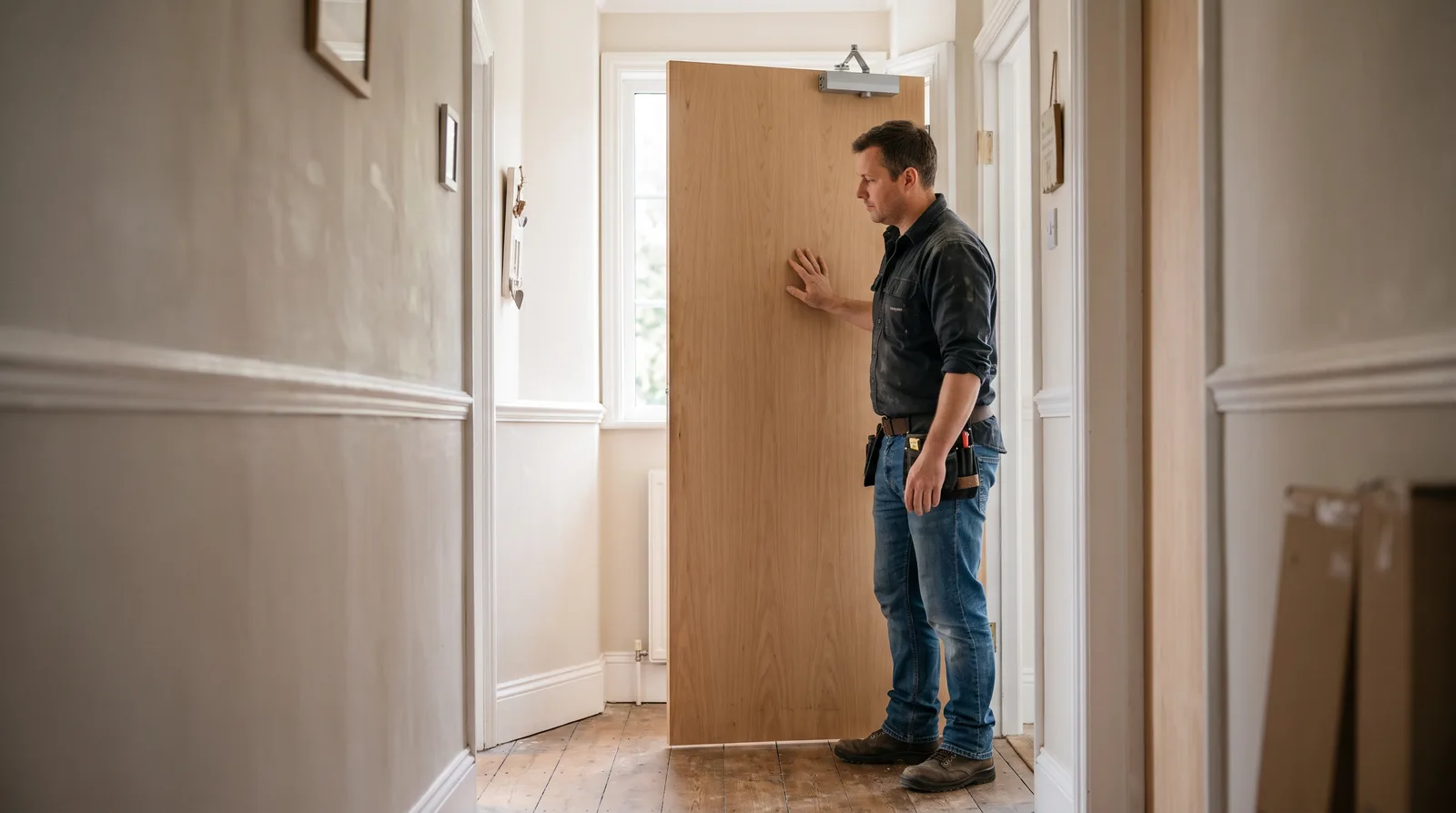
A certified self-closing device, selected to match the door and fitted to manufacturer instructions — so the door closes and latches, every single time.
Local to Berkshire
Experienced Carpenters
32 years in the trade
Fully Insured
High-Quality Finish
The Brief
A Fire Door That Actually Closes Itself
This is the kind of fire door project we take on regularly across Berkshire: a fire door already hung, or newly specified, that needs a self-closing device fitted so it performs the job it is there to do. A fire door left to be closed by hand is only ever as reliable as the person last through it — the self-closer is what makes the protection automatic.
The precision in this kind of work lies in matching the device to the door, not simply bolting on whatever is to hand. The closer has to suit the door’s weight and certification, be fixed exactly where the manufacturer specifies, and be adjusted afterwards so it closes firmly, quietly, and latches fully from any opening angle.
It is unglamorous, quietly essential work — the kind of detail that is invisible when done properly, and only noticed when it has been skipped.
This page illustrates the type and standard of fire door fitting work we carry out — not a specific named address or client. Every project is scoped and quoted individually after a free site visit.
The Process
From Selection to a Door That Latches Every Time
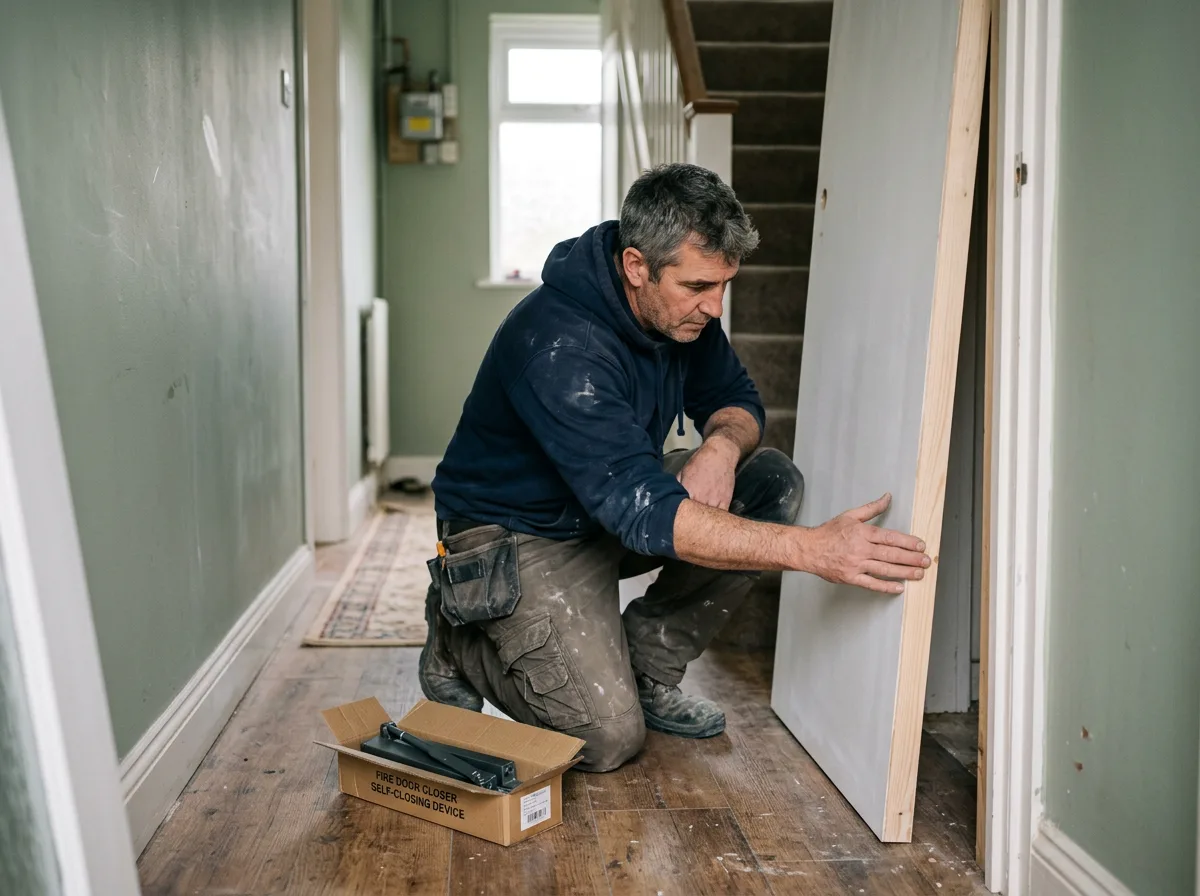
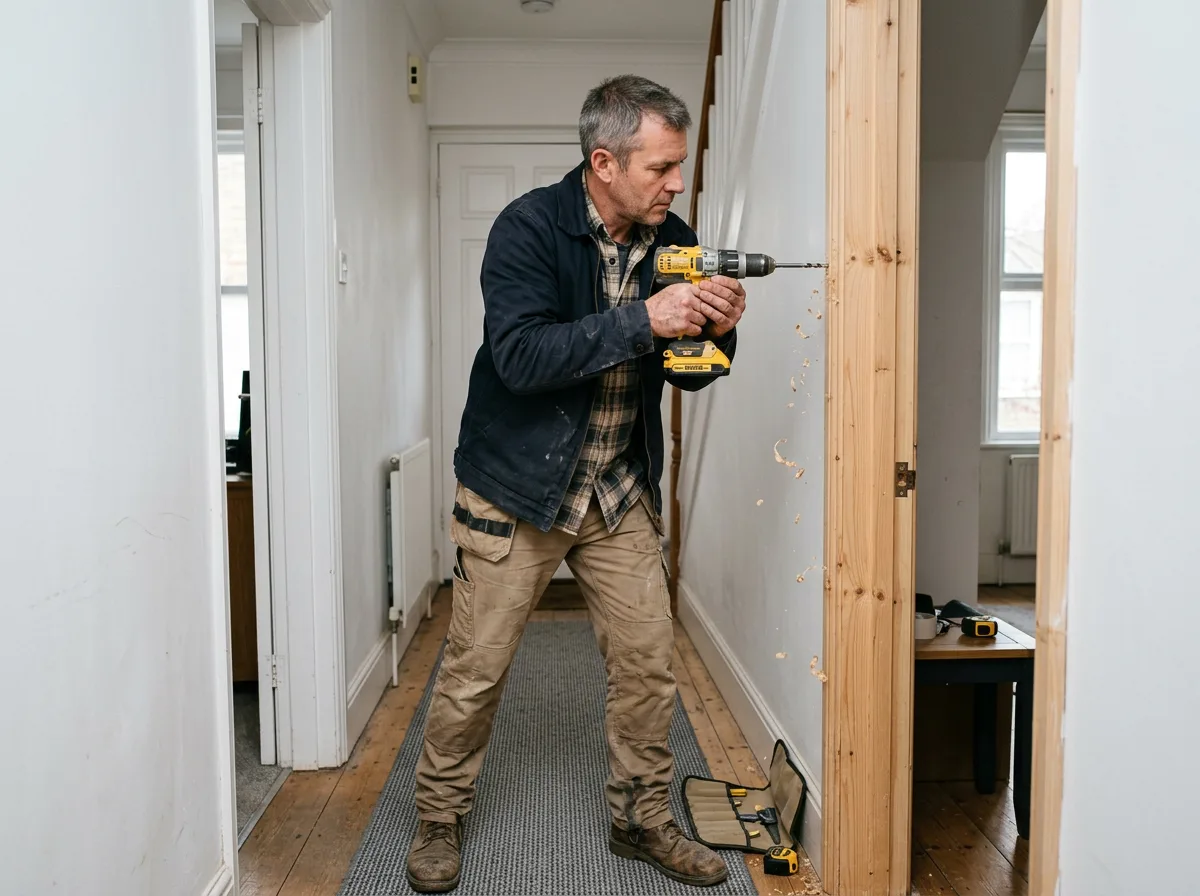
We start by checking the door itself — its certification, its weight, and how it is currently hung — before selecting a self-closing device compatible with that specific door. A closer that suits a lightweight internal door is not necessarily right for a heavier, higher-specification fire door, so this matching step comes before any fixing is chosen or any hole is drilled.
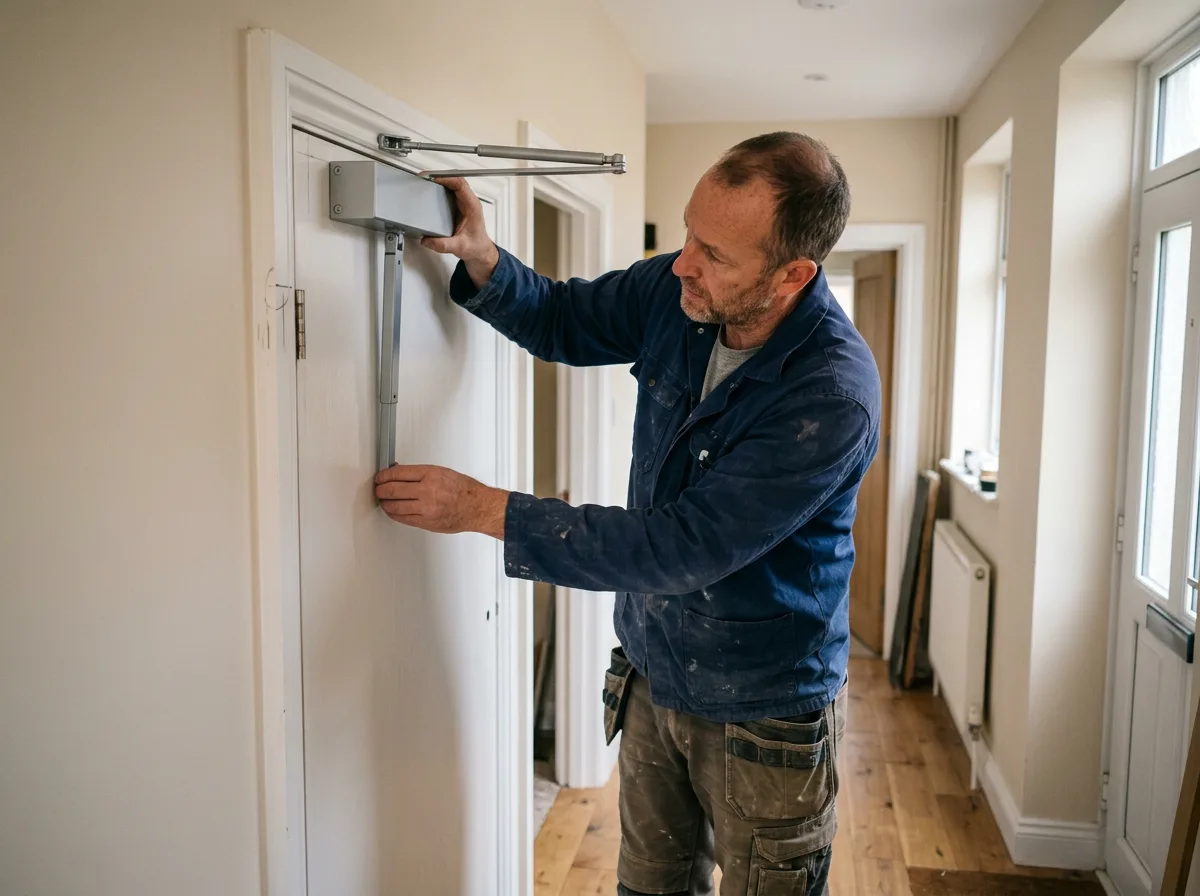
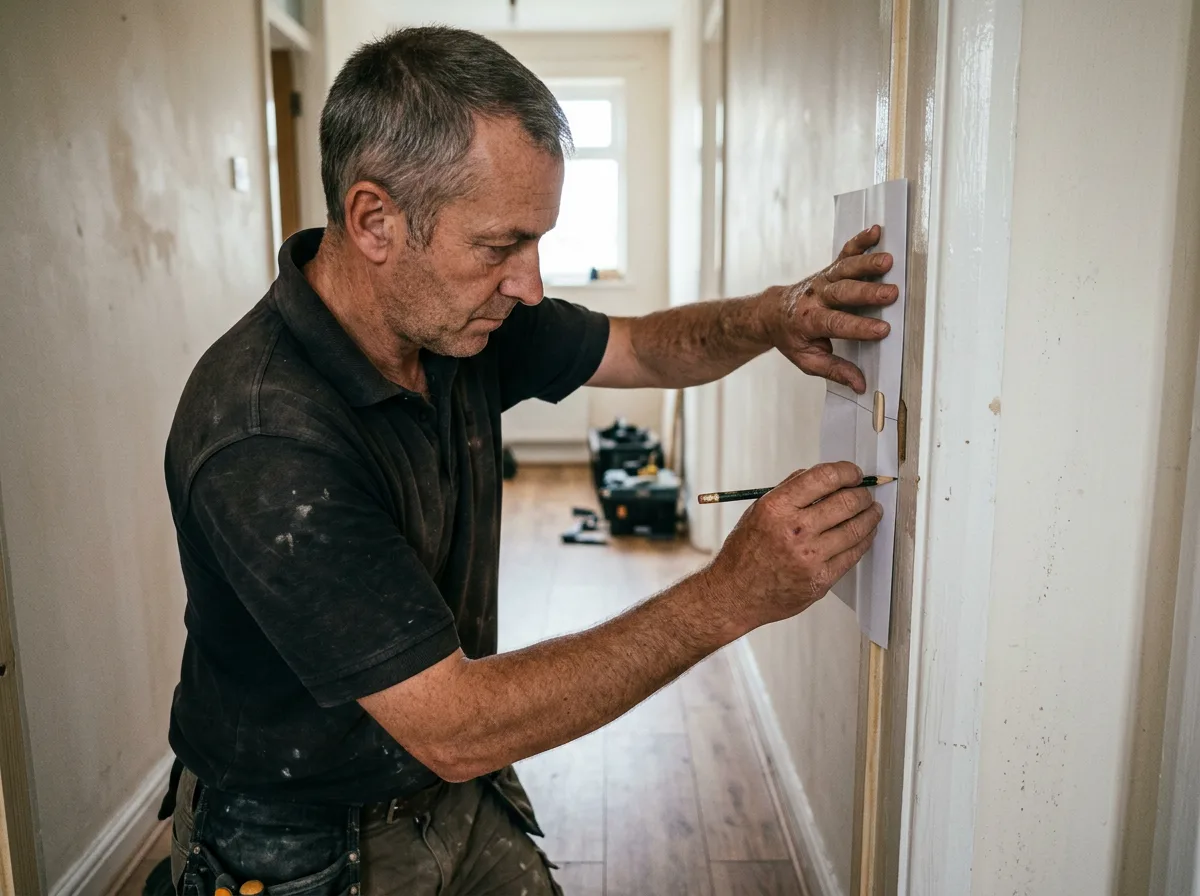
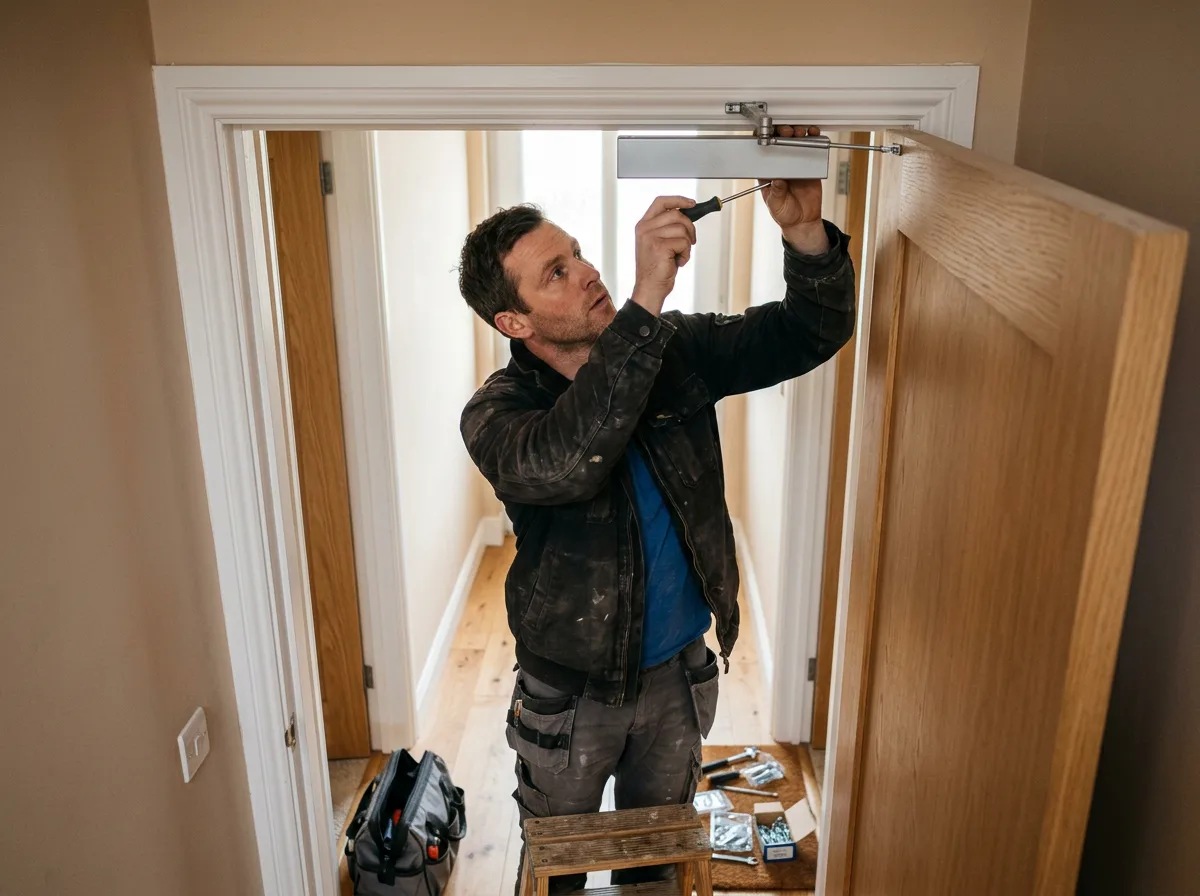
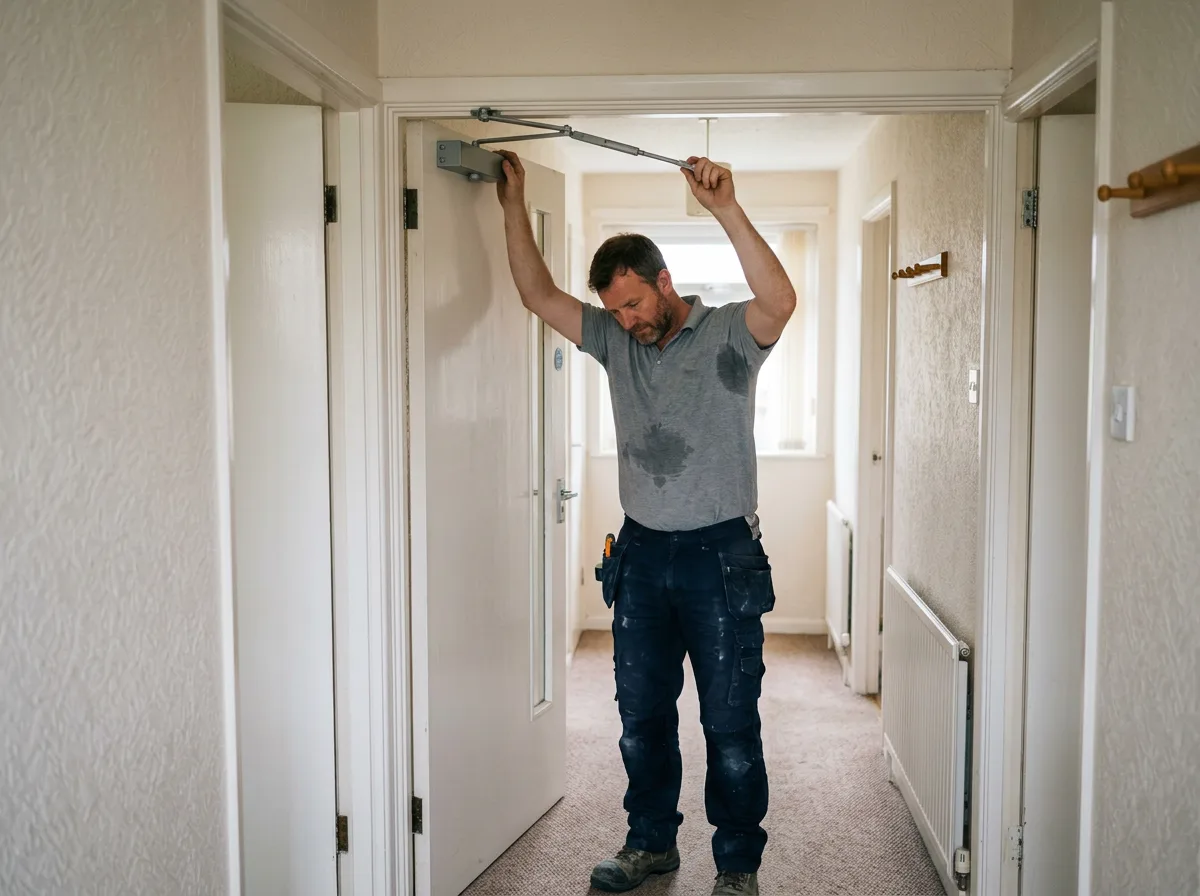
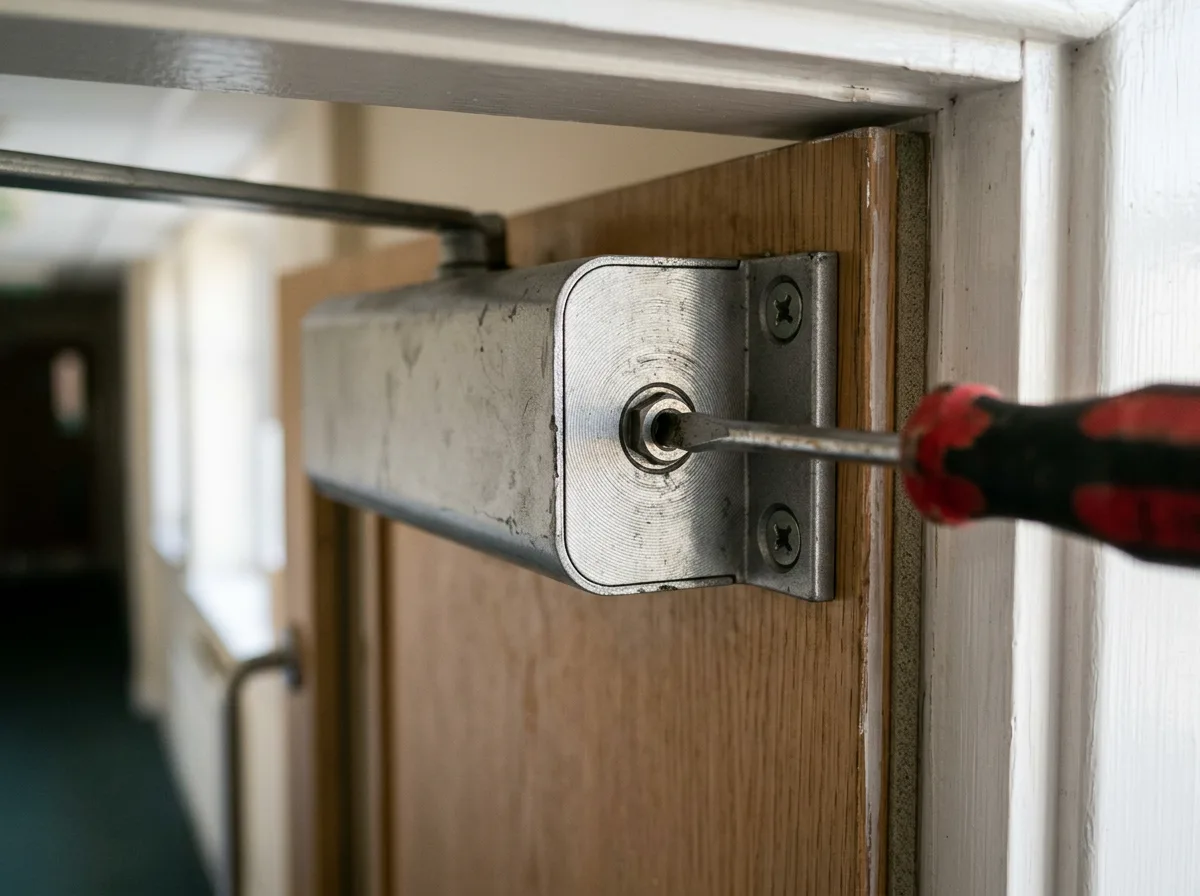
Fitting follows the manufacturer’s instructions for both the door and the closer, with fixing points marked carefully against the supplied template rather than estimated by eye. Once the closer body and arm are fitted and fixed, the door is closed and adjusted repeatedly — the closing speed and the final latching force are both tuned at the valve until the door swings shut smoothly and latches fully every time, without slamming or catching.
The last step is a proper function and compliance check: closing the door from several different opening positions, confirming it latches fully each time, and checking every fixing is secure. We do not call the job finished until the door performs exactly as it should, unassisted.
The Work, Step By Step
A Closer Look
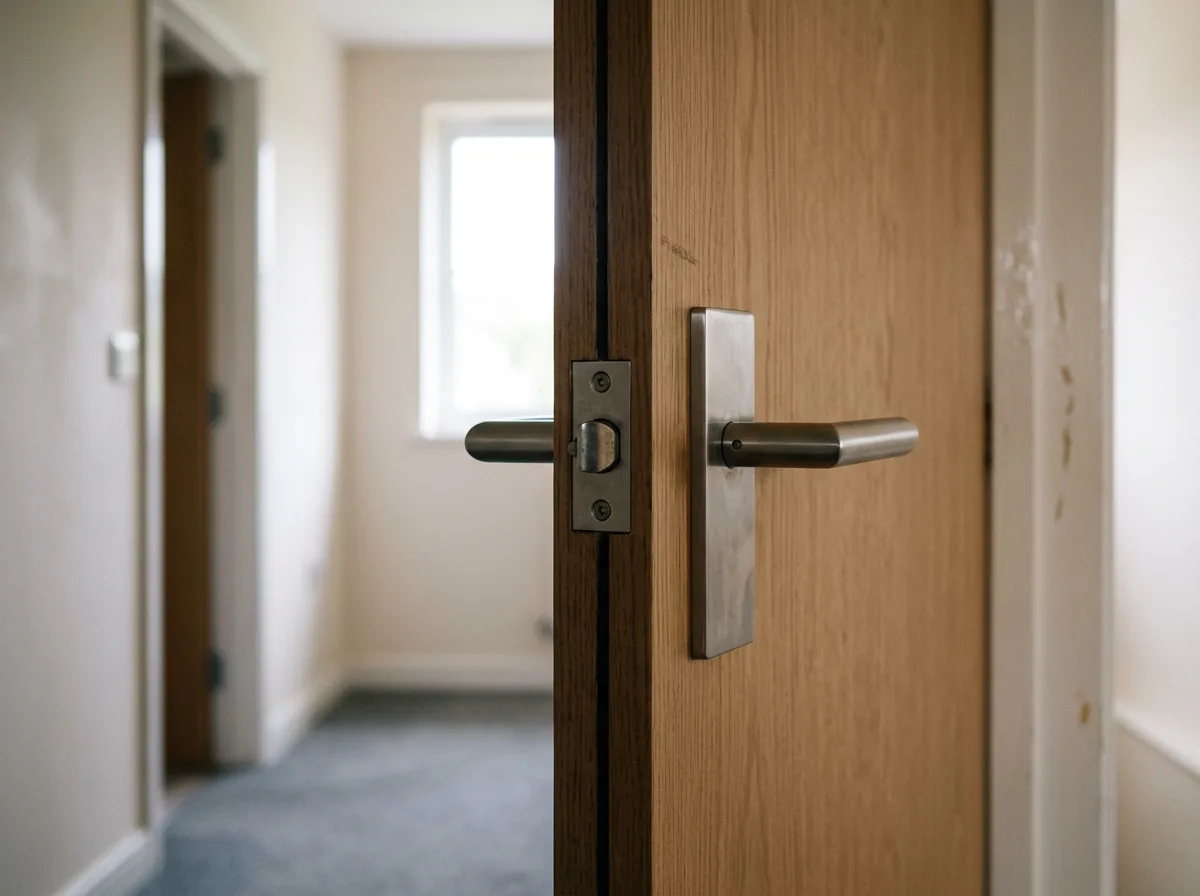
A closer look at the kind of selection, fitting and adjustment involved in getting a fire door self-closer right.
Specification
Materials & Approach
- A self-closing device selected specifically for compatibility with the door’s weight and certification
- An adjustable closer, so closing speed and final latching force can be tuned to the door once fitted
- Fixings and fixing positions following the manufacturer’s template and instructions, not estimated by eye
- Compliant signage fitted alongside the door where required by the property’s fire safety arrangements
- A full function check on completion — closing and latching confirmed from several opening positions
- No substitution of fixings, devices or positions outside what the manufacturer specifies for the door
Common Questions
Fire Door Self-Closers — Frequently Asked Questions
Why does a fire door need a self-closing device at all?
A fire door only does its job if it is actually closed when a fire breaks out. A self-closing device makes sure the door returns to its frame and latches automatically, every time, rather than relying on someone remembering to shut it. Without one, even a perfectly specified fire door offers very little protection if it is left propped open.
Can a self-closer be adjusted if it closes too hard or too gently?
Yes — the closing speed and the final latching force are both adjustable, usually via a small valve on the closer body. Too gentle and the door may not latch fully; too hard and it can bang, catch fingers, or wear the frame prematurely. Part of fitting a closer properly is taking the time to tune it so the door closes firmly and quietly, and latches every single time.
Do rental or landlord properties legally require a self-closing fire door?
Fire door and self-closer requirements depend on the type of property, its use, and current fire safety regulations, and these obligations can differ for rented accommodation, HMOs, and communal areas. We would always recommend checking current guidance or speaking to a fire safety professional for your specific situation — we can advise on the fitting itself, but the legal position for your property is worth confirming independently.
How often should a fire door self-closer be checked?
A quick functional check — does the door close fully and latch from a few different opening positions, without being pushed — is worth doing periodically, and is good practice as part of any routine fire safety check. If a closer starts closing more slowly, fails to latch, or feels loose at its fixings, it should be looked at and adjusted or re-fitted promptly rather than left.
Will a self-closer work with any fire door, or does it need to match?
The closer needs to be compatible with the door’s weight, size and certification — not just any closer fitted to any door. Part of our process is checking the door’s specification and selecting a device suited to it, then fitting and adjusting it so the door performs as intended.
Does fitting a self-closer damage or affect the fire door’s certification?
Fitting is carried out following the manufacturer’s instructions for both the door and the closer, using the correct fixings and positions, specifically so the installation does not compromise the door’s performance. We do not improvise fixings or positions outside what the manufacturer specifies.
How long does fitting a fire door closer take?
Fitting a self-closing device to an existing, correctly hung fire door is typically a straightforward half-day job, including final adjustment and testing. If the door itself also needs attention — hinges, intumescent strips, or the frame — we scope that as part of the same visit so everything is addressed together.
Do you offer any guarantee on fire door fitting work?
All our fitting work is covered by our standard workmanship guarantee, details of which are confirmed in writing with your quote. If a closer were ever to work loose or need re-adjustment under normal use, we would come back and put it right.
Related Projects
More Fire Doors & Door Joinery
An Elegant Internal Door, Hung to Perfection
An internal door hung true and square, with every hinge and gap set exactly as it should be.
A Precisely Levelled Internal Door Fit
The unglamorous but essential final step — checking and adjusting a hung door until it is perfectly level.
Fitting a Fire Door to FD30 Standard
A fire door fitted exactly to its manufacturer instructions, intumescent strips and all.
Get Started
Request a Free Quote for Your Fire Door
Need a Fire Door Fitted to Full Compliance?
Self-closer selection, fitting and adjustment, carried out to manufacturer instructions. Get a free quote or arrange a site visit.