Doors & Door Joinery
A Precisely Levelled Internal Door Fit
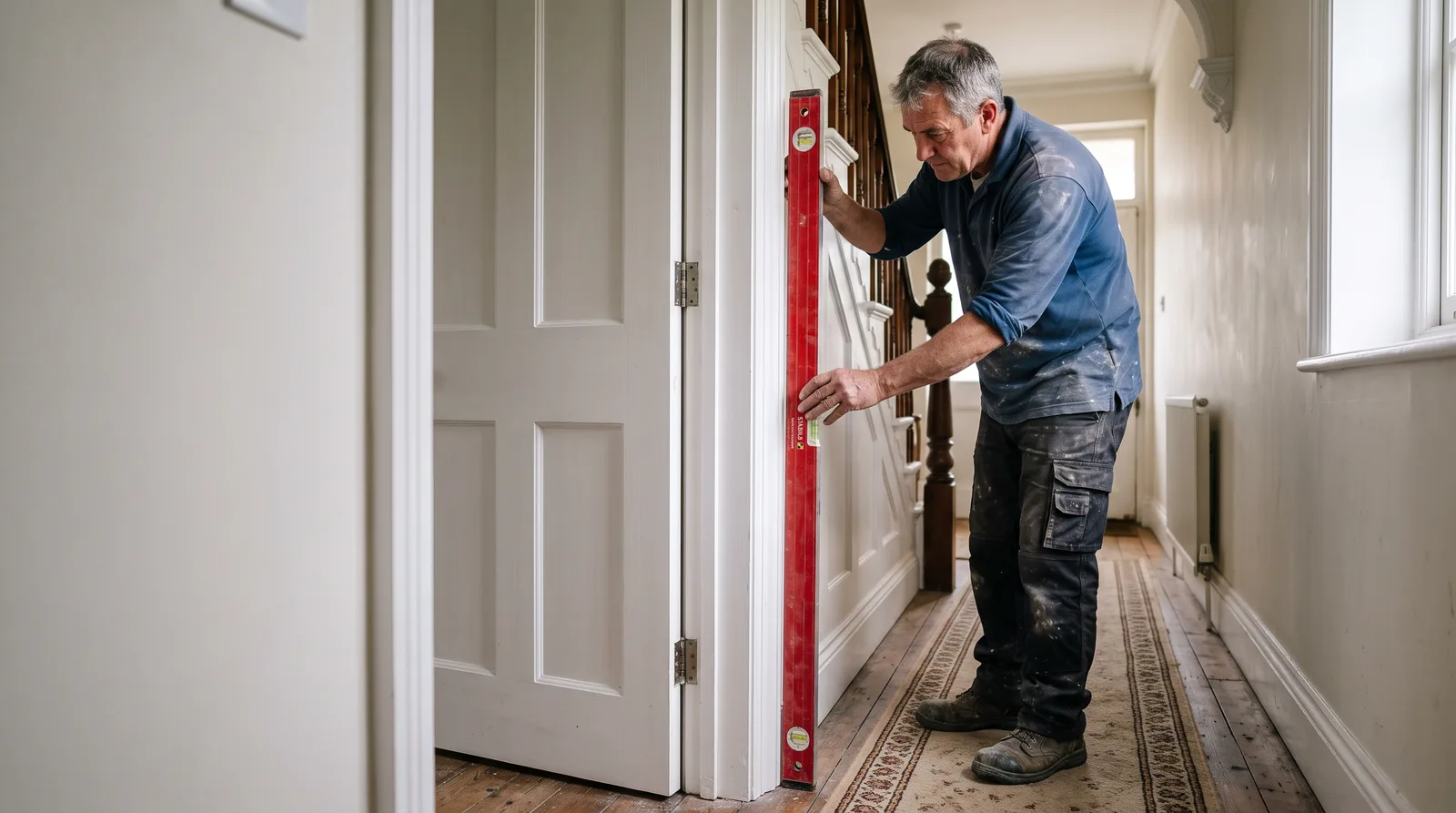
The unglamorous but essential final step in hanging any door well — checking plumb and level at every hinge until the swing is smooth and the gap is even all round.
Local to Berkshire
Experienced Carpenters
32 years in the trade
Fully Insured
High-Quality Finish
The Brief
The Difference Between Hung and Hung Well
This is the kind of door project we take on routinely across Berkshire: a perfectly good door, already hung, that simply has not been finished off with the care it deserves. Perhaps it swings shut under its own weight, perhaps it catches the carpet on one side and leaves a gap you could post a letter through on the other. The door itself is rarely the problem — it is the levelling and fine-adjustment that was never quite completed.
There is a particular, quiet satisfaction in getting this part right. A door that is truly level does not announce itself — it simply closes with a soft, even click, sits flush in its frame, and holds the same gap at every point around its edge. That exquisite ordinariness is the entire aim, and it is achieved through patient, incremental checking rather than any single dramatic fix.
It is also the step most commonly skipped by a less careful fit. A door can be hung roughly square and still swing closed without obvious complaint on the day it goes in, only to bind or drop within a few months as the building settles further. Taking the time to level and adjust properly at the outset — or to put right a door that was never quite finished — is what separates a door that feels right for years from one that is a recurring minor irritation.
This page illustrates the type and standard of door carpentry work we carry out — not a specific named address or client. Every project is scoped and quoted individually after a free site visit.
The Process
Checking, Shimming, and Fine-Tuning Until It Is Right
Gaps and levelling matter far more to how a door feels day to day than most people expect. A door that is a millimetre or two out of plumb at the top will, over time, either swing open on its own or swing shut and latch itself — neither of which is a fault of the door, but of the angle it has been left hanging at. An uneven gap around the edge is usually the first visible sign that something further up, at the hinge, is not quite true. Getting this right is less about the door and more about reading what the frame and the building are actually doing.
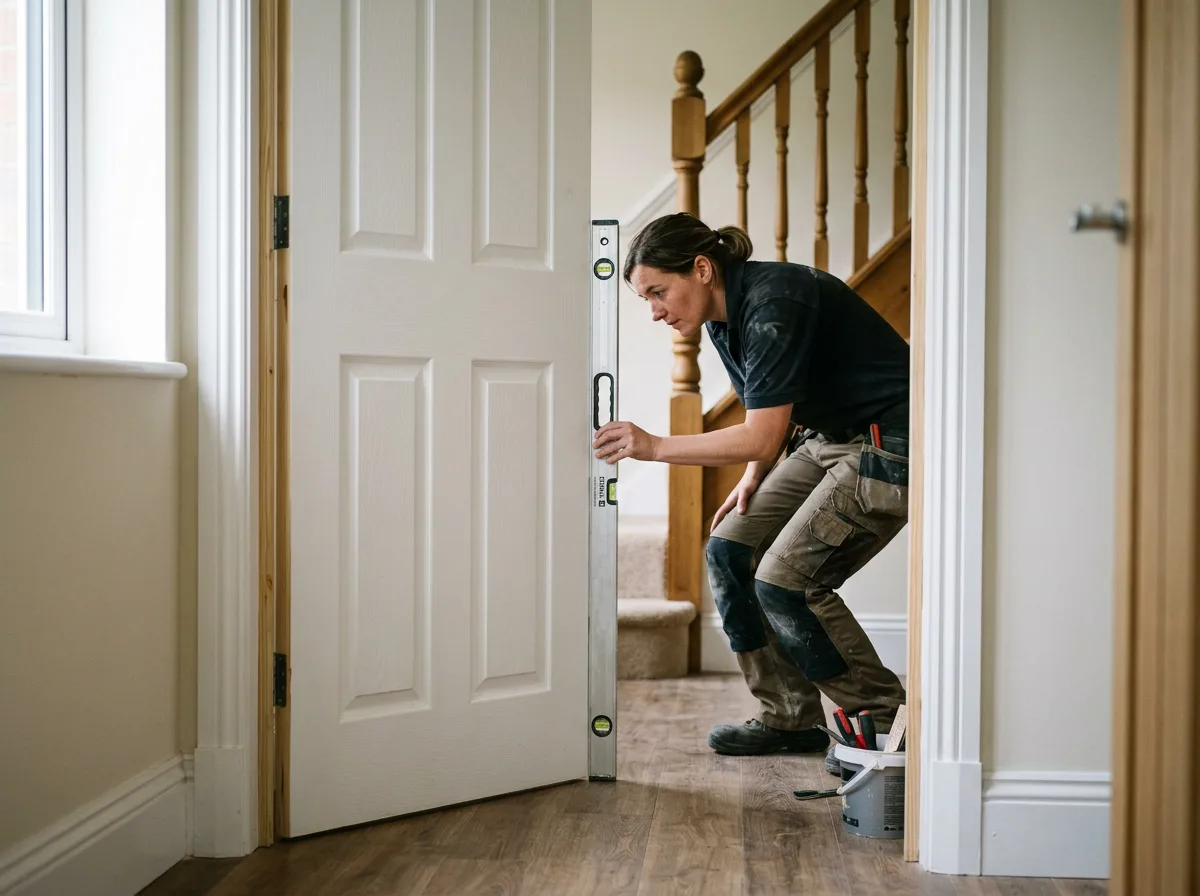
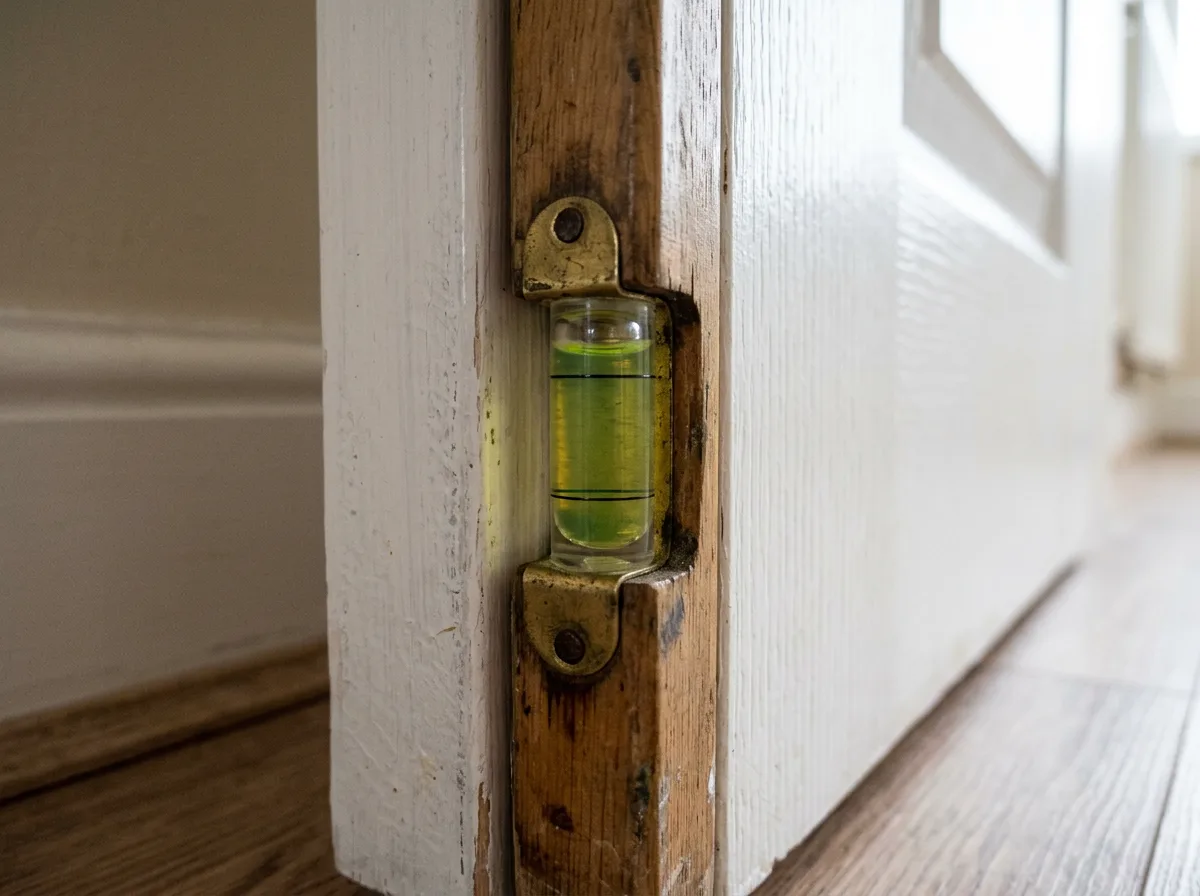
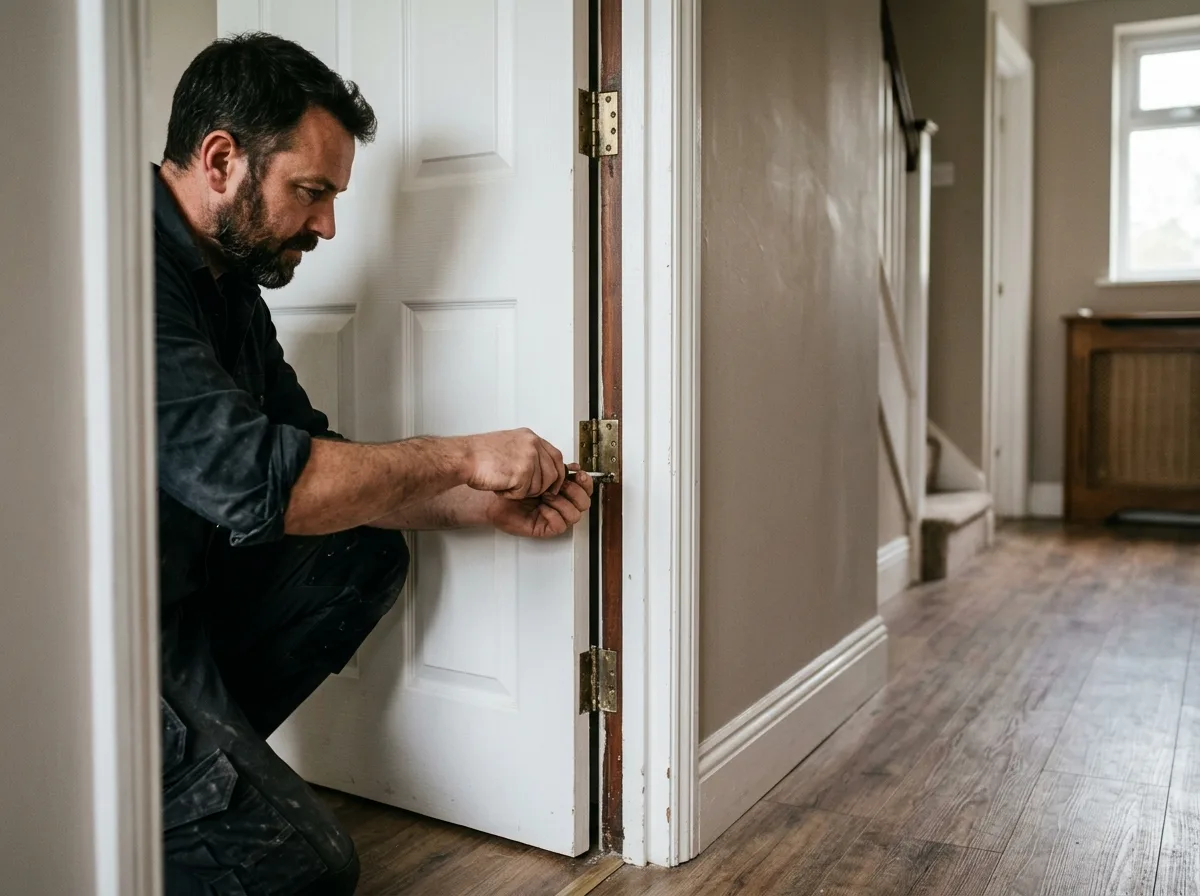
The check itself is methodical: a spirit level held against the leading edge of the door with it part-open, and again against the frame itself, at the top, middle, and bottom of each hinge. Any deviation from true plumb is noted at each hinge individually, because a door is very rarely out in only one place — a fix applied at the top hinge alone will often leave the bottom one still slightly wrong. The gap around the whole door is measured at several points as well, since a level door with an uneven gap usually means the frame itself has a slight twist in it that needs accounting for.
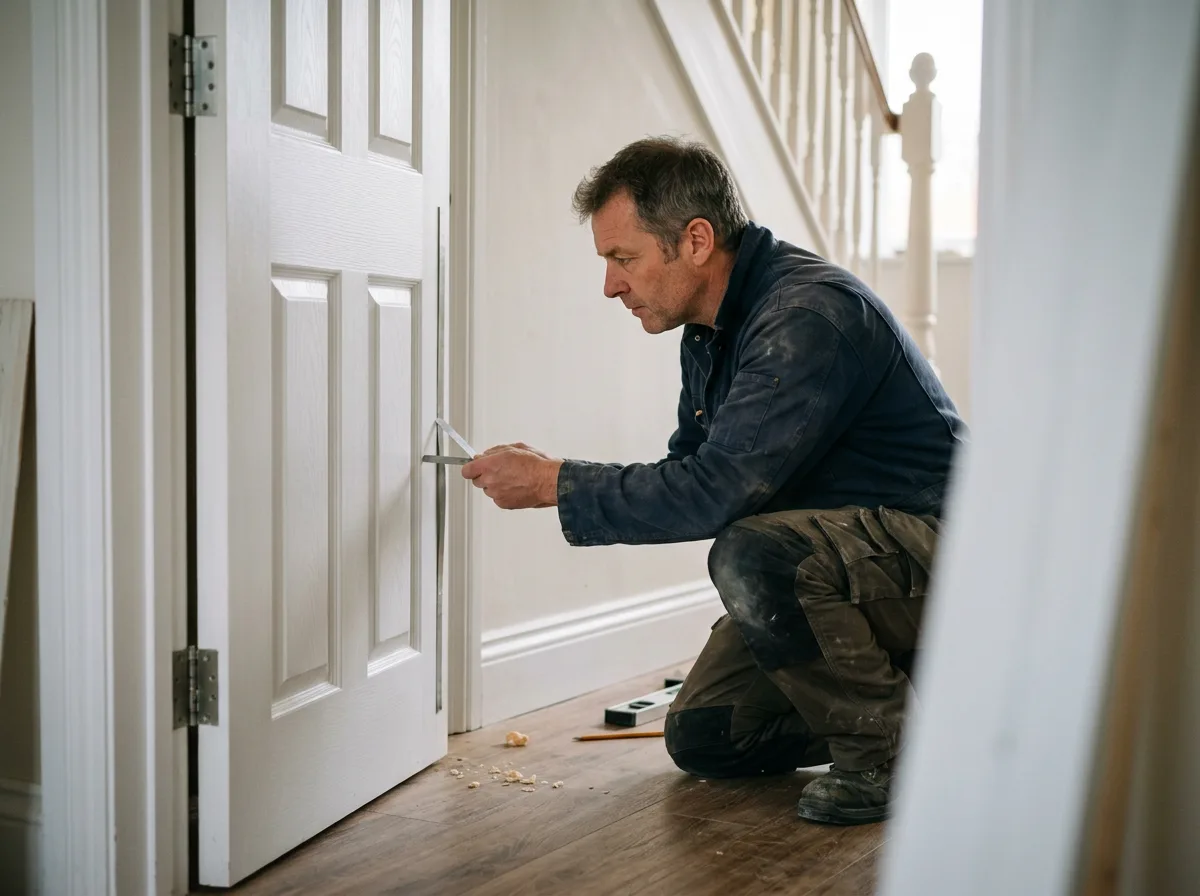
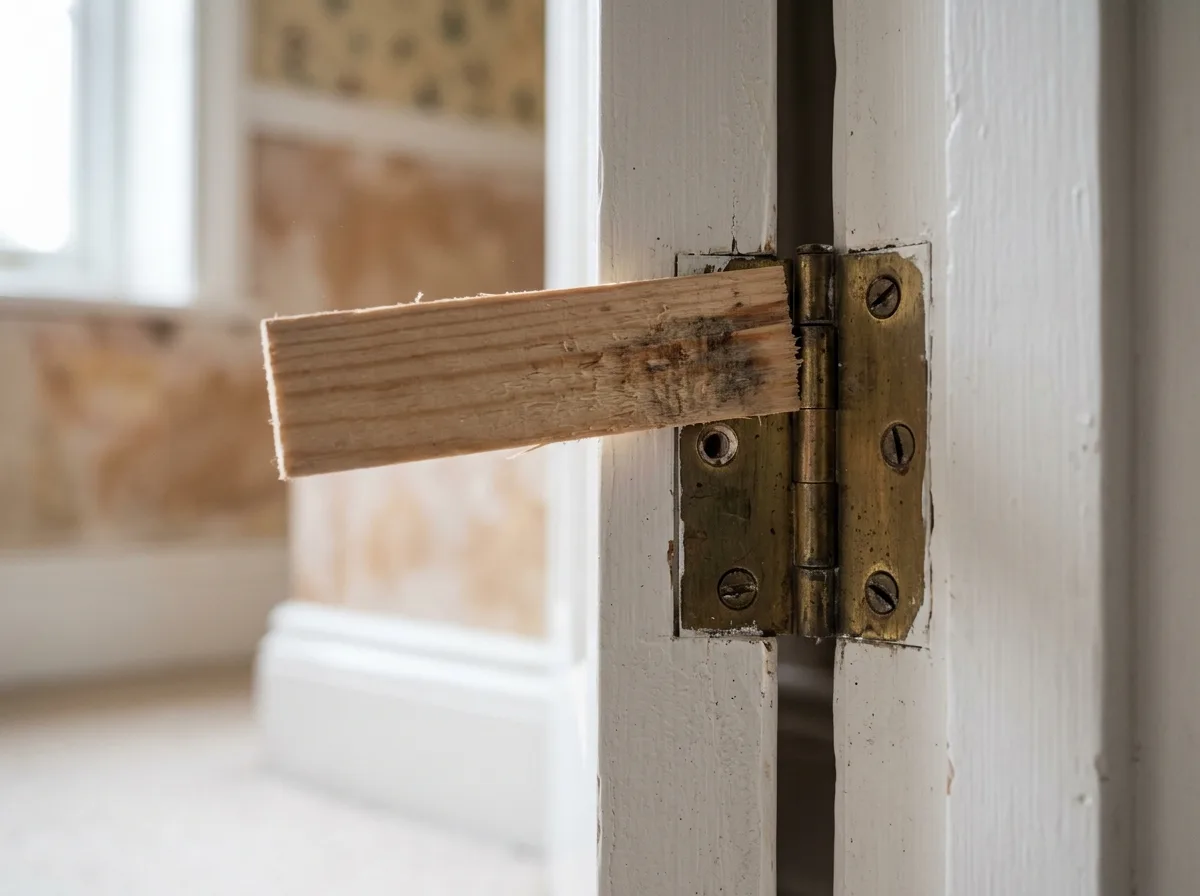
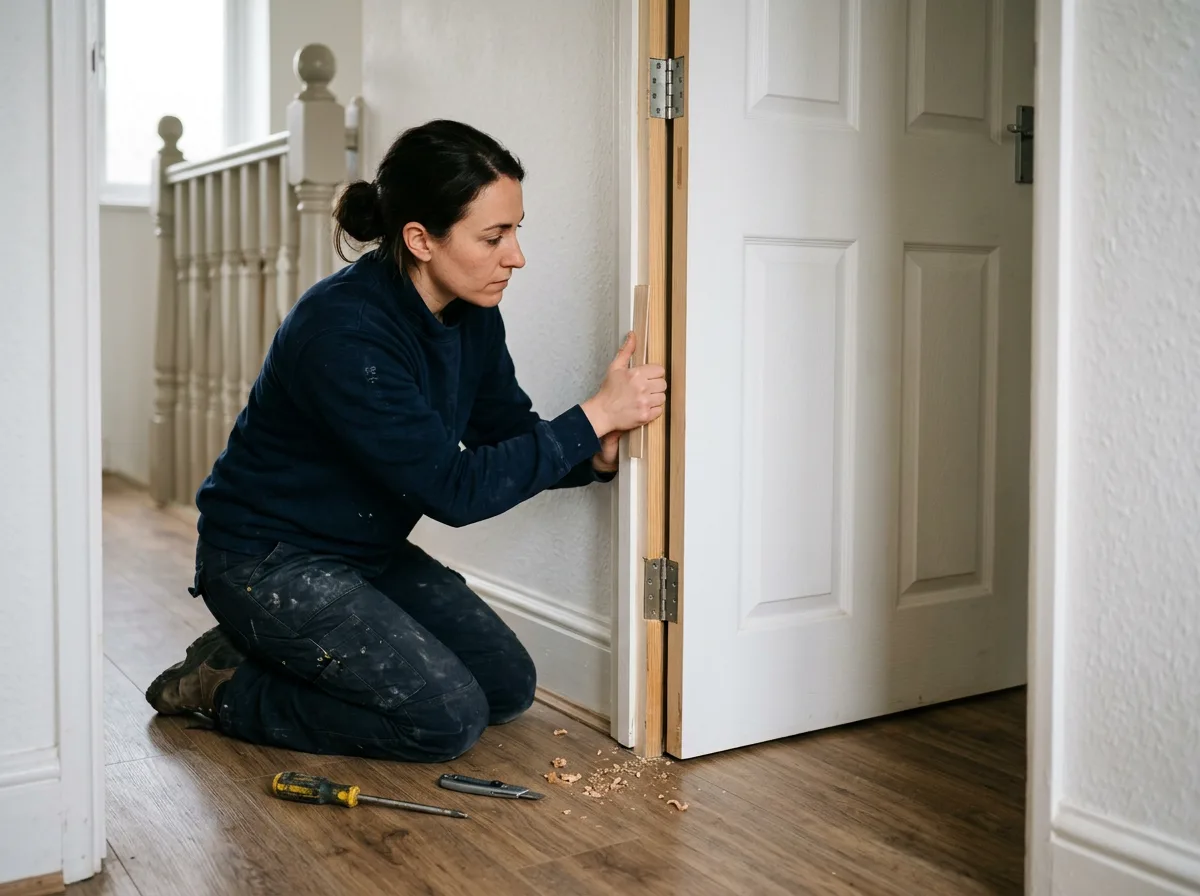
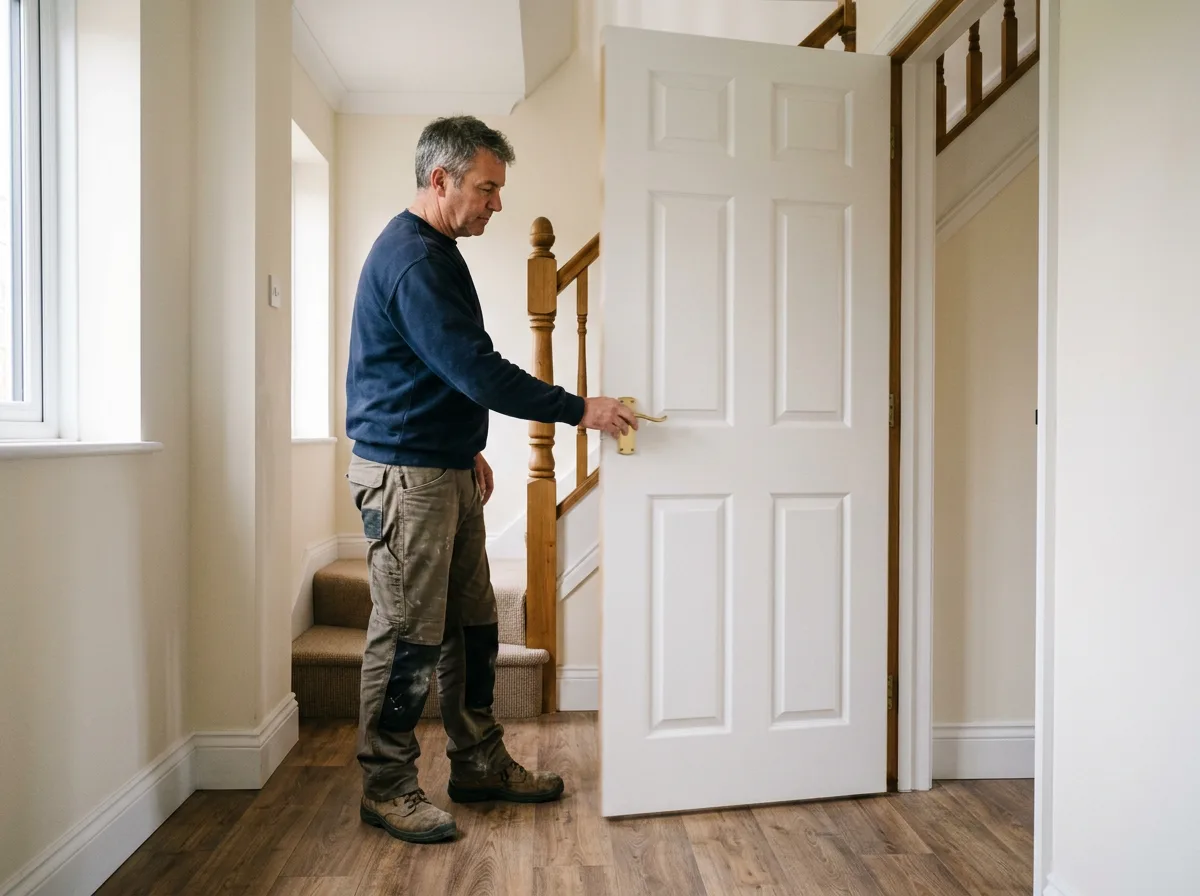
Correction comes next, and it is almost always small and incremental rather than a single bold adjustment. A hinge screw eased and the leaf re-seated, a thin timber shim packed in behind a hinge to correct a twist in the frame, a fraction of a turn at a time — each change is followed by swinging the door through its full arc to test the new action before the next adjustment is made. This continues, patiently, until the door closes smoothly under a gentle push from any angle, sits flush against the stops, and holds an even gap all the way round. Only then, with the levelling confirmed, is the latch and keep alignment checked and finished.
The Work, Step By Step
A Closer Look
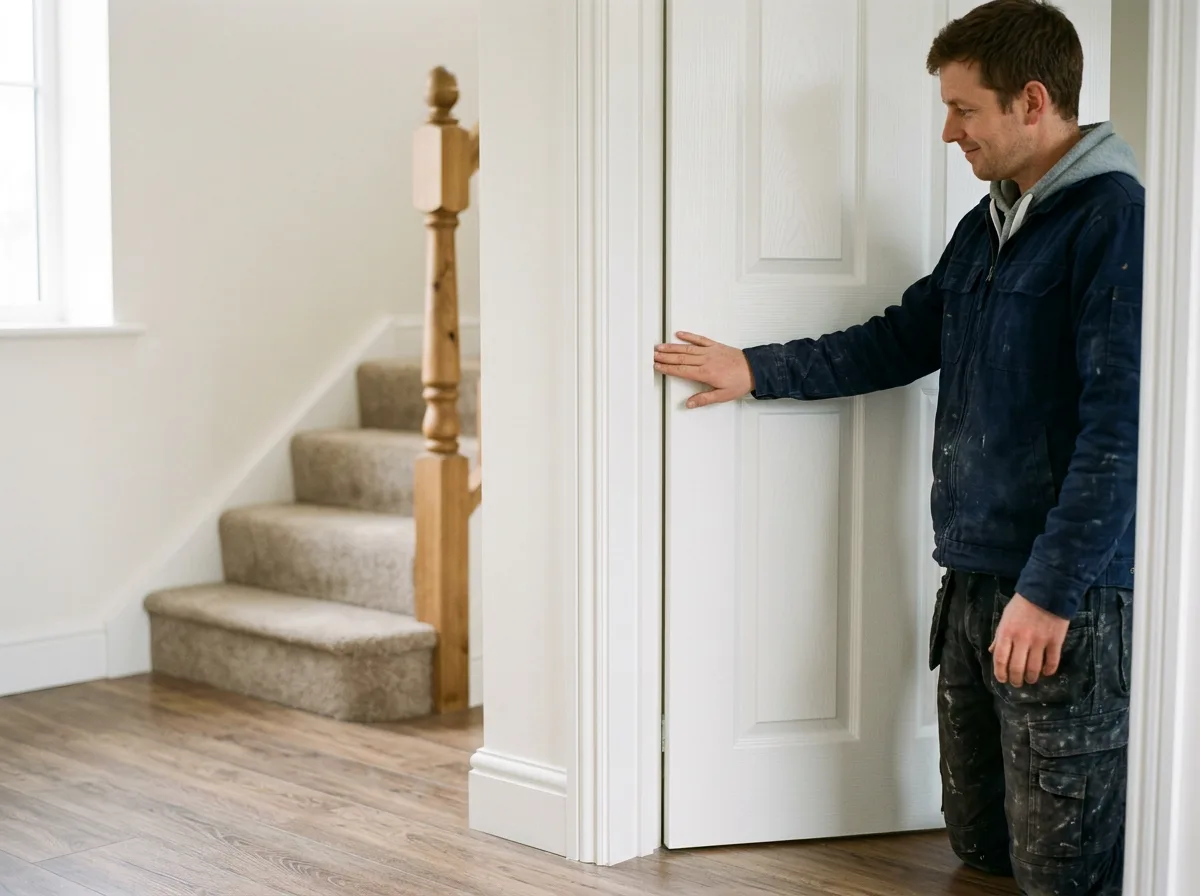
A closer look at the checking, shimming and fine-adjustment involved in levelling a door properly.
Specification
Materials & Approach
- An even perimeter gap of approximately 2-3mm at the top and sides, checked at multiple points rather than by eye alone
- Thin timber packing shims used behind hinge leaves to correct frame twist, rather than planing the door itself
- Hinge-leaf adjustment and re-seating as the primary levelling technique, preserving the original door and frame
- A precision spirit level used against both the door edge and the frame at each hinge position
- A full-arc swing test after every adjustment, confirming smooth action before moving to the next hinge
- Latch and keep alignment checked and re-set as the final step, once levelling is fully confirmed
Common Questions
Door Levelling — Frequently Asked Questions
Why does a door bind or stick after it has been hung?
Almost always because the frame or the door itself is slightly out of plumb, rather than any fault in the door. Timber frames move a little as a building settles, and even a new door fitted into an existing opening can pick up a tiny twist from the frame underneath it. The fix is rarely to plane the door down — it is to correct the alignment at the hinge first.
How is a door levelled without re-hanging it entirely?
In the large majority of cases, levelling is done at the hinges rather than by removing and re-cutting the door. Packing a hinge out very slightly with a thin shim, or easing a screw and re-seating the leaf, changes the angle the door hangs at by a precise, small amount — enough to correct a bind or an uneven gap without disturbing anything else.
What tools are actually used to level a door?
A good spirit level held against the door edge and the frame, a feeler gauge or simply a consistent household item to check gap width at several points, a screwdriver for hinge adjustment, and thin timber shims cut to size. None of it is exotic — the precision comes from checking methodically rather than any specialist tool.
How long does fine-adjustment and levelling take?
A single door that just needs a hinge adjustment and a gap check is typically a straightforward job of well under an hour once the carpenter is on site. A door that needs reworking at more than one hinge, or a frame that has moved more than expected, takes longer — we confirm a time estimate as part of the written quote.
What gap should there be around a correctly fitted door?
As a general guide, an even gap of around 2-3mm around the top and sides, and a slightly larger, consistent gap at the floor depending on flooring and threshold. What matters more than hitting an exact number is that the gap is even all the way round — an uneven gap is usually the visible symptom of a door that is not quite level.
Can an older door in an older house ever be made perfectly level?
Usually, yes, though "perfectly level" sometimes means levelling the door to sit well within a frame that is itself slightly out of true, rather than fighting a building that has settled over decades. We aim for a door that closes smoothly, sits flush, and holds an even gap — the practical definition of level in a period property.
Will levelling the door affect the lock or latch alignment?
It can, which is exactly why latch and keep alignment is checked again once the door is level, not before. A hinge adjustment of even a couple of millimetres can shift where the latch meets the keep, so this is checked and, if needed, the keep is re-set as the final part of the job.
Do you offer a guarantee on door hanging and levelling work?
Yes — all our door hanging and adjustment work is covered by our standard workmanship guarantee, confirmed in writing with your quote. If a door were ever to drop or bind again under normal use within that period, we would come back and put it right.
Related Projects
More Doors & Door Joinery
An Elegant Internal Door, Hung to Perfection
An internal door hung true and square, with every hinge and gap set exactly as it should be.
Fitting a Fire Door to FD30 Standard
A fire door fitted exactly to its manufacturer instructions, intumescent strips and all.
Beautiful Door Ironmongery, Fitted with Precision
Hinges, latches and handles selected and fitted with the same care as the door itself.
Get Started
Request a Free Quote for Your Doors
Got a Door That Binds, Drops, or Never Quite Closed Right?
Levelling and fine-adjustment is usually a quick, precise fix. Get a free quote or arrange a site visit.