Doors & Door Joinery
Beautiful Door Ironmongery, Fitted with Precision
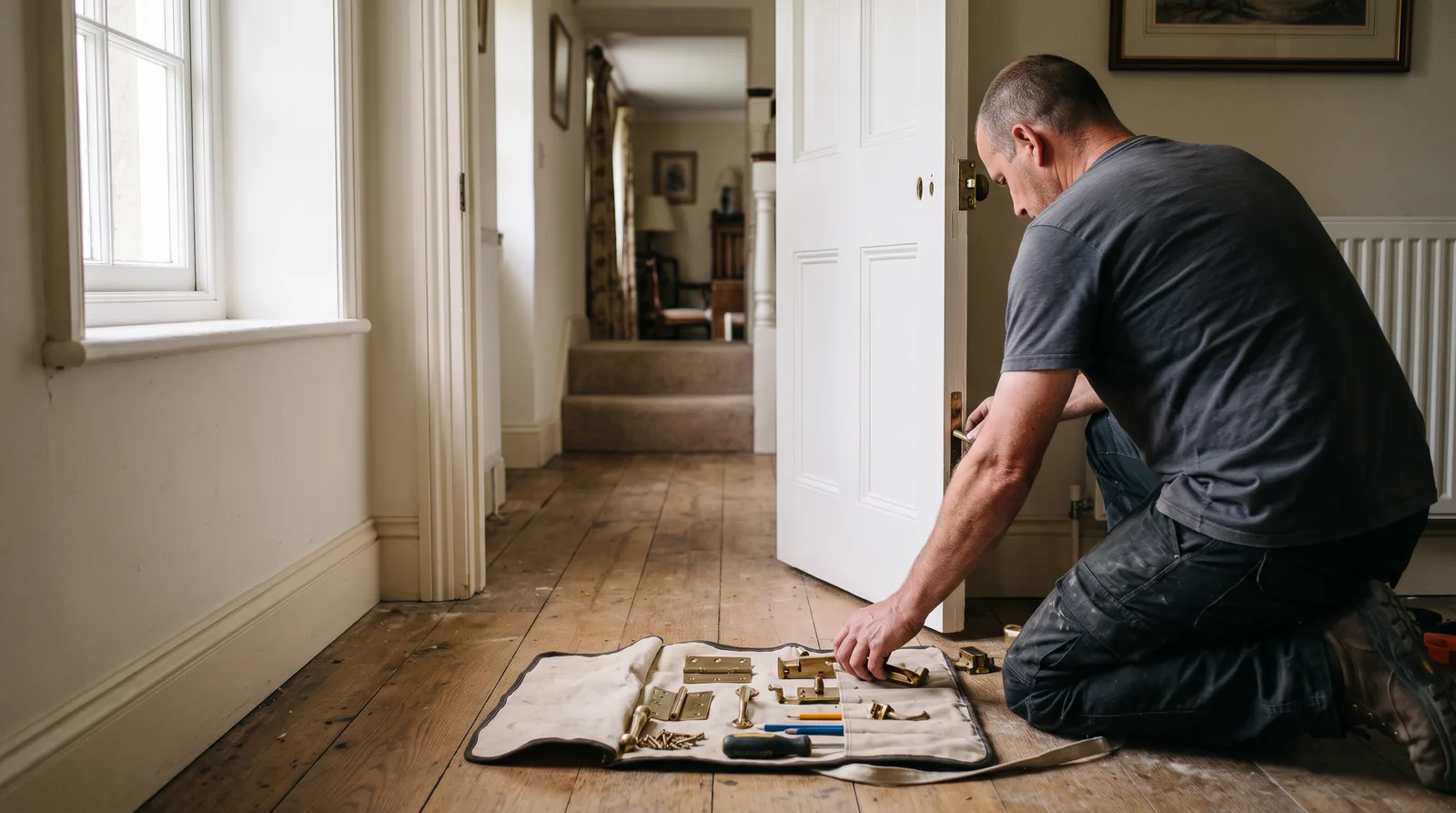
Hinges, latches and handles are the last thing a hand touches on a door — chosen and fitted with the same care as the carpentry beneath them, they turn a plain door into a genuinely beautiful one.
Local to Berkshire
Experienced Carpenters
32 years in the trade
Fully Insured
High-Quality Finish
The Brief
The Finishing Detail That Makes a Door
This is the kind of door ironmongery project we take on regularly across Berkshire: a perfectly sound internal door, well hung and well painted, let down only by ironmongery that is mismatched, worn, or simply the wrong style for the room it sits in. It is a small specification in terms of cost, but it is the single detail a hand actually touches every time the door is used — which makes it worth getting elegantly, precisely right.
The chic part of this work lies in restraint as much as selection. A handle, latch and set of hinges chosen to suit the door's age and the room's character, fitted dead square and operating smoothly, reads as though it was always meant to be there. The alternative — a beautiful door undone by a handle that rattles or a hinge that was never quite set true — is far more common than it should be, and entirely avoidable with the right approach.
Whether it is a single front door or a full run of doors through a hallway and landing, the brief is the same: select ironmongery that suits the house, then fit it with a precision that matches the quality of the hardware itself.
This page illustrates the type and standard of door carpentry work we carry out — not a specific named address or client. Every project is scoped and quoted individually after a free site visit.
The Process
From Selection to Smooth Operation
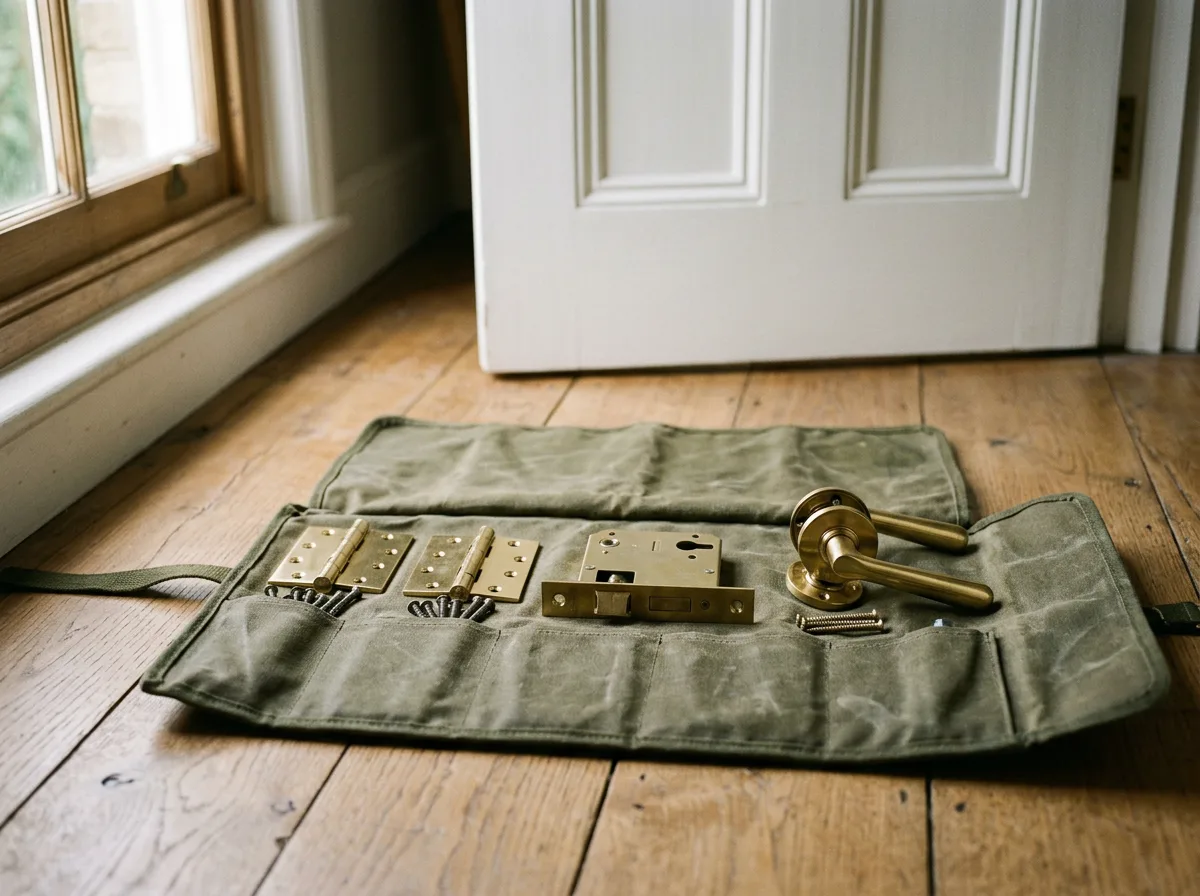
Selection comes first. Ironmongery is chosen to suit both the door and the room it serves — a reeded brass knob and narrow latch for a period door, a sleek matt black lever for a contemporary interior, a privacy function for a bathroom rather than a plain latch. Hinge sizing is matched to the weight and thickness of the door itself, with a third hinge specified for anything heavier than a standard internal door, and a single backset measurement agreed up front so every door in the property reads as one consistent scheme rather than a mismatched collection.
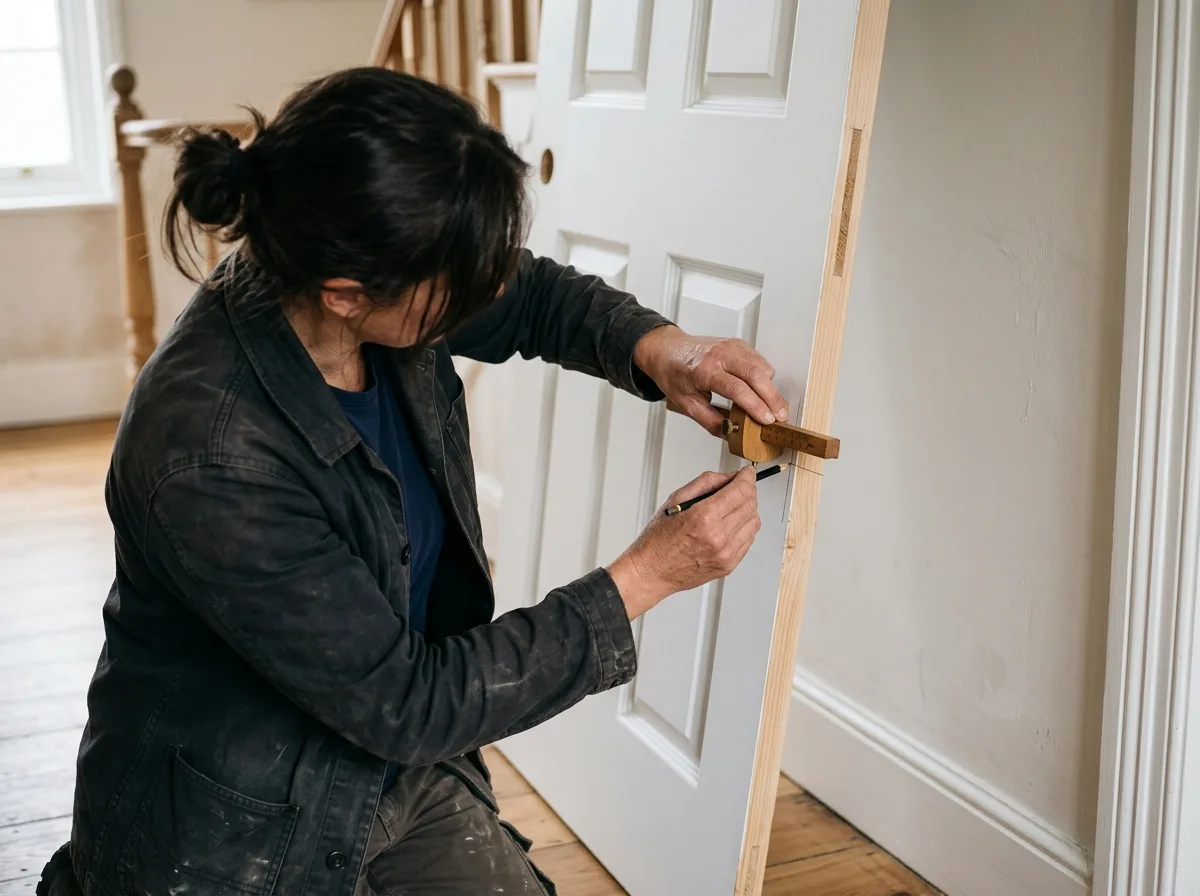
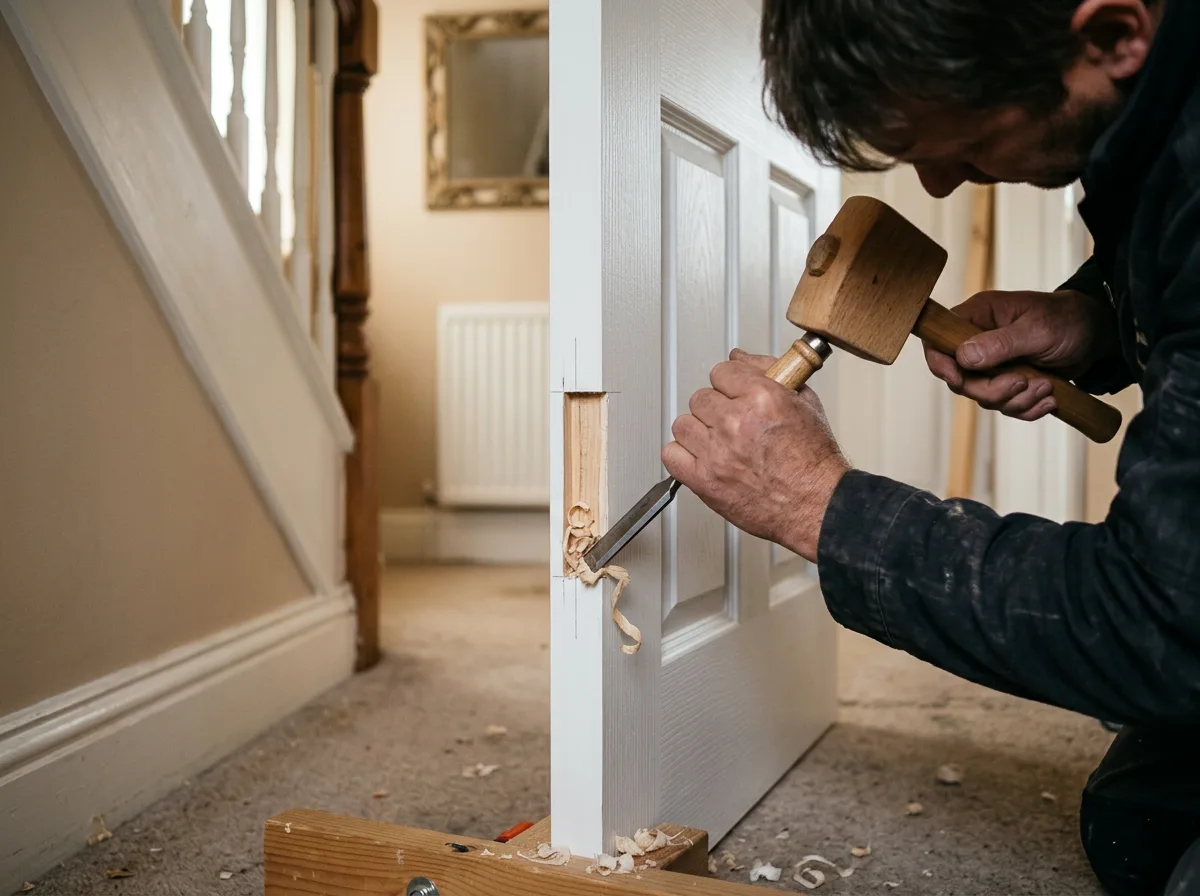
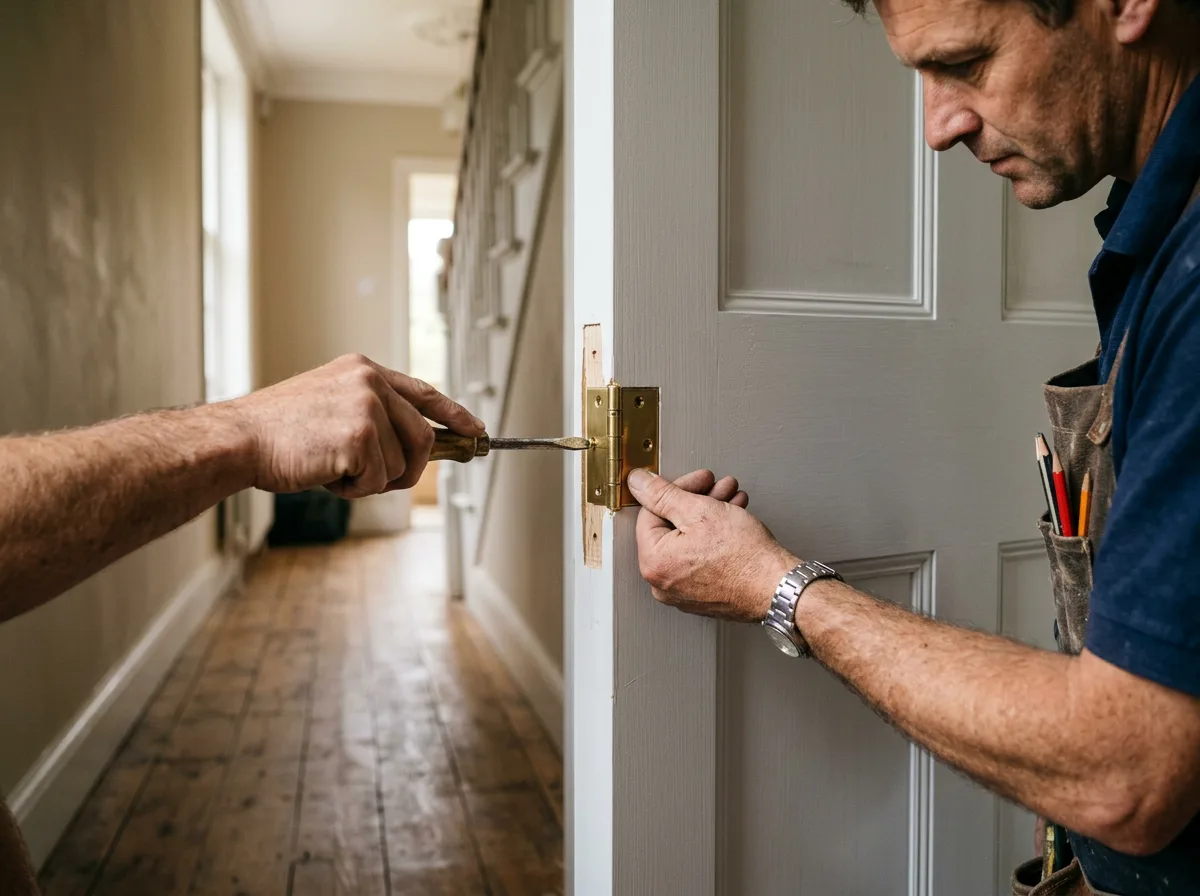
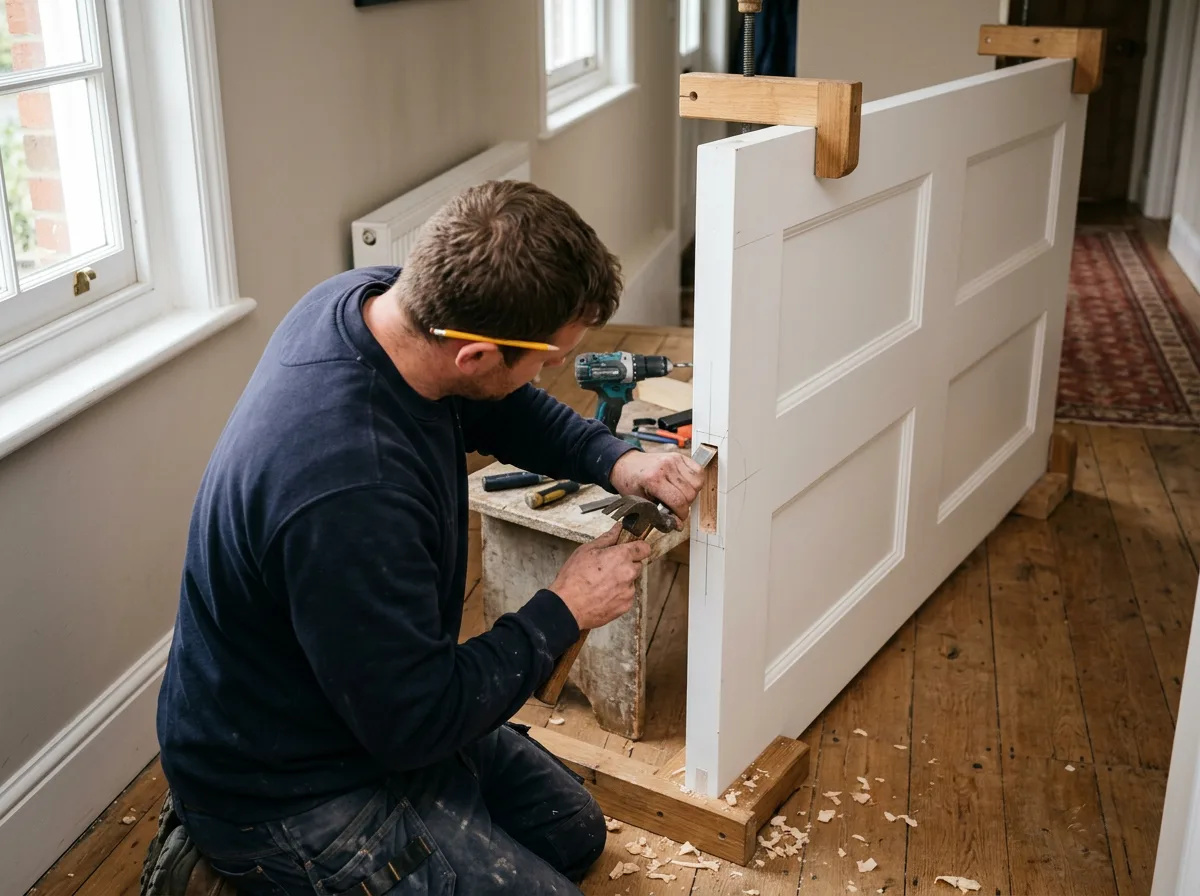
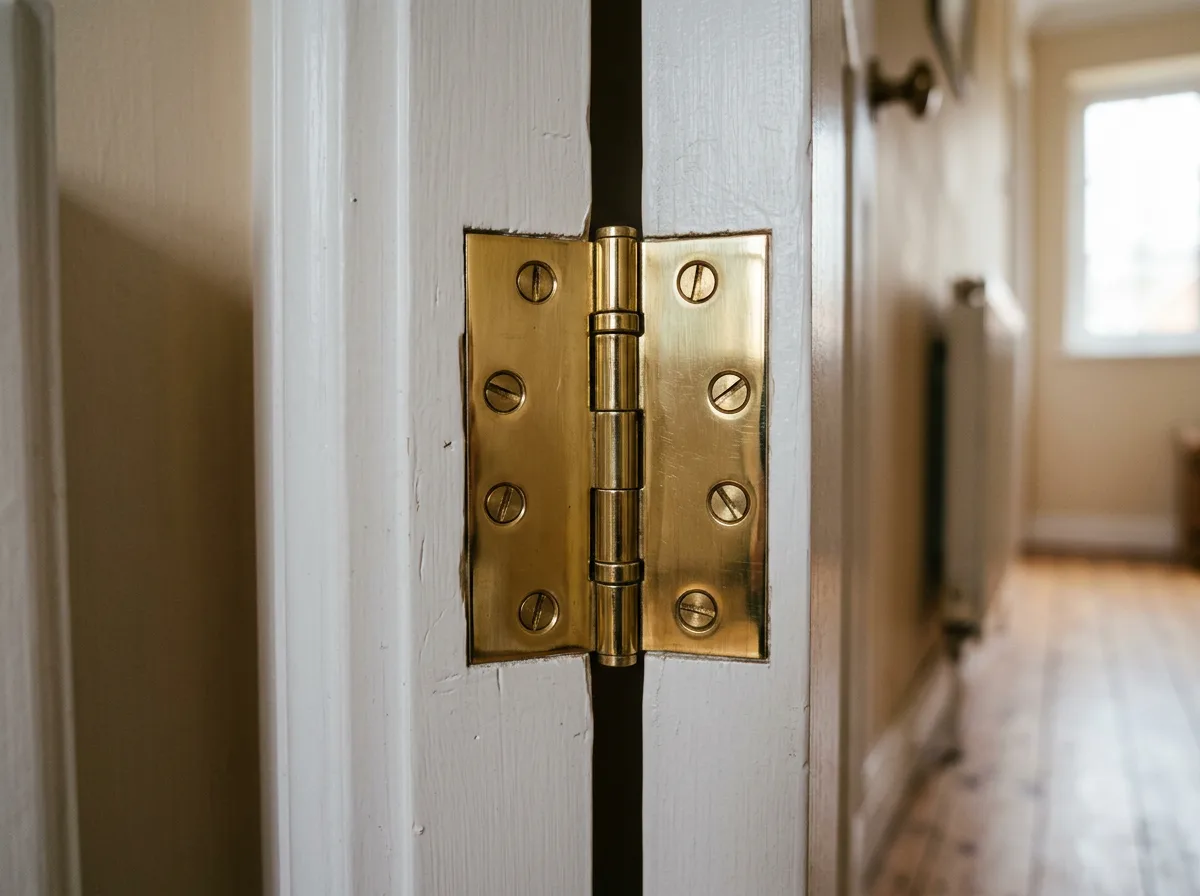
Marking and morticing is where the precision actually happens. Hinge positions are marked down the door edge with a gauge, not eyeballed, and each recess is chiselled by hand to the exact depth of the hinge leaf so it sits flush rather than proud or sunk. The latch body is marked and morticed into the door edge with the same care, aligned exactly with the handle spindle hole on the face, so that everything meets in the middle without packing or forcing.
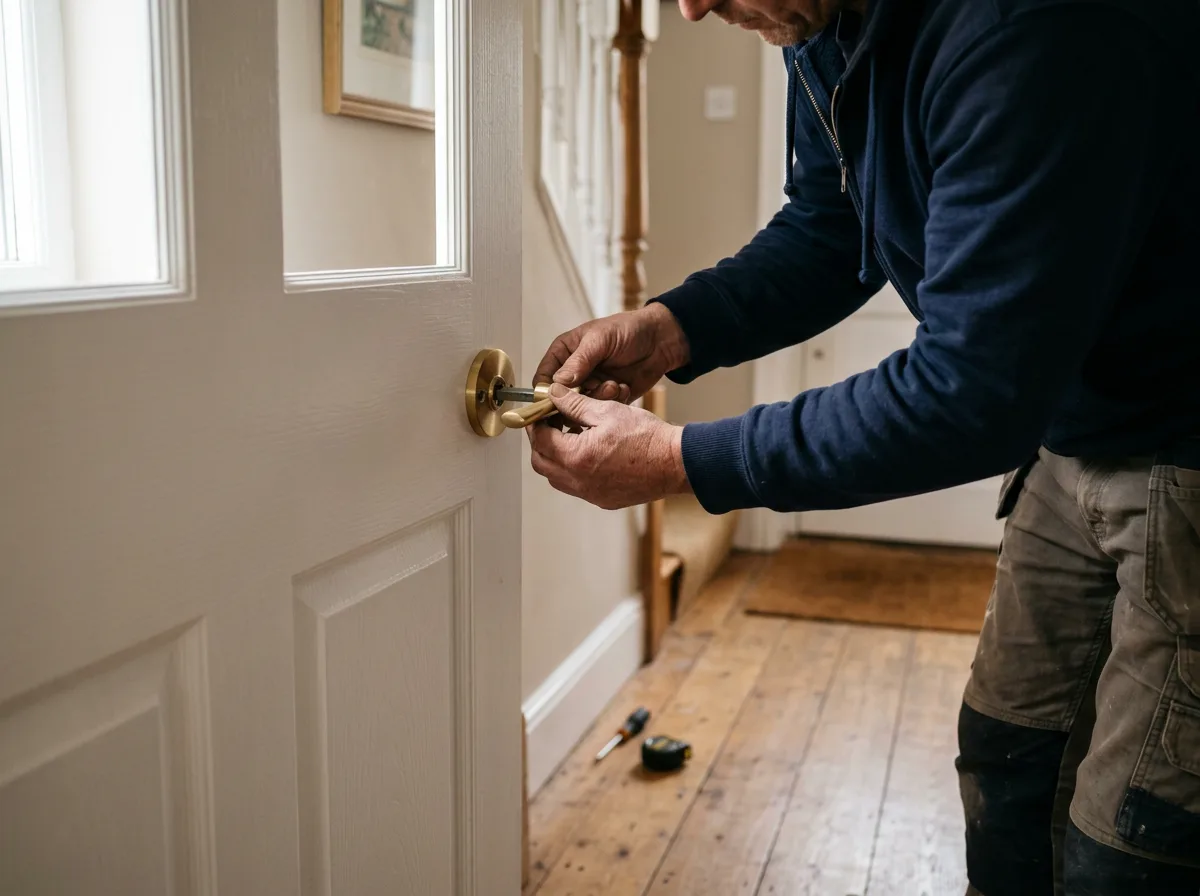
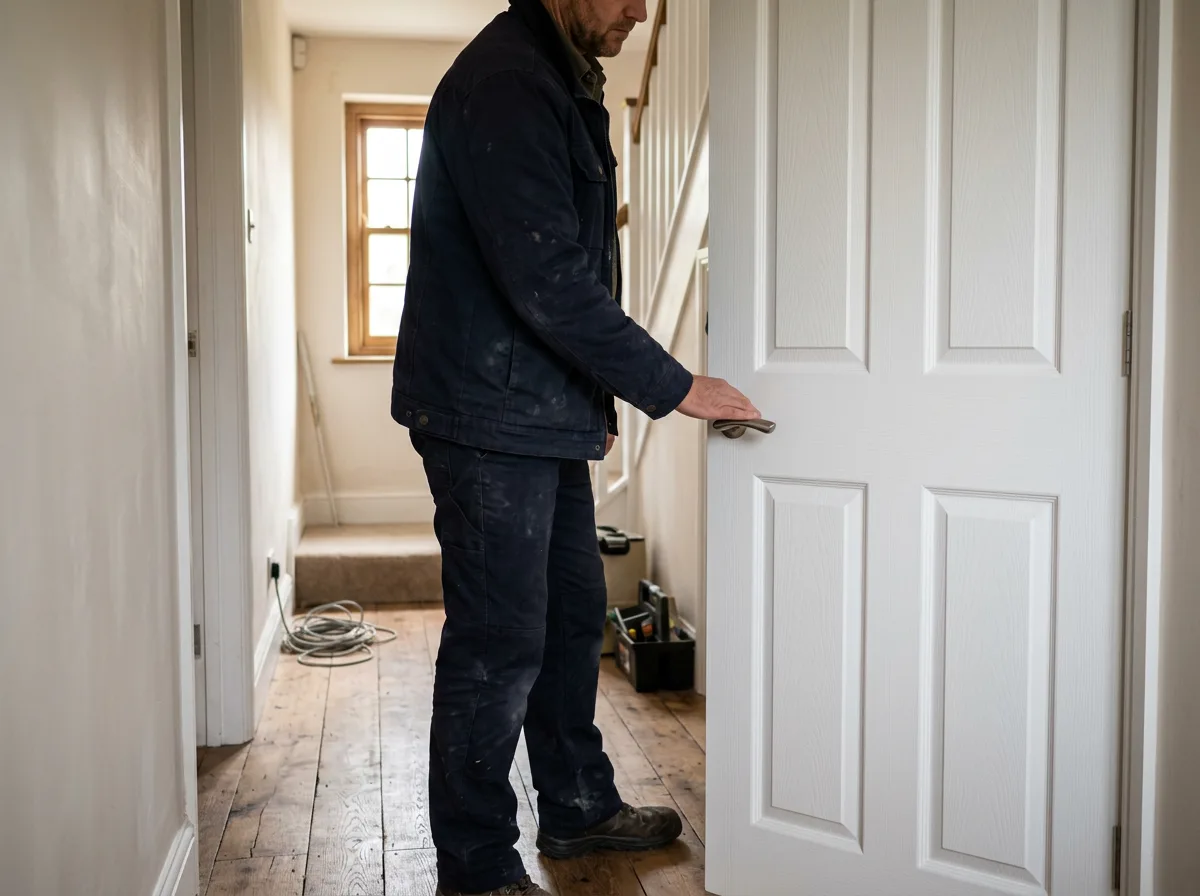
Fitting the handles is the final stage, and the one most easily rushed if care is not taken: roses aligned on both faces, spindle length correct for the door thickness, and every screw seated square. Before the job is called finished, the door is swung and the latch operated repeatedly, checking for any drag, rattle or stiffness — a handle that looks beautiful but catches on the strike plate is not a finished job.
The Work, Step By Step
A Closer Look
A closer look at the selection and fitting involved in getting door ironmongery genuinely right.
Specification
Materials & Approach
- Finish options to suit the house and room — polished brass, satin brass, chrome, satin chrome, or matt black
- Latch function for standard internal doors, privacy function for bathrooms and WCs, and lock function where key access is genuinely needed
- Hinge sizing and quantity matched to door weight and thickness, with an additional hinge specified for heavier doors
- A single backset measurement agreed and applied consistently across every door in a property-wide refit
- Screws and fixings finished to match the visible ironmongery, rather than left mismatched or on show
- No invented pricing or supplier names here — exact specification and cost are confirmed as part of a free, written quote
Common Questions
Door Ironmongery — Frequently Asked Questions
Can ironmongery be swapped without replacing the door itself?
In almost every case, yes. Hinges, latches and handles are fitted to the door and frame rather than being part of the door's structure, so a tired or mismatched set can usually be removed and replaced without touching the door itself. The main exception is where an existing mortice has been cut to a non-standard size or in a non-standard position — we check this on site before quoting, rather than assuming it will be a straightforward swap.
How do you match ironmongery across a whole house?
We work from a single specification — one finish, one handle style, one backset measurement — and apply it consistently to every door in the property, rather than fitting room by room. This is particularly worthwhile where doors are visible from the same hallway or landing, so the eye reads the whole run as one considered scheme rather than a series of individual choices.
What finishes wear best over time?
Satin and matt finishes — satin brass, satin chrome, matt black — tend to hide fingerprints and light scuffs better day to day than a high-polish finish, which shows every mark until it develops its own patina. Solid brass and stainless steel also wear more gracefully than plated finishes, which can show through to a different base metal at high-contact points after many years of use.
Can you match period-style ironmongery to an older house?
Yes — this is a large part of the appeal of the work. Reeded or beehive knobs, traditional escutcheons, and narrower backset latches all read correctly on a Victorian or Georgian door in a way that a contemporary lever handle simply does not. We select ironmongery to suit the age and character of the door and the house, not just whatever is easiest to fit.
What is the difference between a latch and a lock function?
A latch holds a door closed without keeping it locked — the standard choice for most internal doors. A lock function adds a key-operated bolt, typically specified for a home office, a store cupboard, or an external door. Bathroom and WC doors usually take a privacy function instead, which locks from the inside only and can be released from the outside in an emergency.
Do the hinges need to match the handles?
Not strictly, but it reads far better when they do. A brass handle against chrome or black hinges tends to look like an oversight rather than a choice, so we specify hinges in the same finish as the handles and latch plates as standard, and only mix finishes deliberately where that is genuinely the intended look.
How long does fitting ironmongery to a door take?
A single door with new hinges, a latch and a handle set is typically a half-day job once the ironmongery is on site. A whole-house refit across a dozen or more doors is usually a day or two, depending on how much of the existing hardware and mortices can be reused. We confirm a realistic time estimate as part of the written quote.
Do you offer a guarantee on ironmongery fitting?
Yes — all our door ironmongery fitting is covered by our standard workmanship guarantee, confirmed in writing with your quote. If a hinge, latch or handle were ever to work loose or operate stiffly as a result of our fitting, we would come back and put it right.
Related Projects
More Doors & Door Joinery
An Elegant Internal Door, Hung to Perfection
An internal door hung true and square, with every hinge and gap set exactly as it should be.
A Precisely Levelled Internal Door Fit
The unglamorous but essential final step — checking and adjusting a hung door until it is perfectly level.
Fitting a Fire Door to FD30 Standard
A fire door fitted exactly to its manufacturer instructions, intumescent strips and all.
Get Started
Request a Free Quote for Your Doors
Ready for Ironmongery That Matches the Door?
Hinges, latches and handles chosen and fitted with real precision — for a single door or a whole house. Get a free quote or arrange a site visit.