Doors & Door Joinery — Fire Doors
Fitting a Fire Door to FD30 Standard
A certified fire door, fitted exactly to its manufacturer instructions — intumescent strips, certified hinges and a compliant self-closing device, all correctly specified and checked.

Local to Berkshire
Experienced Carpenters
32 years in the trade
Fully Insured
High-Quality Finish
The Brief
A Door That Has to Perform, Not Just Fit
This is the kind of fire door fitting project we take on regularly across Berkshire: an opening — often a flat entrance door, a door onto an integral garage, or a door protecting an escape route within a house — that needs a genuine FD30-rated fire door, fitted correctly as a complete certified assembly rather than treated as a standard internal door with a few extra parts bolted on.
The precision in this kind of work lies entirely in the detail. A fire door only performs to its rating if every component in the assembly — the door leaf, the frame, the intumescent and cold smoke seals, the hinges, and the self-closing device — is correctly specified, matched, and fitted to the manufacturer's certified instructions. Get any one element wrong and the door may look right while no longer being the rated assembly it was certified as.
That is why we approach every fire door job methodically: confirming certification before fitting starts, following manufacturer instructions on seal depth and hinge specification rather than approximating, and finishing with a proper check of gaps and closing action rather than simply hanging the door and moving on.
This page illustrates the type and standard of fire door fitting work we carry out — not a specific named address or client. Every project is scoped and quoted individually after a free site visit.
The Process
From Certified Set to Compliant, Working Door
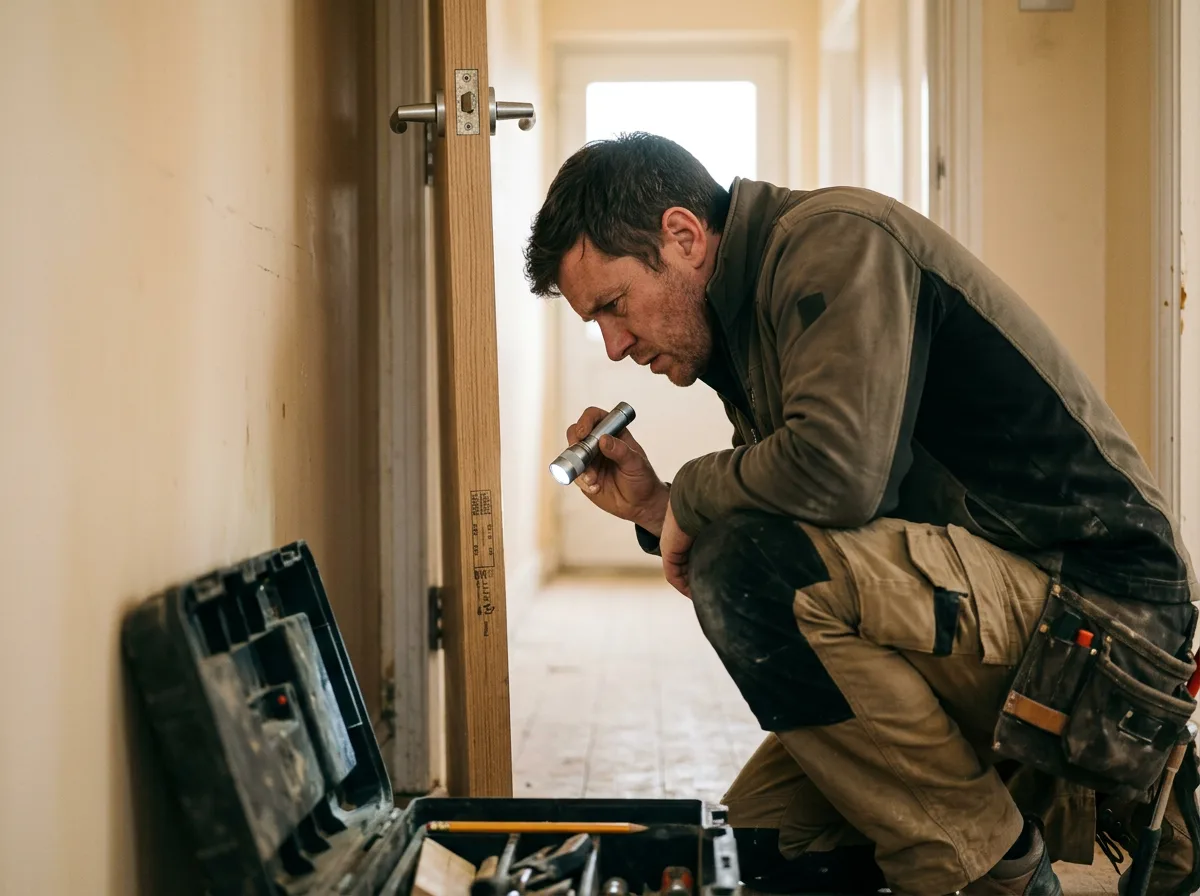
Every job starts with a check, not a tape measure. Before anything is cut or fitted, we confirm that the door leaf and frame are a certified, matched fire-rated set — checking the manufacturer's labelling and paperwork rather than assuming a door that looks right is rated right. A fire door is only as good as the complete assembly it was tested as, so this step is never skipped, whether we are supplying the door or fitting one the customer has already bought.
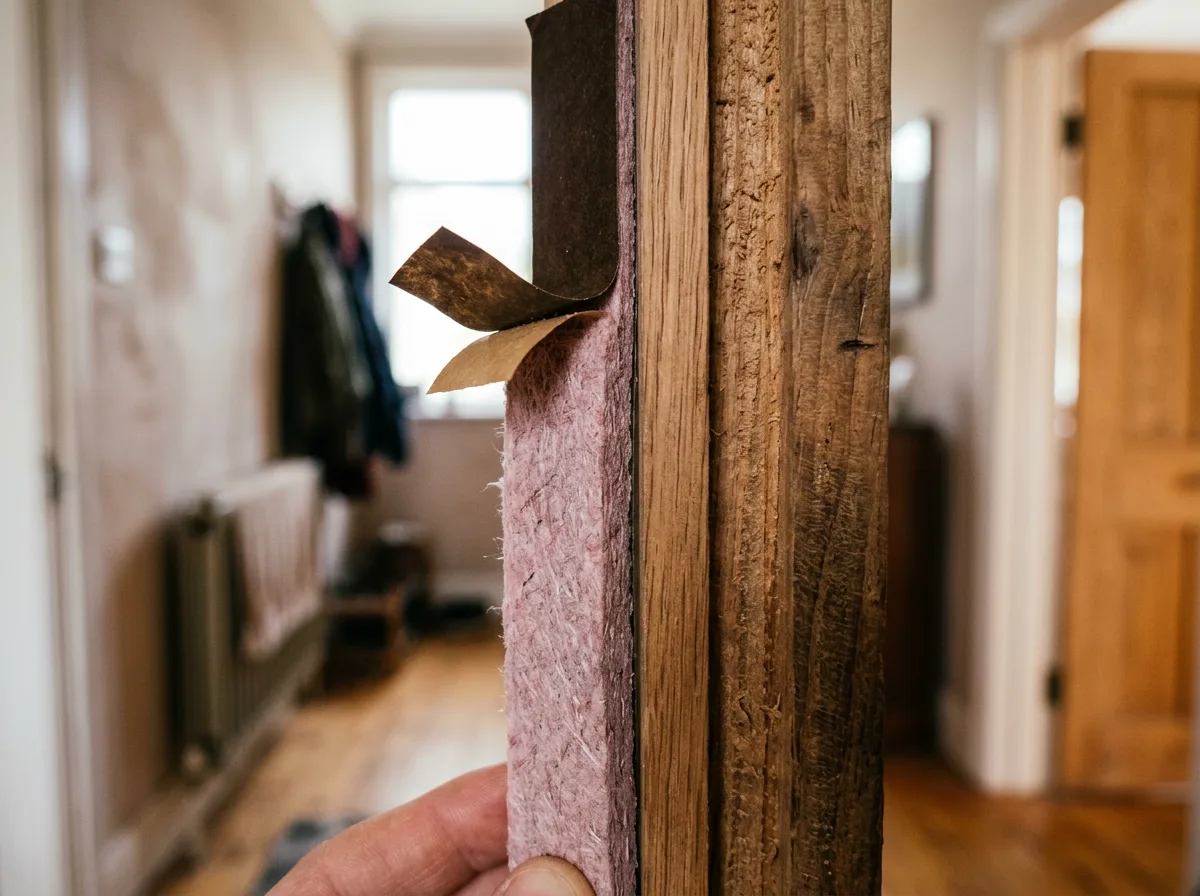
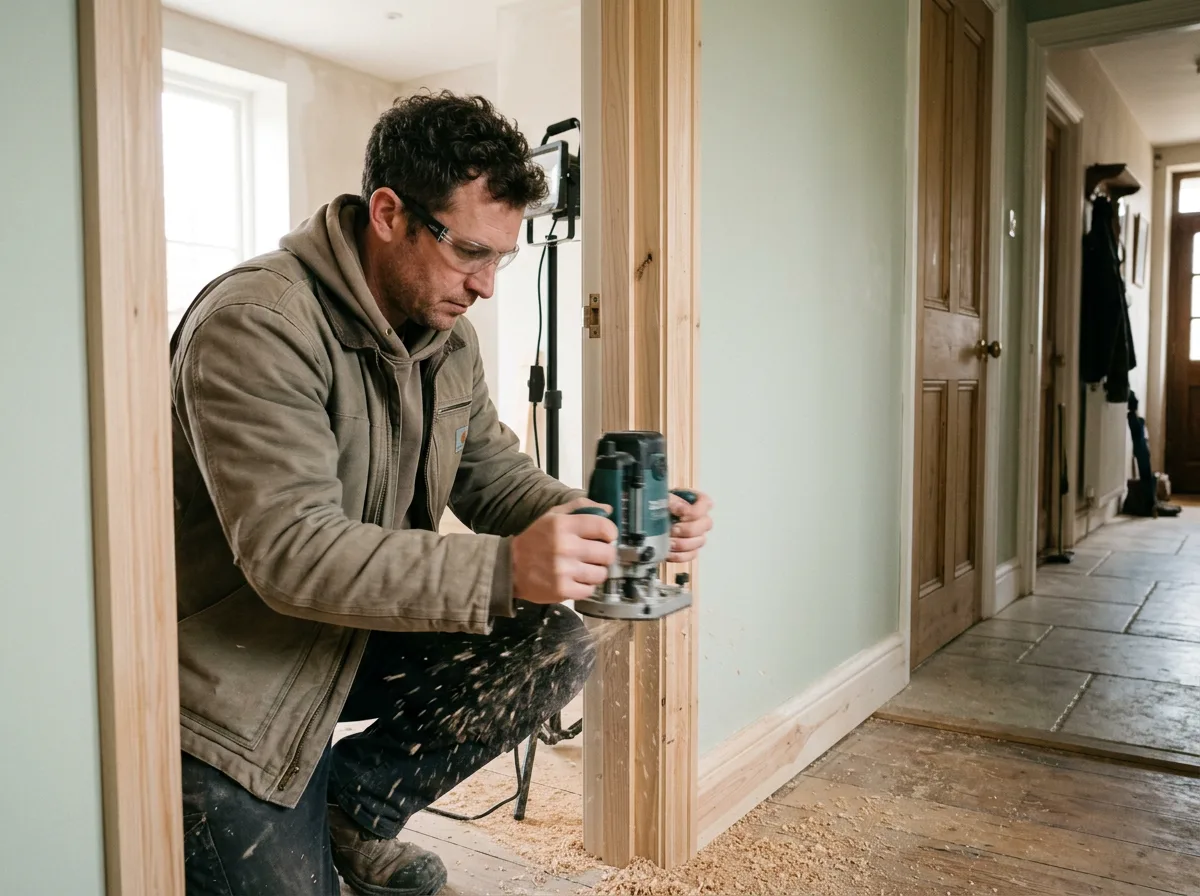
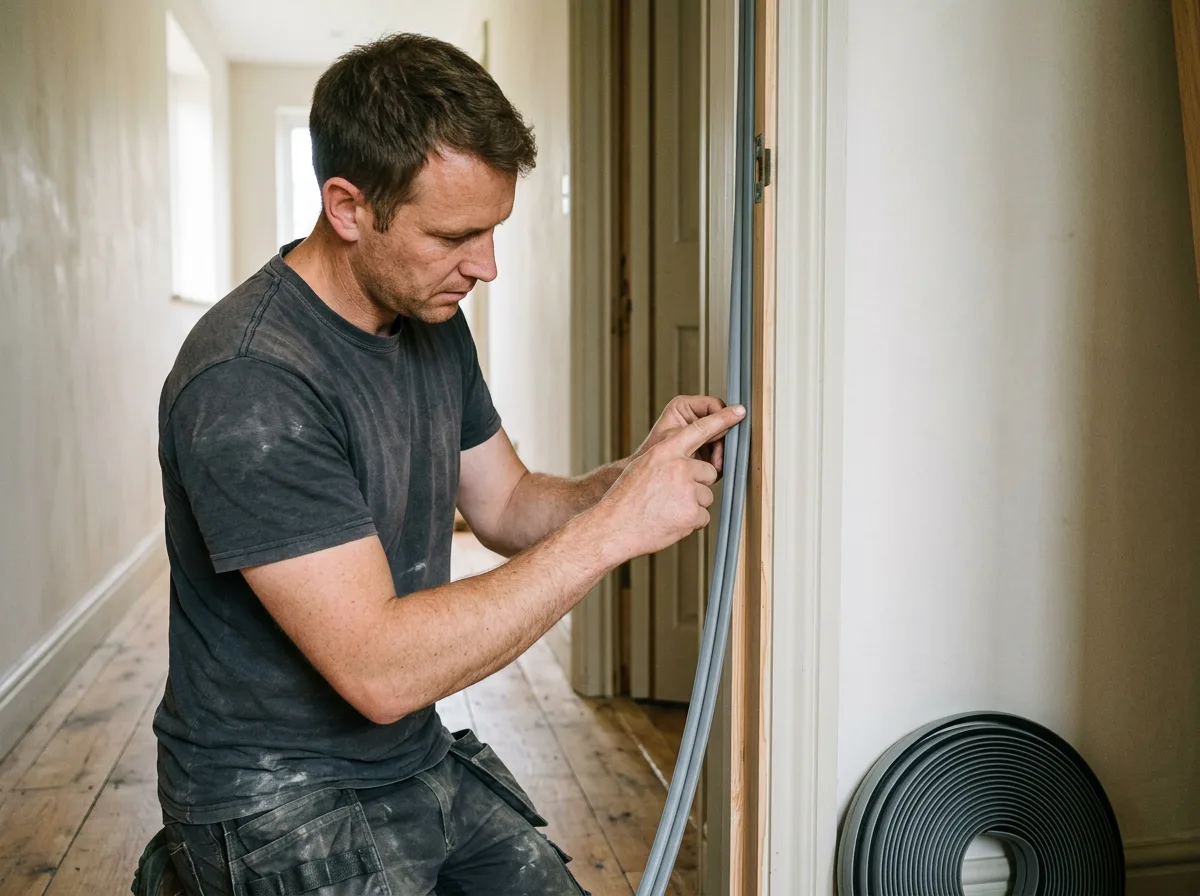
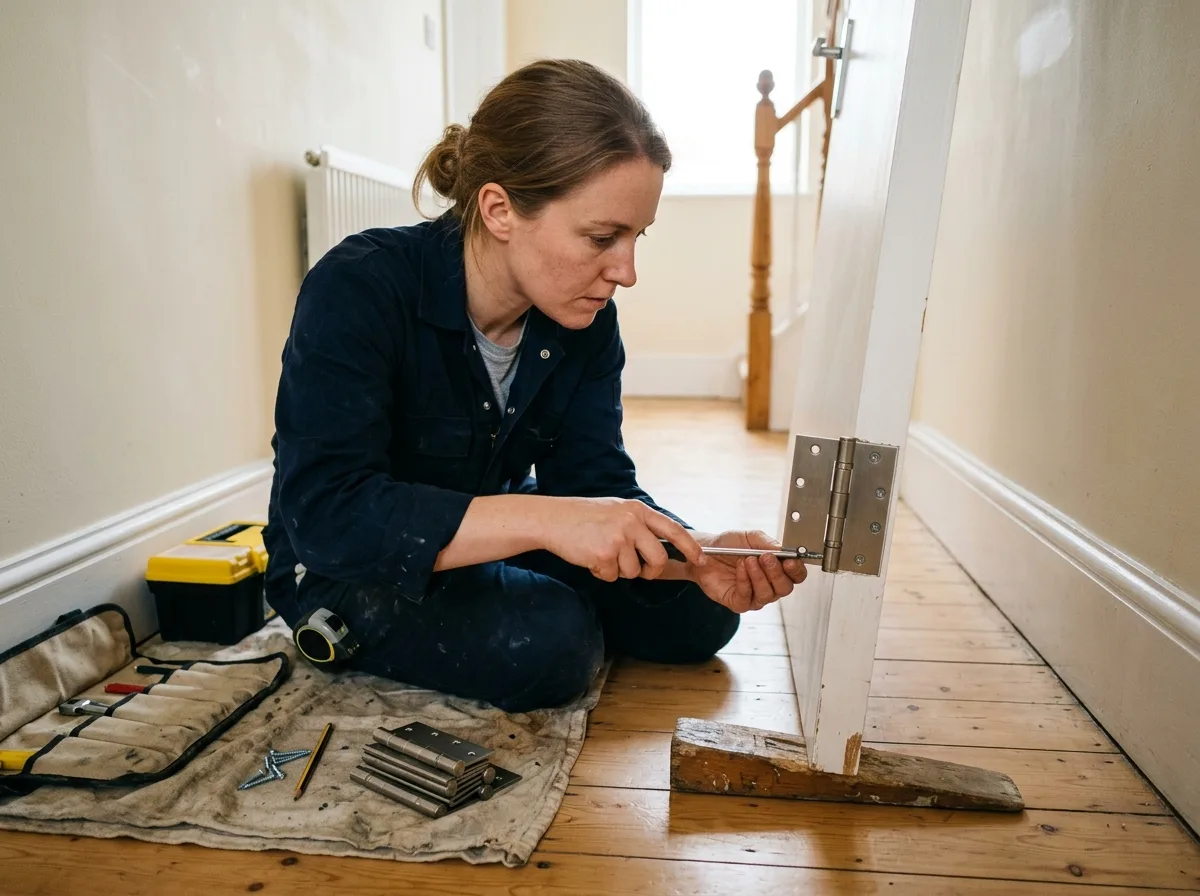
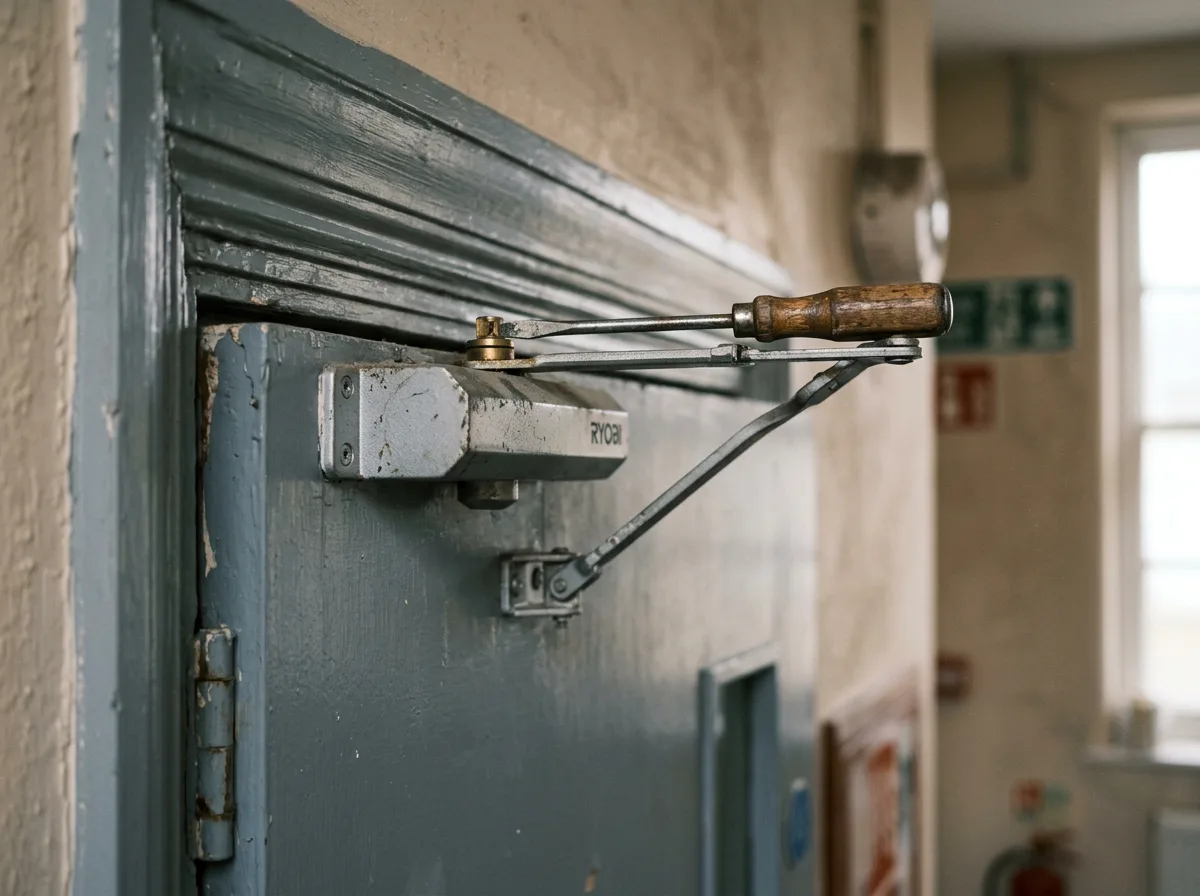
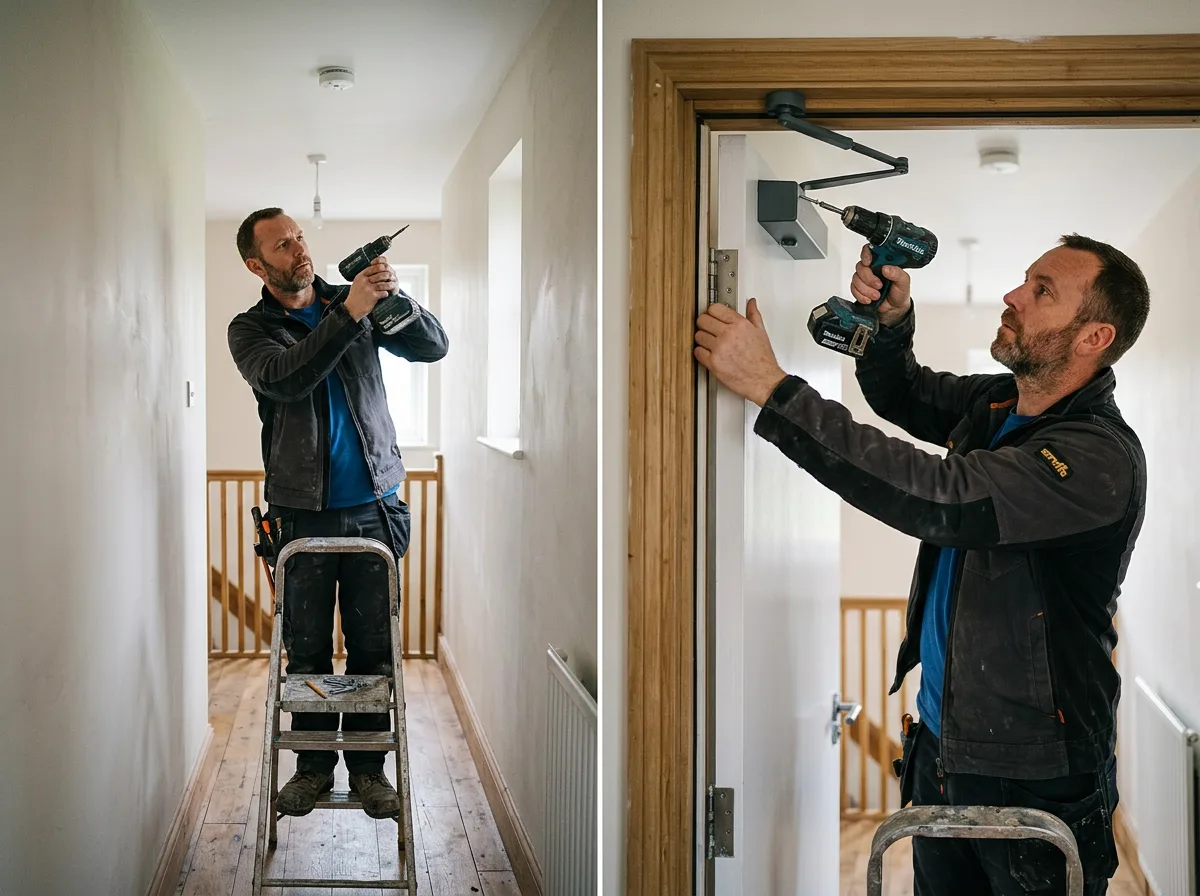
With the set confirmed, the frame rebate is prepared and the intumescent and cold smoke seals are fitted exactly to the manufacturer's instructions — correct groove depth, continuous coverage around the frame, and no shortcuts on the parts that are least visible once the door is hung. Certified fire-rated hinges are fitted next, specified to suit the weight and rating of the door rather than whatever happens to be on the van, followed by a compliant self-closing device, adjusted so the door closes fully home onto its seals every time rather than drifting shut at an angle.
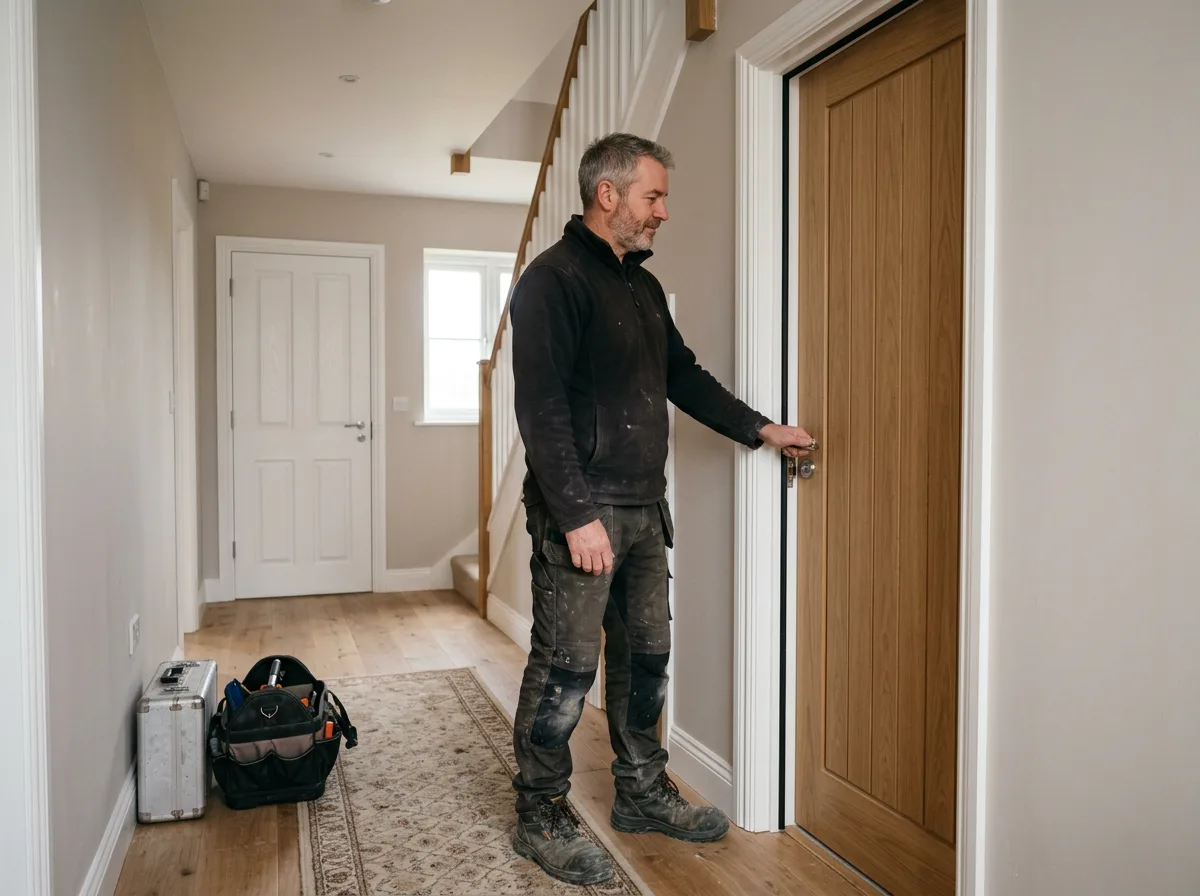
The final step is a proper functional check: door gaps measured and confirmed against tolerance, the closing action tested repeatedly to make sure the self-closer brings the door fully into its frame, and the seals checked for full, even contact. Nothing is signed off until the door closes, seals, and operates exactly as a certified fire door assembly should.
The Work, Step By Step
A Closer Look
A closer look at the kind of care and sequencing involved in fitting a certified fire door correctly.
Specification
Materials & Approach
- A certified FD30 (or, where specified, FD60) fire door and frame assembly — fitted as a matched set rather than mixed components
- Intumescent and cold smoke seals fitted into a routed frame rebate to the depth and coverage set out in the manufacturer's instructions
- Certified fire-rated hinges, selected to suit the weight and rating of the door
- A compliant self-closing device, fitted and adjusted so the door closes fully home onto its seals
- Door and frame gaps checked and set to the tolerances given in the manufacturer's fitting instructions
- No non-rated hardware or unverified substitutions used in place of certified components
Common Questions
Fire Door Fitting — Frequently Asked Questions
What actually makes a door an "FD30" fire door?
FD30 means the door, as a complete certified assembly — leaf, frame, seals, hinges and any glazing — is designed and tested to hold back fire for around 30 minutes. It is not just about the thickness or weight of the door leaf; the certification covers the whole fitted assembly, which is why every component has to be correctly specified and fitted to the manufacturer's instructions rather than mixed and matched.
What is the difference between FD30 and FD60?
In general terms, the number refers to the length of time the certified door assembly is designed to resist fire — roughly 30 minutes for FD30, roughly 60 minutes for FD60. FD60 doors are typically heavier, thicker constructions with correspondingly rated hardware and seals. Which standard is required for a given doorway depends on the building and its layout, and is something to confirm before ordering a door rather than after.
Can an existing internal door be upgraded to FD30, or does it need replacing?
A genuine fire door has to be a certified assembly, so in most cases a standard internal door cannot simply be retrofitted with intumescent strips and called compliant — the door leaf itself needs to be a certified fire-rated product. Where an existing opening is being brought up to standard, that usually means fitting a new certified door and frame, though we are happy to survey what you have and advise honestly on what is and is not achievable.
Why do fire doors need a self-closing device fitted?
A fire door only does its job if it is actually closed when a fire starts, and a self-closer ensures that happens automatically even if the door has been left open or someone forgets to pull it shut. It is a core part of a compliant fire door installation, not an optional extra, and we fit a compliant device as standard on every fire door job.
Do you supply the fire door, or do you fit doors customers have already bought?
Both. We are happy to source and supply a certified fire door and ironmongery package to suit the opening, or to fit a door you have already purchased — provided it is a genuine certified fire door assembly. Either way, we check the door, frame and hardware are a correctly matched set before fitting begins.
Does the intumescent strip need to be visible once the door is fitted?
No — the strip sits in a routed rebate in the door or frame edge, so once the door is hung and closed it is essentially hidden from normal view. It is only doing its job in the event of heat, when it begins to expand and seal the gap around the door.
How long does a typical fire door fitting job take?
A single fire door, hung complete with intumescent and cold smoke seals, certified hinges and a self-closing device, is typically a half-day to a full-day job depending on whether the frame and opening are already prepared. Multiple doors across a property, or openings that need more frame work, take longer — we confirm a time estimate as part of the written quote.
Do you offer any guarantee on fire door fitting work?
Yes — all our fire door fitting work is covered by our standard workmanship guarantee, confirmed in writing with your quote. Compliance work like this is exactly the kind of job where getting it right matters, and we stand behind it accordingly.
Related Projects
More Doors & Door Joinery
An Elegant Internal Door, Hung to Perfection
An internal door hung true and square, with every hinge and gap set exactly as it should be.
A Precisely Levelled Internal Door Fit
The unglamorous but essential final step — checking and adjusting a hung door until it is perfectly level.
Beautiful Door Ironmongery, Fitted with Precision
Hinges, latches and handles selected and fitted with the same care as the door itself.
Get Started
Request a Free Quote for Your Fire Door
Need a Fire Door Fitted Correctly, Start to Finish?
Certified fire doors, intumescent seals, hinges and self-closers — fitted exactly to manufacturer instructions. Get a free quote or arrange a site visit.