Roof Carpentry
Collar Ties and Strutting, Holding a Roof Together
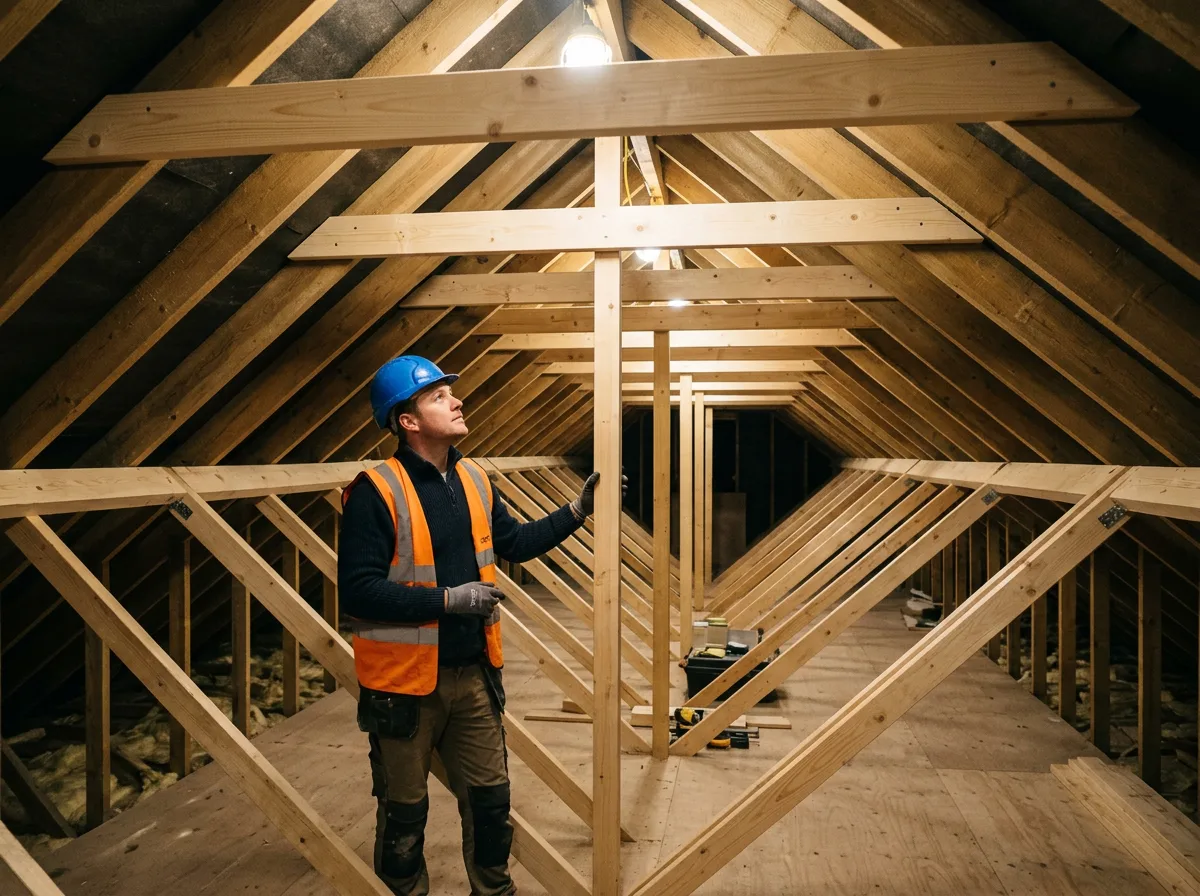
Collar ties and strutting fitted between rafters at exactly the right height and bearing point — the quiet structural work that keeps a roof honest for decades.

Local to Berkshire
Experienced Carpenters
32 years in the trade
Fully Insured
High-Quality Finish
The Brief
A Roof That Needed Tying Together
This is the kind of roof carpentry project we take on regularly across Berkshire: a roof structure where the rafters, left to their own devices, are under a constant outward push at the wall plates. Left unchecked over years, that push shows up as spreading walls, sagging ridgelines, or ceiling cracks that track suspiciously along the line of the roof. The fix is not dramatic, but it is precise — collar ties and, where the span calls for it, struts, fitted exactly where the structure needs them.
What makes this work satisfying is how much structural difference a correctly positioned timber makes. A collar tie in the wrong place does very little; the same timber, fixed a few hundred millimetres higher or lower and bolted properly to both rafters, resists real force. The same is true of a strut — it only works if its foot lands on something genuinely capable of carrying the load passed down to it. Getting both of those details right, every time, is the entire job.
It is also work that rewards a careful eye for diagnosis before a single cut is made. Reading how a roof is moving, understanding why, and deciding whether collar ties alone are sufficient or whether strutting is needed too — that groundwork determines whether the finished structure is merely tidy or actually sound.
This page illustrates the type and standard of roof carpentry work we carry out — not a specific named address or client. Every project is scoped and quoted individually after a free site visit.
The Process
From Spreading Rafters to a Stable Structure
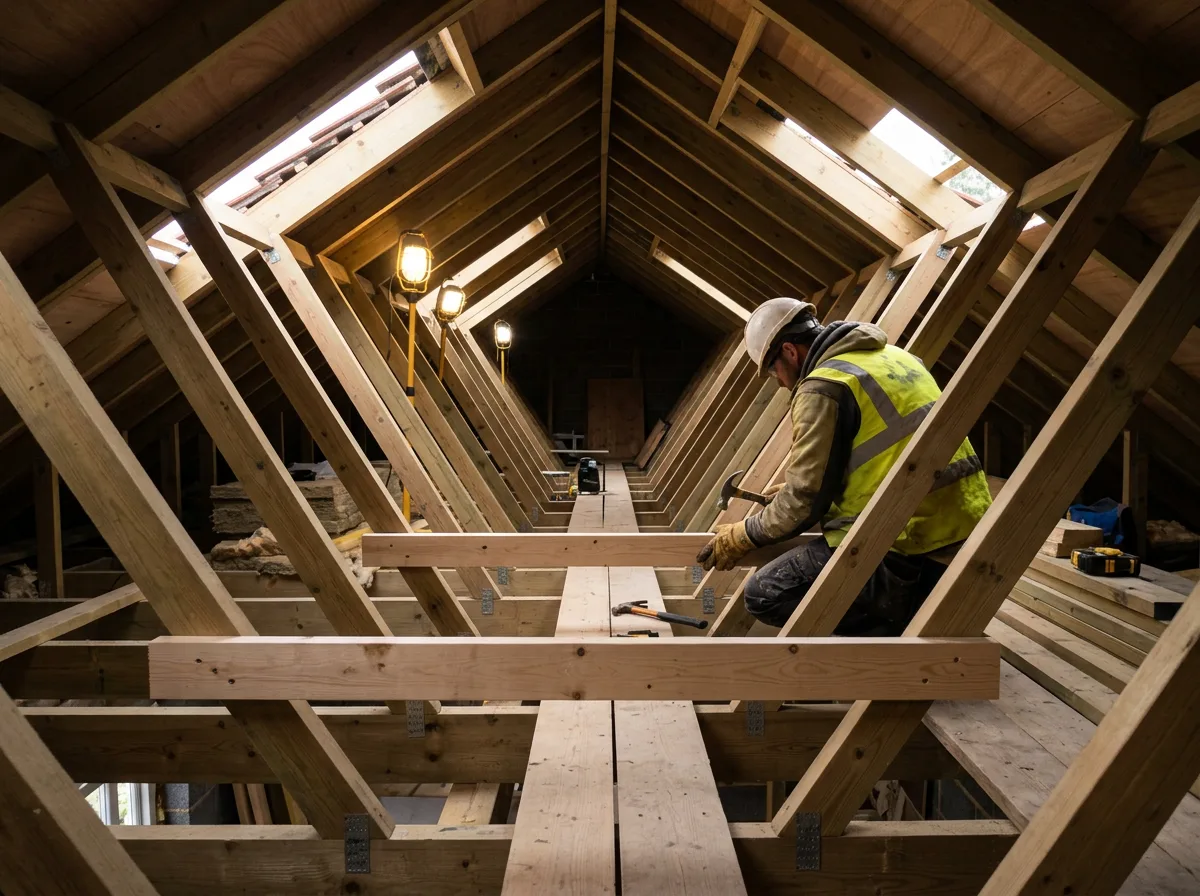
Every pitched roof wants, to some degree, to push its rafters apart at the wall plates — the weight of the roof covering bearing down on a sloped rafter naturally resolves into an outward force at the base. Left unresisted, that force is carried by the walls themselves, which were rarely designed to take it indefinitely. A collar tie interrupts that mechanism by connecting a pair of opposing rafters horizontally, converting the outward push into tension the timber itself can resist, well above the wall plates where the movement would otherwise show up first.
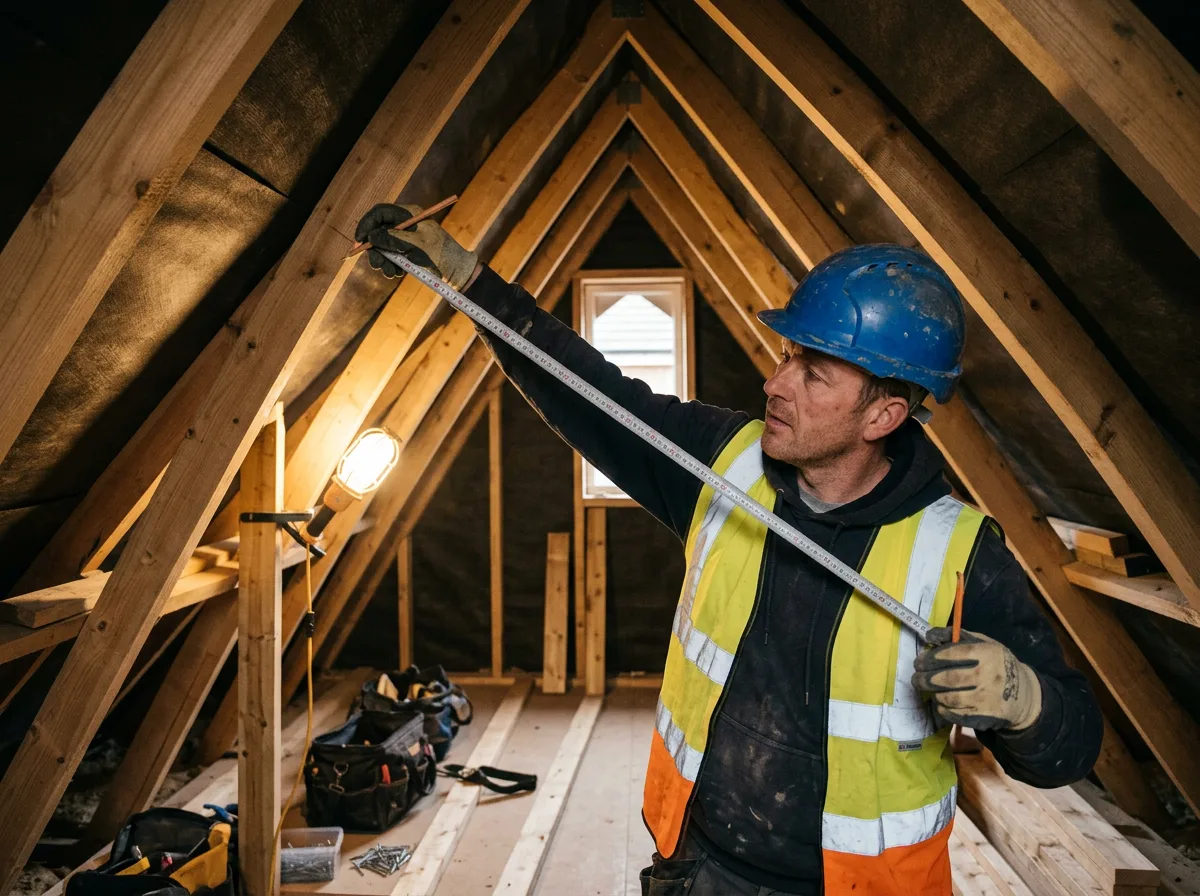
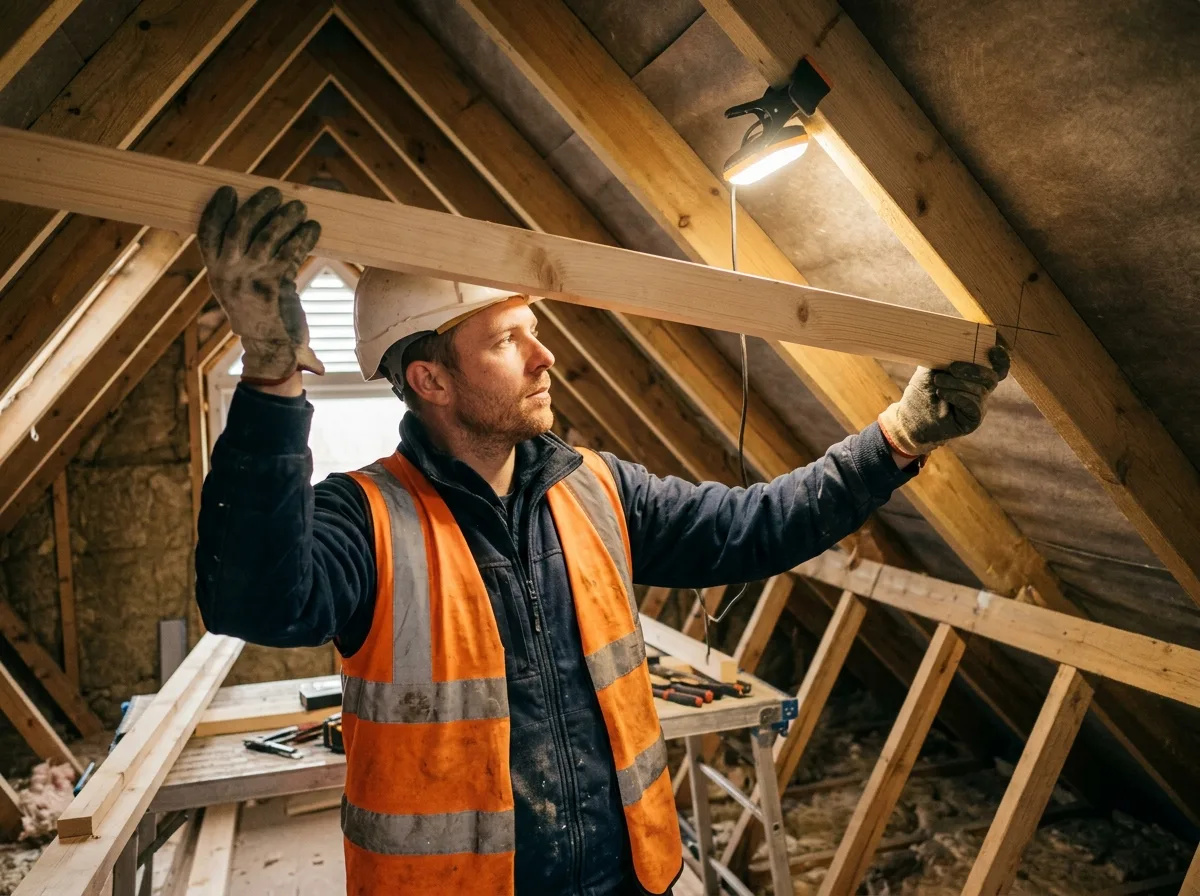
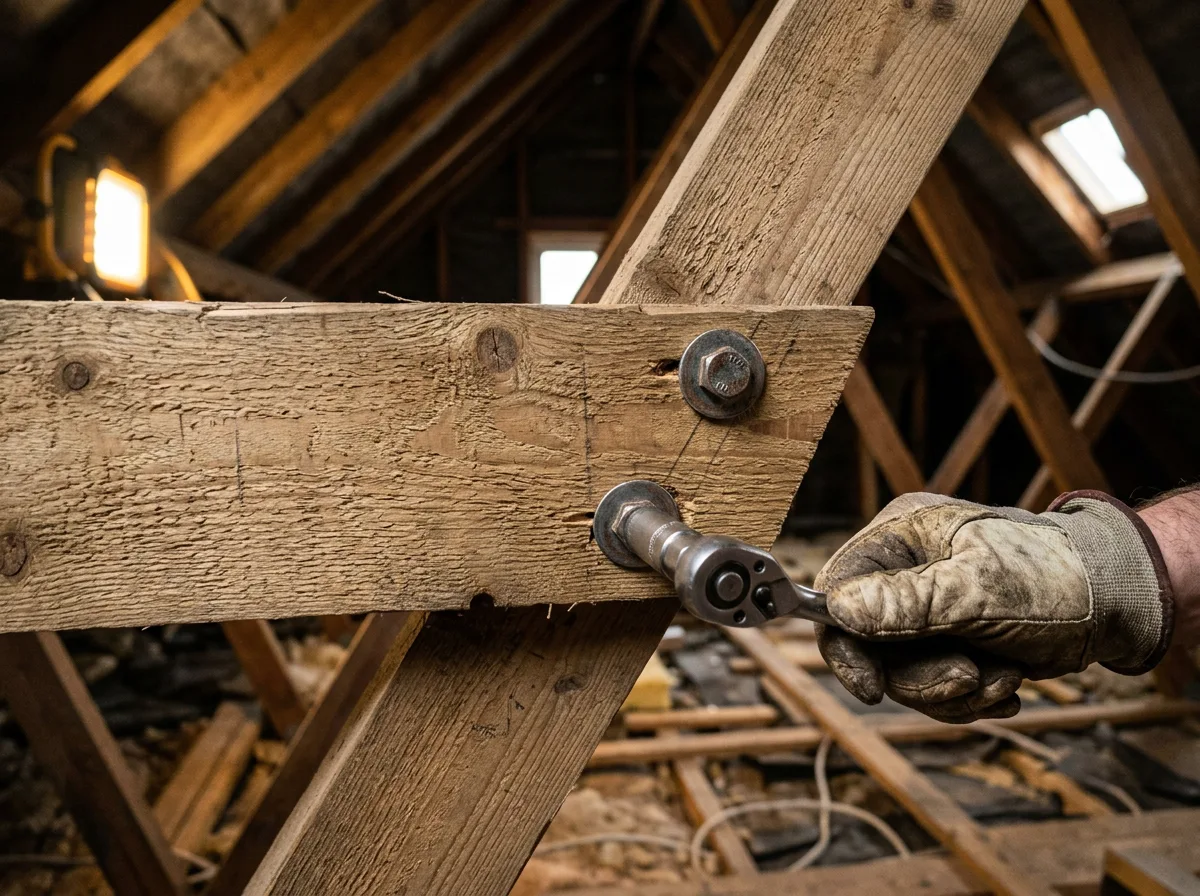
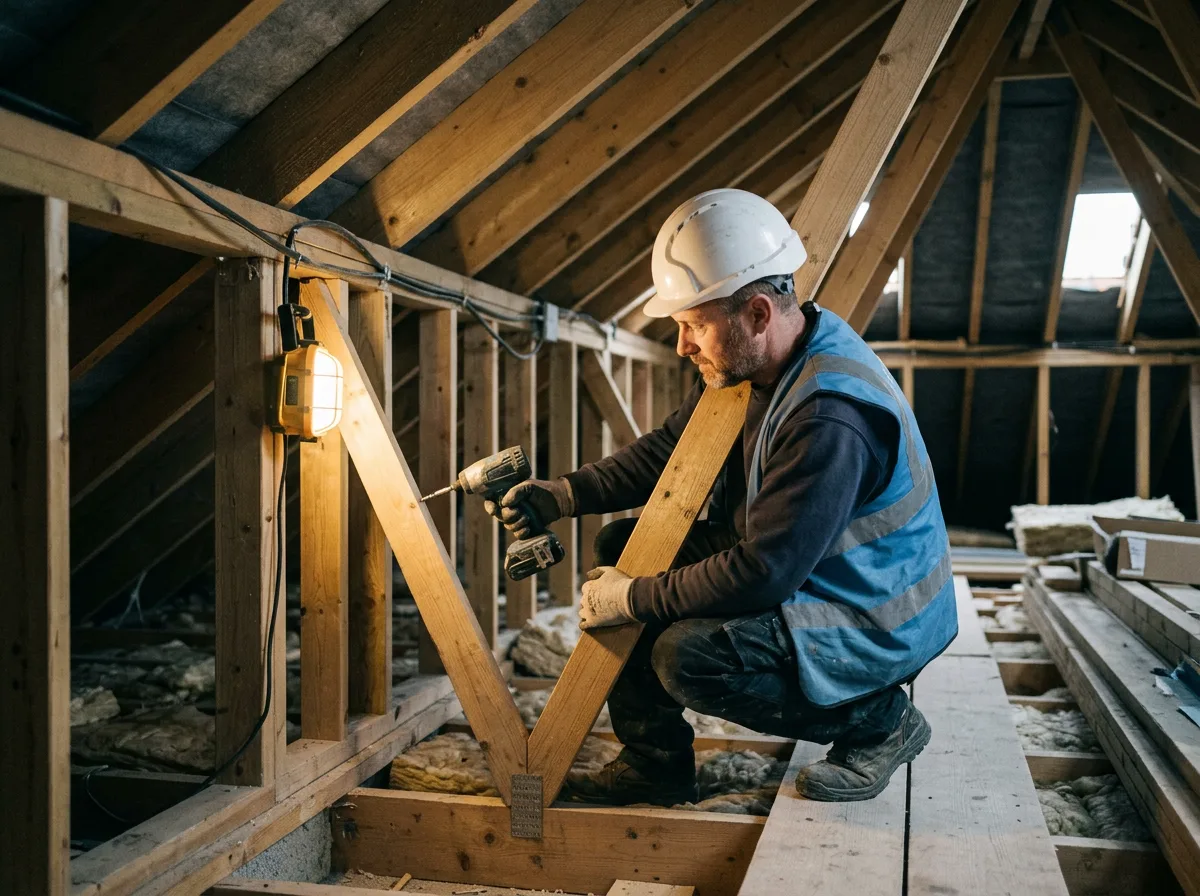
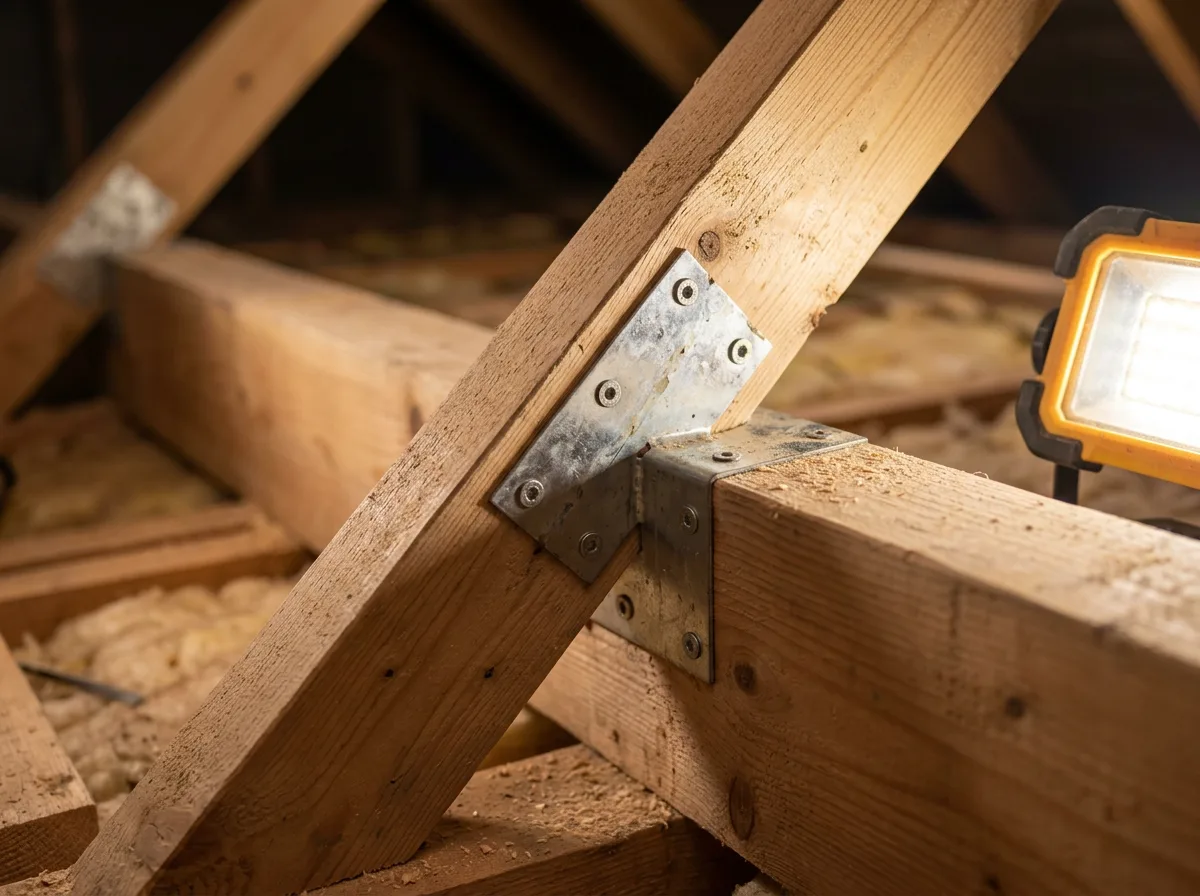
Getting the height right is the part that separates a collar tie that works from one that is merely present. We measure and mark the position on both rafters of a pair before cutting anything, working to the height the roof's design calls for rather than wherever happens to be convenient to reach. The timber is then cut, offered up, checked for square against both rafter faces, and fixed with bolted or coach-screwed connections rather than nails alone — a joint under genuine tension needs a fixing that will hold under load, not just hold still.
Where a rafter also needs support against sagging along its length, a strut is brought in to carry load down to a loadbearing point beneath it — a structural wall, a purlin, or another member capable of taking the weight. Finding and confirming that bearing point matters as much as the strut itself; a strut resting on something that cannot carry the load is worse than no strut at all, because it looks like a fix without being one. Once every tie and strut is fixed, we check the whole run again, roof light permitting, before calling the structure complete.
The Work, Step By Step
A Closer Look
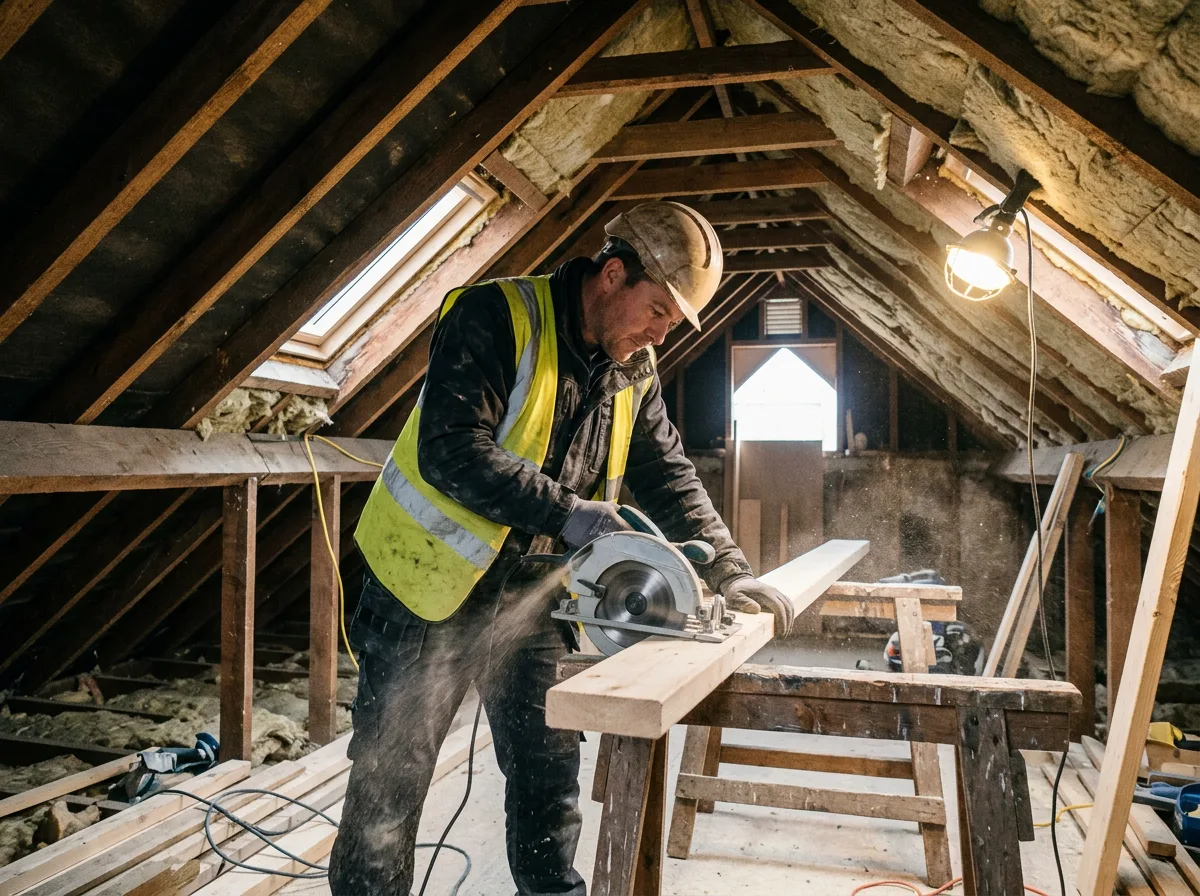
A closer look at the kind of setting-out, fixing, and strutting involved in stabilising a roof structure.
Specification
Materials & Approach
- Collar tie timber sized to the span and loading of the roof in question, positioned at the design height on each opposing rafter pair rather than an arbitrary point
- Strutting timber sized to suit the load being carried down from the rafter to its bearing point
- Fixings selected for the joint under load — bolted or coach-screwed connections at collar ties, rather than nails alone
- Struts fitted only where a confirmed loadbearing point exists beneath them — a structural wall, purlin, or equivalent member designed to take the load
- Work carried out from within the roof space, leaving the roof covering above completely undisturbed
- Completed structure left accessible and properly fixed, ready for Building Control inspection where required
Common Questions
Collar Ties & Strutting — Frequently Asked Questions
What does a collar tie actually do?
A collar tie is fixed horizontally between a pair of opposing rafters, roughly in the upper third of the roof slope. Its job is to resist the rafters spreading apart at the wall plates under roof load, which in turn resists the walls below being pushed outward. It works in tension, holding the two rafters together rather than carrying weight downward.
How is the correct height for a collar tie decided?
Position matters as much as the timber itself. Too high up the slope and a collar tie does very little useful work; positioned correctly, it ties the rafters together at the height where it is most effective at resisting spread. We set this out to the design height for the roof in question rather than an arbitrary convenient position, and check it against both rafters before any fixing is cut.
When is strutting needed as well as collar ties?
Struts come into play where a rafter needs additional support down to a loadbearing point lower in the structure — typically where a rafter spans further than it should without intermediate support. A collar tie resists spreading; a strut carries load down to something solid beneath it. Many roofs need one, the other, or both, depending on span and design.
Where does a strut actually need to bear?
A strut has to land on a genuinely loadbearing point — a structural wall, a purlin, or another member designed to carry the load being passed down to it. A strut fixed to something that cannot take that load is doing nothing useful and can even disguise a problem rather than solve it. This is exactly the kind of detail worth having checked on site rather than assumed.
Can collar ties and struts be added to an existing roof without disturbing the covering?
In most cases, yes. Collar ties and struts are fitted from within the roof space, working between and below the rafters, so the tiles, slates or felt above are left completely undisturbed. It is one of the reasons this kind of stabilising work is often more straightforward — and considerably less disruptive — than homeowners expect.
How do I know if my roof actually needs collar ties or strutting?
Signs to look out for include rafters that appear to be spreading or sagging, ceiling cracks that track along the roof line, or a roof that was built without adequate tying in the first place. Not every roof needs intervention, and not every fix needs to be extensive — a site visit tells us which parts of your roof, if any, need collar ties, struts, or both.
Does fitting collar ties or struts require Building Control sign-off?
Structural work of this kind is the sort of thing Building Control takes an interest in, particularly where it affects a roof's structural stability. We leave completed work accessible and properly fixed, ready for inspection, and can talk through what level of sign-off applies to your specific job as part of the quote.
Do you offer any guarantee on roof carpentry work like this?
All our roof carpentry work is covered by our standard workmanship guarantee, confirmed in writing with your quote. Structural fixes like collar ties and strutting are exactly the kind of work where that guarantee matters most, and we stand behind it.
Related Projects
More Roof Carpentry
A Spectacular Cut Timber Roof Structure
A traditional cut timber roof, rafters and ridge beam built entirely on site rather than trussed.
Structural Rafters and Ceiling Joists, Set Out to Perfection
Rafters and ceiling joists set out and fixed exactly to specification across a new roof structure.
A Purlin, Carrying a Roof Slope with Confidence
A purlin fitted mid-span to support a run of rafters, exactly where the roof structure calls for it.
Get Started
Request a Free Quote for Your Roof
Got a Roof That Needs Tying Together?
Spreading rafters, sagging ridgelines, and ceiling cracks that track along the roofline are usually fixable without disturbing the roof covering. Get a free quote or arrange a site visit.