Roof Carpentry
A Graceful Birdsmouth Cut, Seating Every Rafter Properly
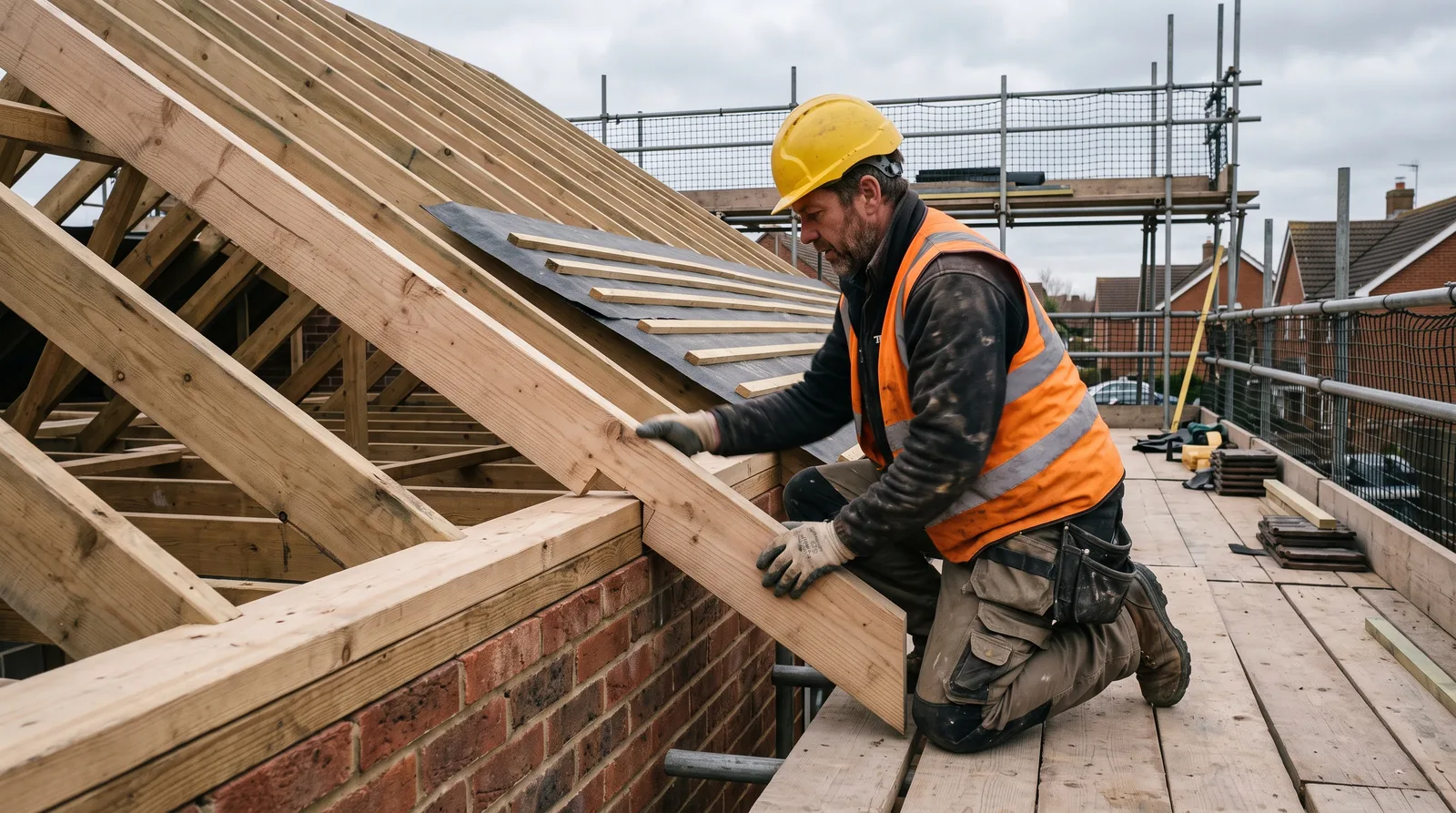
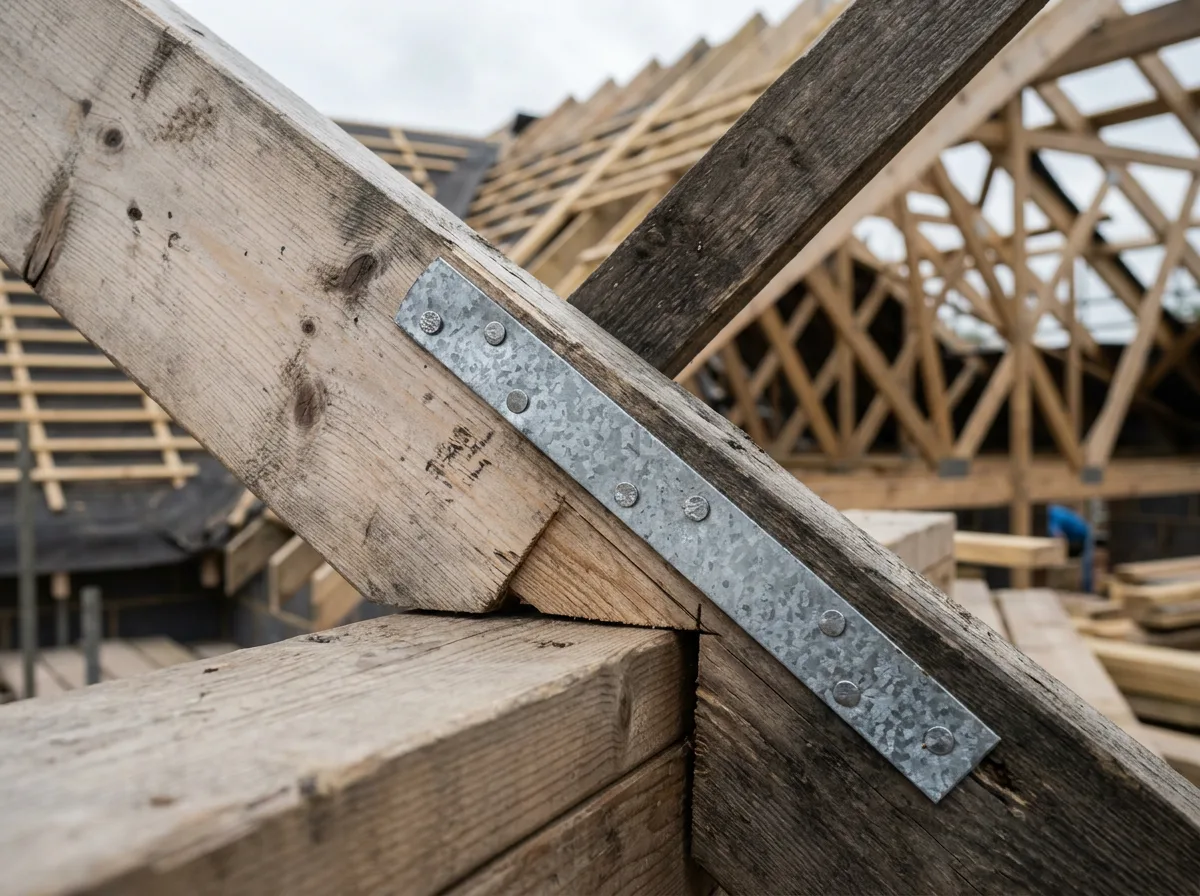
A small notch that carries real weight — every rafter marked out, birdsmouthed and seated onto the wall plate with the precision a roof structure depends on.
Local to Berkshire
Experienced Carpenters
32 years in the trade
Fully Insured
High-Quality Finish
The Brief
A Small Notch, Carrying Real Weight
This is the kind of roof carpentry project we carry out regularly across Berkshire: a run of rafters that needs to land on the wall plate not just roughly in place, but seated flat, evenly, and ready to carry the full weight of the roof above for decades. It rarely gets a mention in a finished roof — once the felt and tiles go on, every birdsmouth joint disappears from view entirely.
That invisibility is exactly why it rewards real care. A birdsmouth cut that seats cleanly spreads the rafter’s load evenly into the wall plate and the wall below; one cut carelessly, at the wrong angle or too deep, concentrates stress at precisely the point the rafter can least afford it. The craft is in the marking-out as much as the cutting — getting the pitch angle right before a saw ever touches the timber.
Whether it is a single replacement rafter on a repair job or a full run across a new roof structure, the standard does not change: every notch marked to the pitch, cut cleanly, and checked for a full, even seat before it is fixed down and restrained for good.
This page illustrates the type and standard of roof carpentry work we carry out — not a specific named address or client. Every project is scoped and quoted individually after a free site visit.
The Process
From Marked Line to Seated Rafter
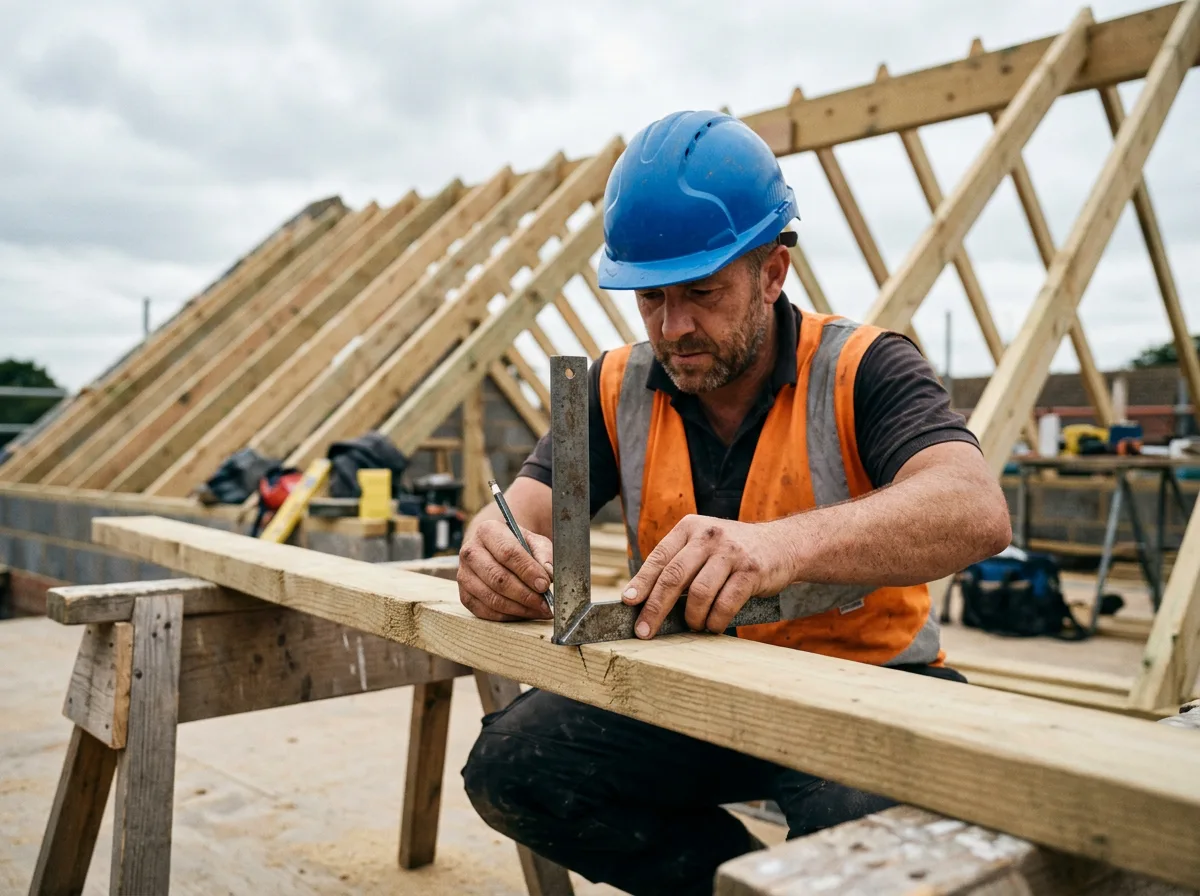
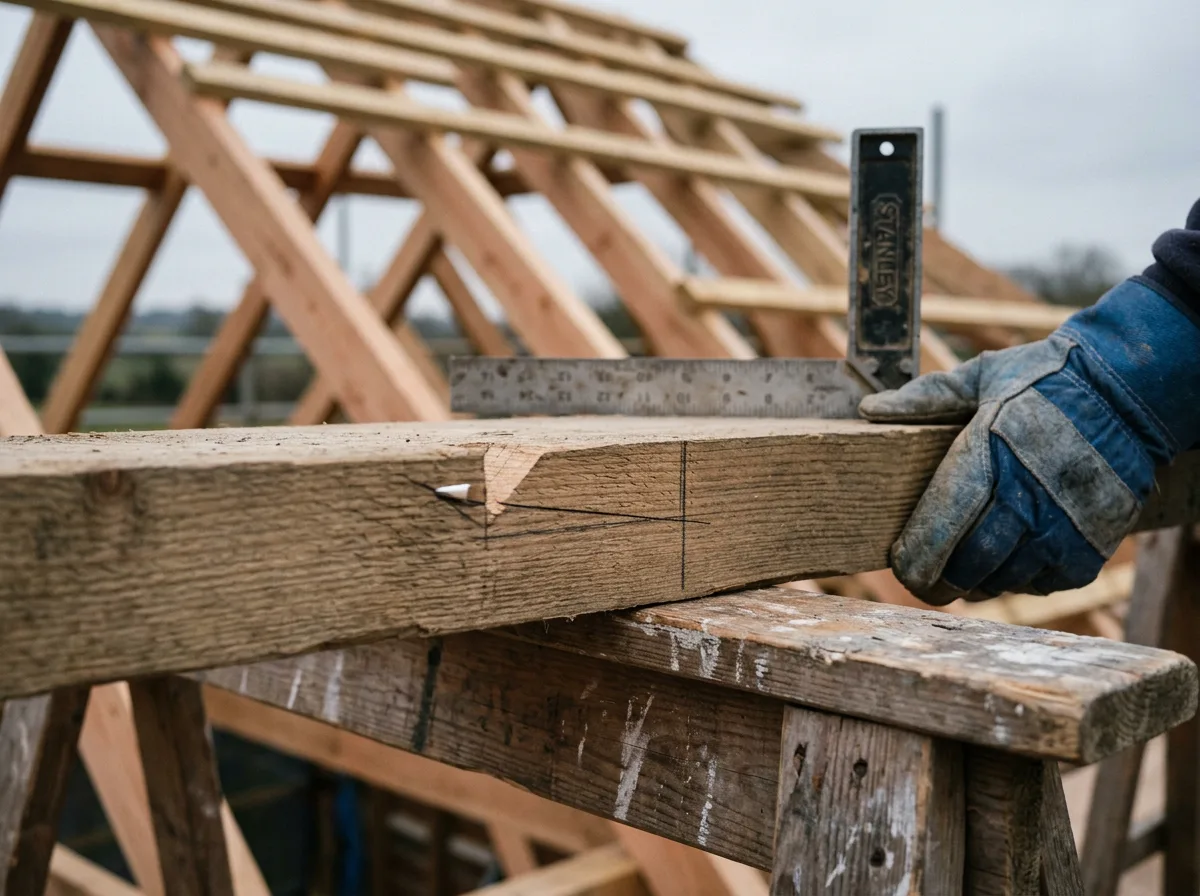
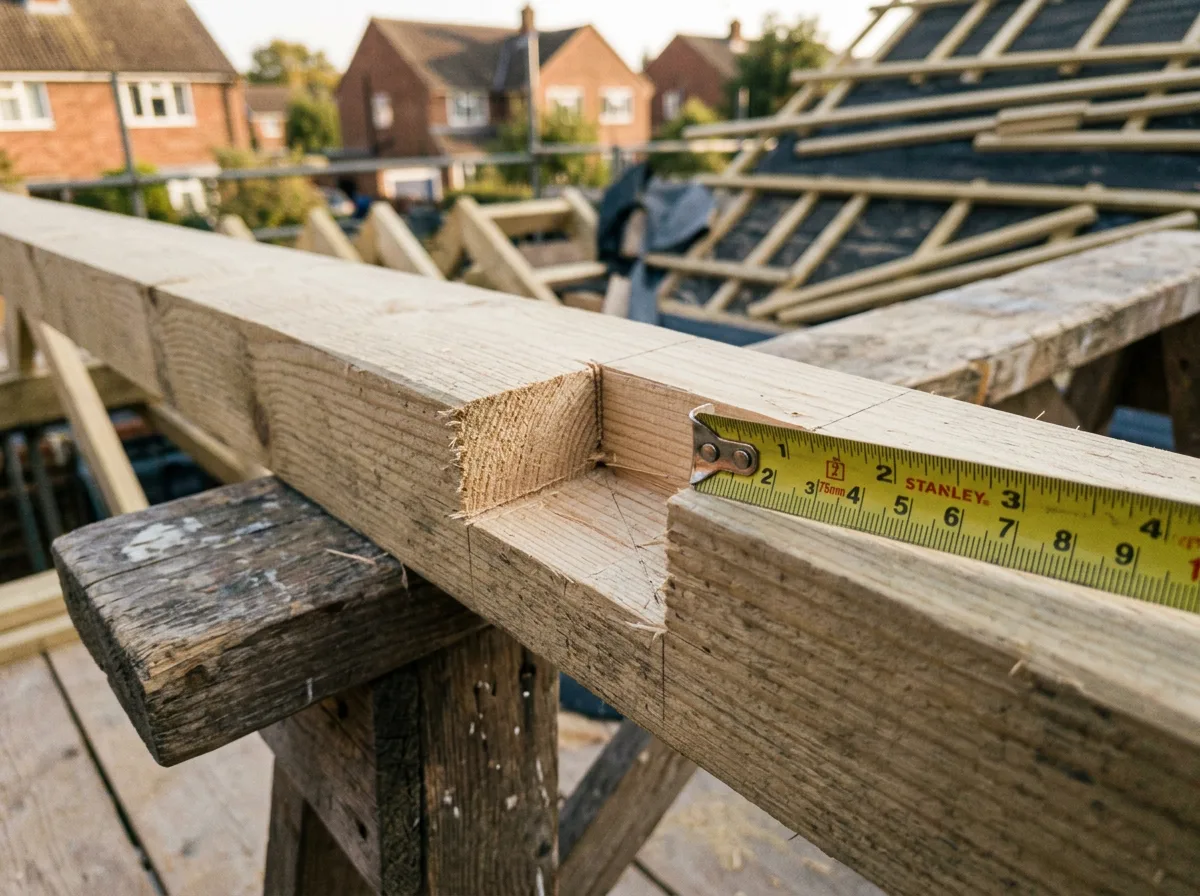
Everything starts with the roof pitch itself. A roofing square, set to the pitch, marks out the seat cut and the plumb cut on the underside of the rafter — the two lines that together form the birdsmouth notch. On any run of more than a couple of rafters, we mark and cut a single pattern rafter first, test it against the wall plate, and only then use it as the template for the rest, so every notch across the roof is identical rather than quietly drifting from one rafter to the next.
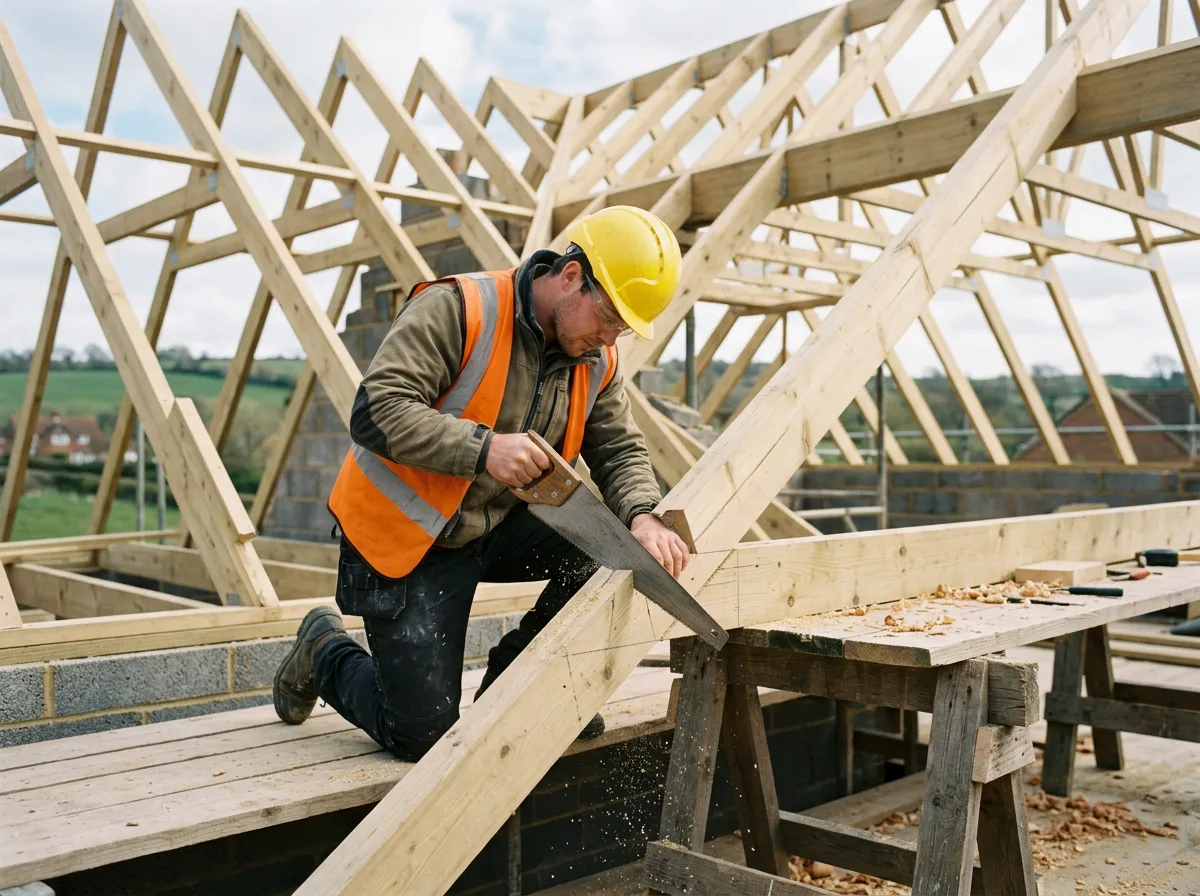
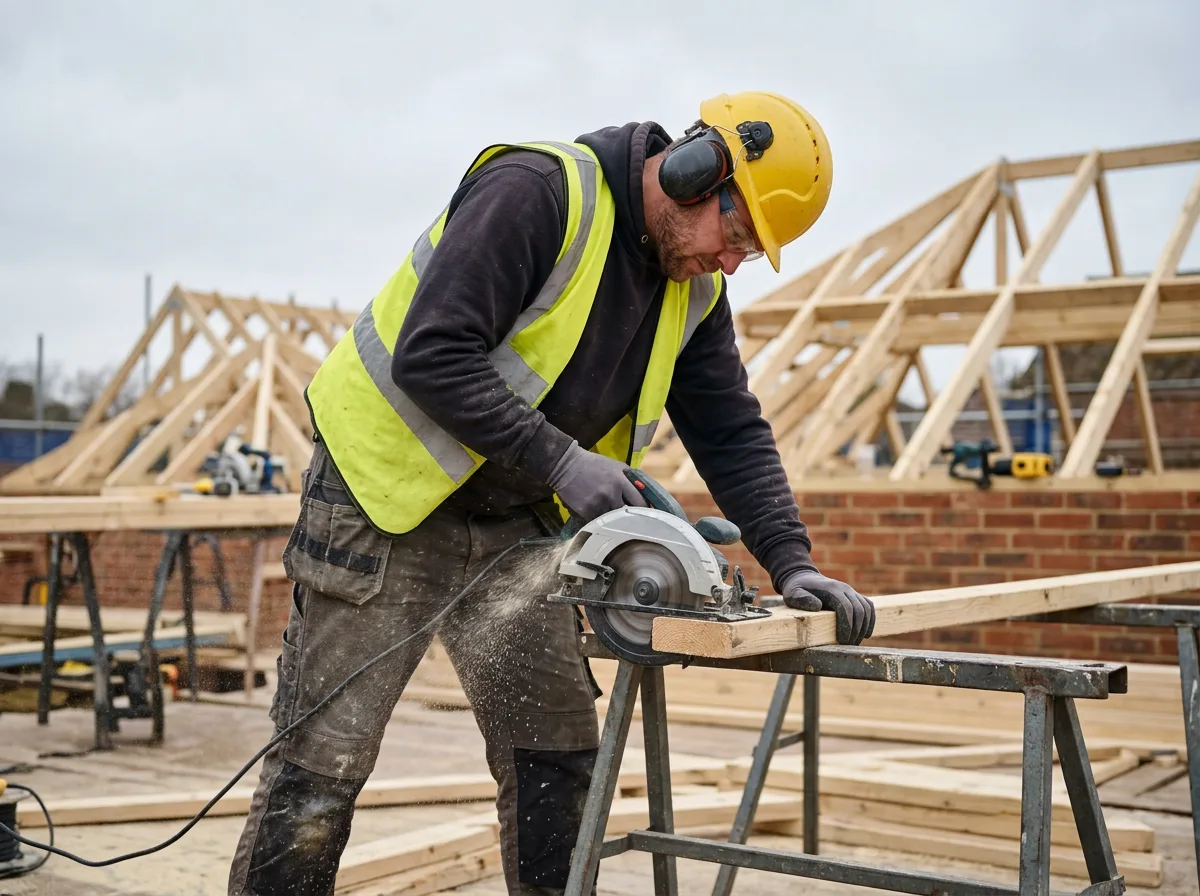
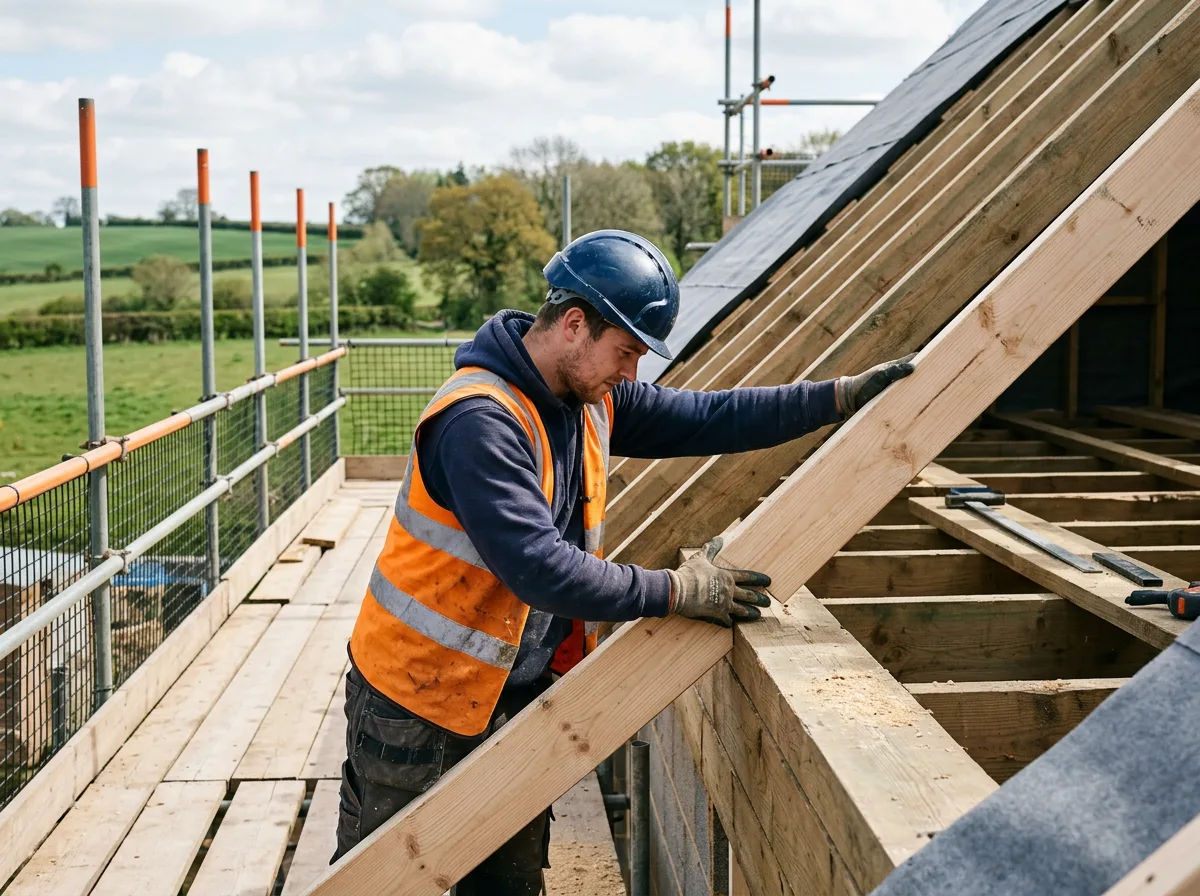
The notch itself is cut carefully to those marked lines, by hand saw where accuracy matters most or with a circular saw on longer runs, always staying within the depth a rafter can safely lose without weakening the joint. Too shallow and the rafter rocks on a single edge rather than bearing evenly; too deep and the rafter is left thinner than it should be exactly where the load concentrates. Each cut rafter is then test-fitted onto the wall plate and checked by eye and by hand for a full, flat seat before it goes anywhere near a fixing.
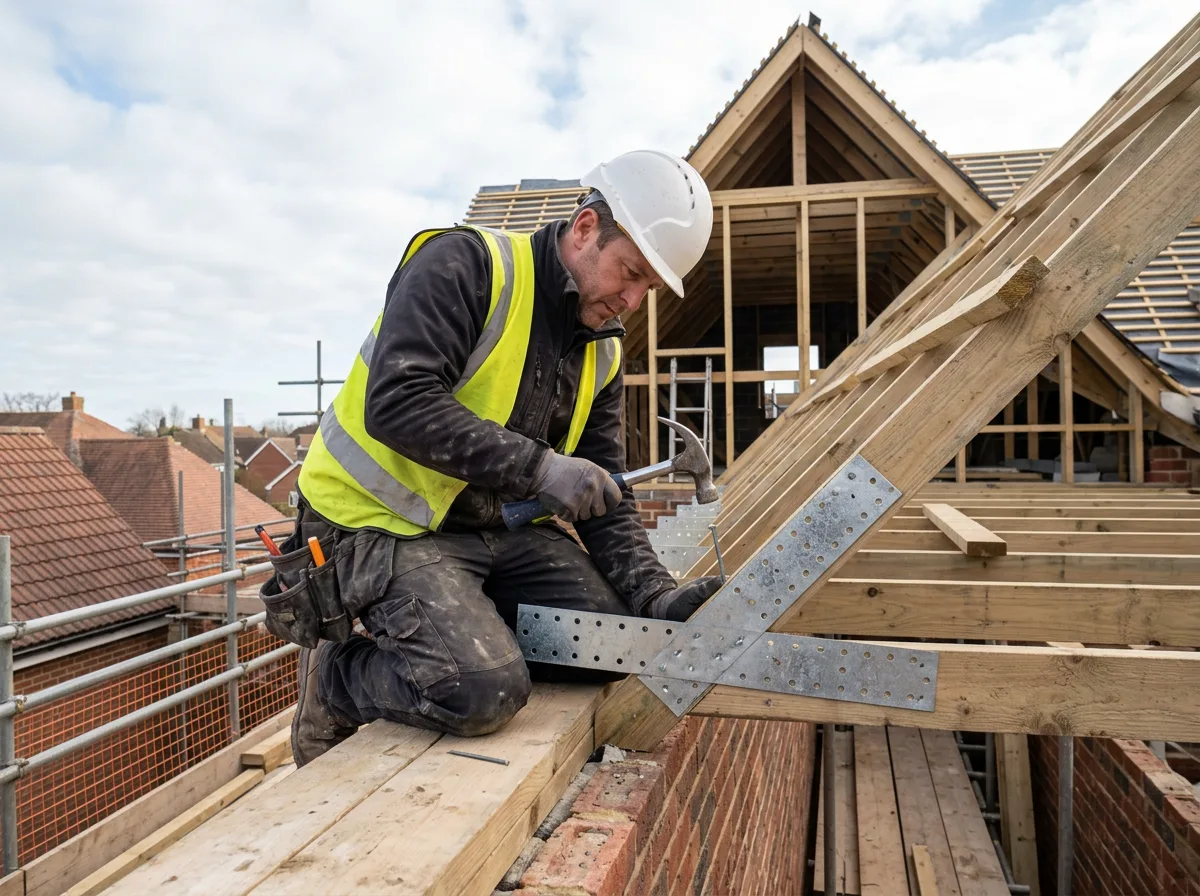
Once the seat is confirmed, the rafter is fixed down and, critically, tied back with the correct restraint strap and nails — a galvanised strap spanning the joint between rafter and wall plate, resisting the uplift and lateral movement that the birdsmouth notch alone cannot. Every joint and strap is left visible and accessible, ready for inspection, before the roof is closed in above it.
The Work, Step By Step
A Closer Look
A closer look at the marking-out, cutting, and fixing involved in seating a rafter properly onto the wall plate.
Specification
Materials & Approach
- Birdsmouth notch depth kept to a sensible proportion of the rafter’s overall depth, so the joint seats evenly without over-weakening the timber
- Seat cut and plumb cut marked to the actual roof pitch using a roofing square, not an assumed or approximate angle
- Galvanised restraint straps fixed across every rafter-to-wall-plate joint to resist uplift and lateral movement
- Fixing nails or screws selected and placed to suit the rafter size and the strap manufacturer’s requirements
- Wall plate checked for a sound, level bedding before any rafter is seated onto it
- A pattern rafter cut, test-fitted and approved before being used as the template for the rest of the run
Common Questions
Birdsmouth Rafter Cutting — Frequently Asked Questions
What is a birdsmouth cut, and why does it matter so much?
A birdsmouth is the notch cut into the underside of a rafter so it seats flat and fully onto the wall plate, rather than just resting on one sharp edge. Done properly, it transfers the roof load evenly into the wall plate and the wall below. Done carelessly — too deep, too shallow, or at the wrong angle — the rafter either sits unevenly or loses more strength than it should, which is why it is one of those cuts that rewards real care over speed.
What happens if a birdsmouth is cut too deep?
Cutting too deep removes more of the rafter’s structural depth at exactly the point it is under the most stress, which can weaken the rafter at that joint. There are accepted limits for how much of a rafter’s depth a birdsmouth notch should remove, and a competent carpenter marks and cuts to stay comfortably within them rather than pushing the notch deeper than it needs to be for a clean seat.
How is the correct angle found for a given roof pitch?
The seat cut follows the roof pitch itself, and the plumb cut sits vertical to it — both marked out using a roofing square (or a digital angle finder) set to the pitch before anything is cut. Getting this marking-out stage right is most of the job; the actual cutting is usually quick once the lines are accurate.
Does birdsmouth rafter cutting need a Building Control inspection?
Where the work forms part of a notifiable building project — a loft conversion or extension roof, for example — yes, the roof structure is typically inspected by Building Control before it is covered over. We leave the birdsmouth joints, restraint straps and fixings fully visible and accessible for that inspection rather than closing anything in early.
What stops the rafter from sliding or lifting once it is seated?
The birdsmouth notch itself resists sliding by seating the rafter against the wall plate, but it is the galvanised restraint strap, correctly fixed across the joint, that ties the rafter down against wind uplift and lateral movement. We treat the strap as a non-negotiable part of the job, not an optional extra.
Can an existing, badly cut birdsmouth be put right without replacing the rafter?
Often, yes. Where a notch has been cut too deep or at the wrong angle but the rafter is otherwise sound, a sistered timber section alongside the weakened joint can restore the strength without a full rafter replacement. Where the damage is more severe, like-for-like replacement is the safer route — we assess each case on site rather than assuming either way.
Do you cut every rafter individually, or use a pattern rafter?
For any run of more than a couple of rafters, we mark out and cut one pattern rafter first, check it fits perfectly on the wall plate, and then use it as the template for the rest. It keeps every birdsmouth consistent across the roof and saves re-measuring the same angle over and over.
Do you offer any guarantee on roof carpentry work like this?
Yes — all our roof carpentry, including rafter cutting and fixing, is covered by our standard workmanship guarantee, confirmed in writing with your quote. If a joint or fixing were ever found not to be sound, we would come back and put it right.
Related Projects
More Roof Carpentry
A Spectacular Cut Timber Roof Structure
A traditional cut timber roof, rafters and ridge beam built entirely on site rather than trussed.
Structural Rafters and Ceiling Joists, Set Out to Perfection
Rafters and ceiling joists set out and fixed exactly to specification across a new roof structure.
A Purlin, Carrying a Roof Slope with Confidence
A purlin fitted mid-span to support a run of rafters, exactly where the roof structure calls for it.
Get Started
Request a Free Quote for Your Roof Carpentry
Got Rafters That Need Cutting and Seating Properly?
Birdsmouth cuts, restraint straps and wall plate fixings — the structural detail your roof depends on, done with real precision. Get a free quote or arrange a site visit.