Structural Carpentry
Rotten & Structural Timber Repairs
Splicing in sound timber or replacing decayed structural members — floor joists, door frames, beams — sized to match the original or to an engineer's specification, with the underlying damp or ventilation cause flagged rather than ignored. A free assessment visit comes first, followed by a fixed, itemised written quote.
Local to Berkshire
Experienced Carpenters
32 years in the trade
Fully Insured
High-Quality Finish
Our Approach
Finding the Real Extent of the Damage First
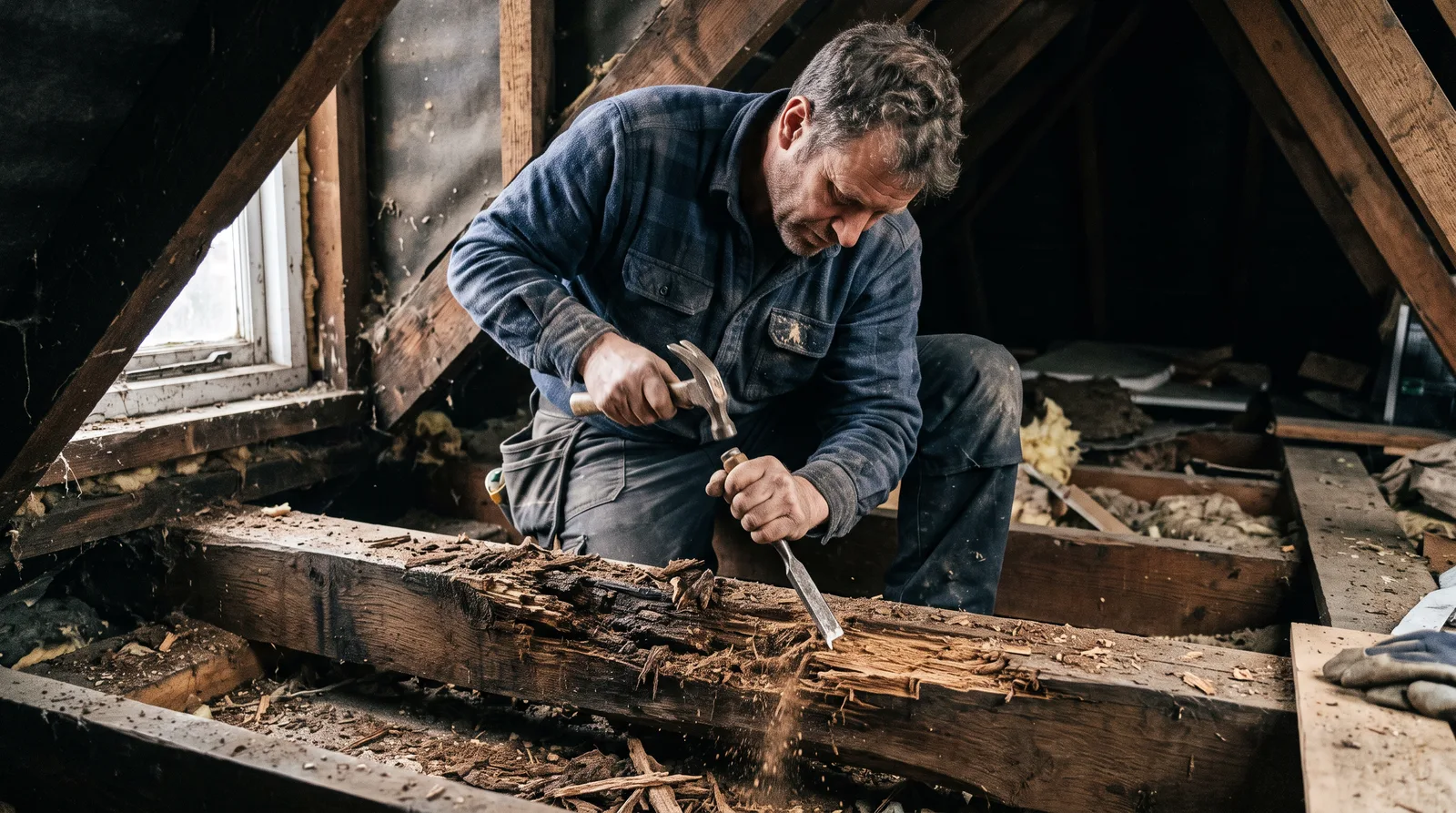
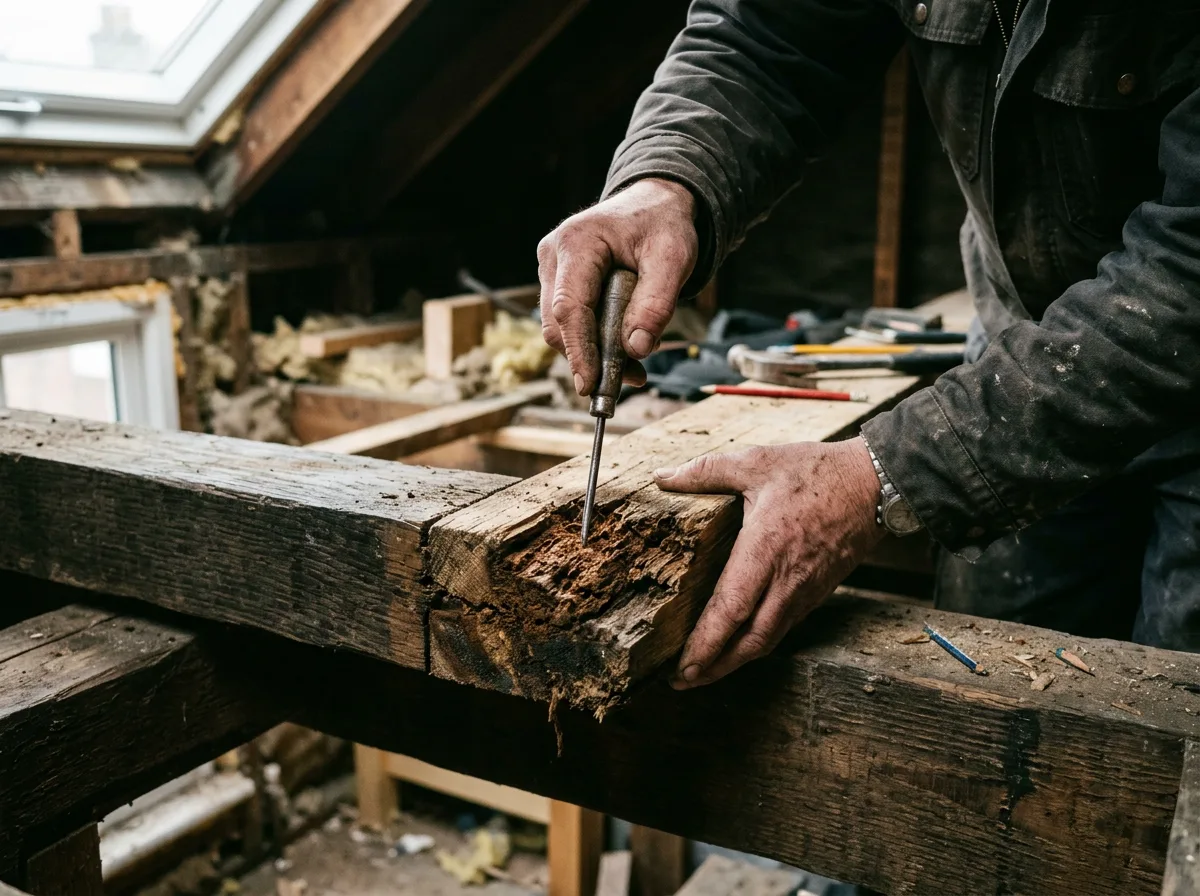
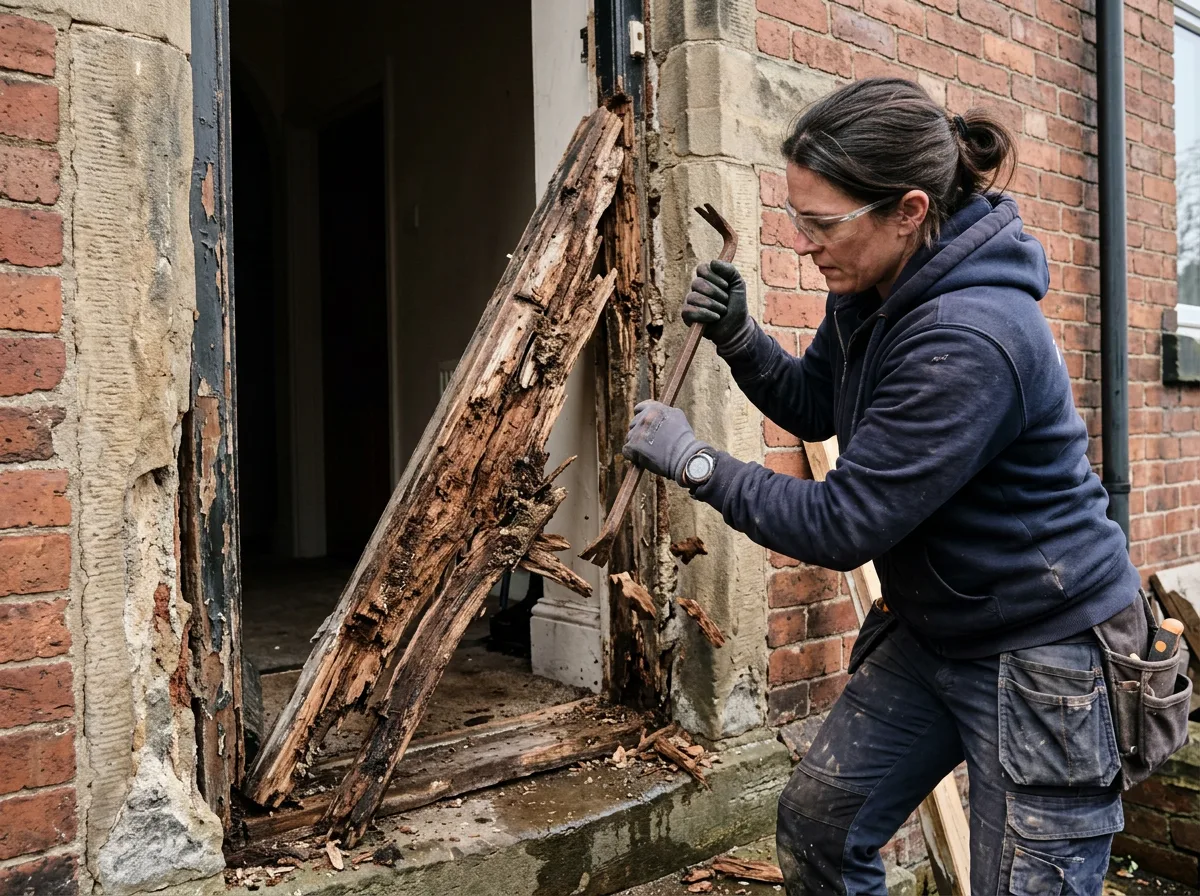
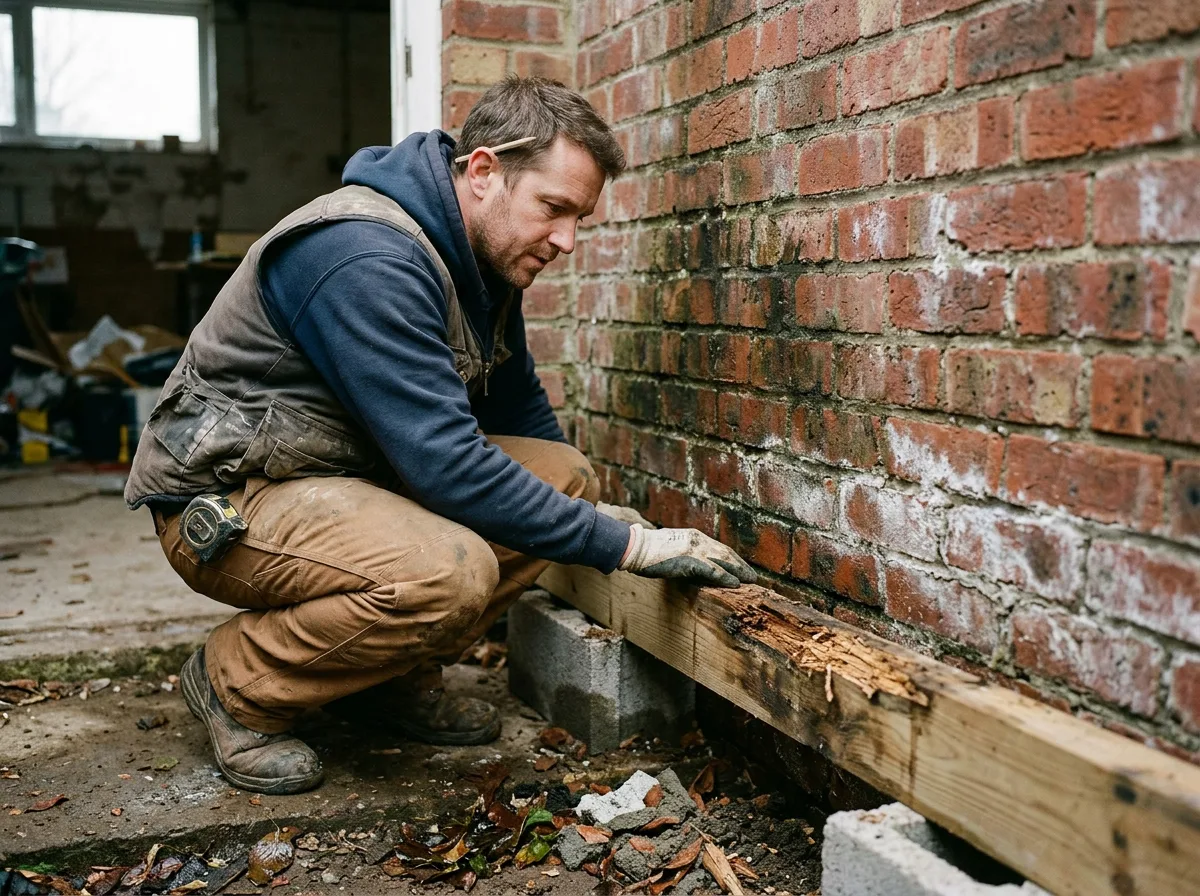
Rot in a structural timber rarely announces itself where the damage actually is. A spongy patch of flooring near an external wall, a door frame that has swollen and started to split, a joist end that has quietly lost its bearing under a leaking gutter — in every case, the visible symptom is usually smaller than the actual extent of the decay. Before we replace or repair anything, we probe the surrounding timber — with a bradawl or similar, pressing along the grain — to find where sound timber genuinely starts, rather than assuming the rot stops at the edge of what looks damaged.
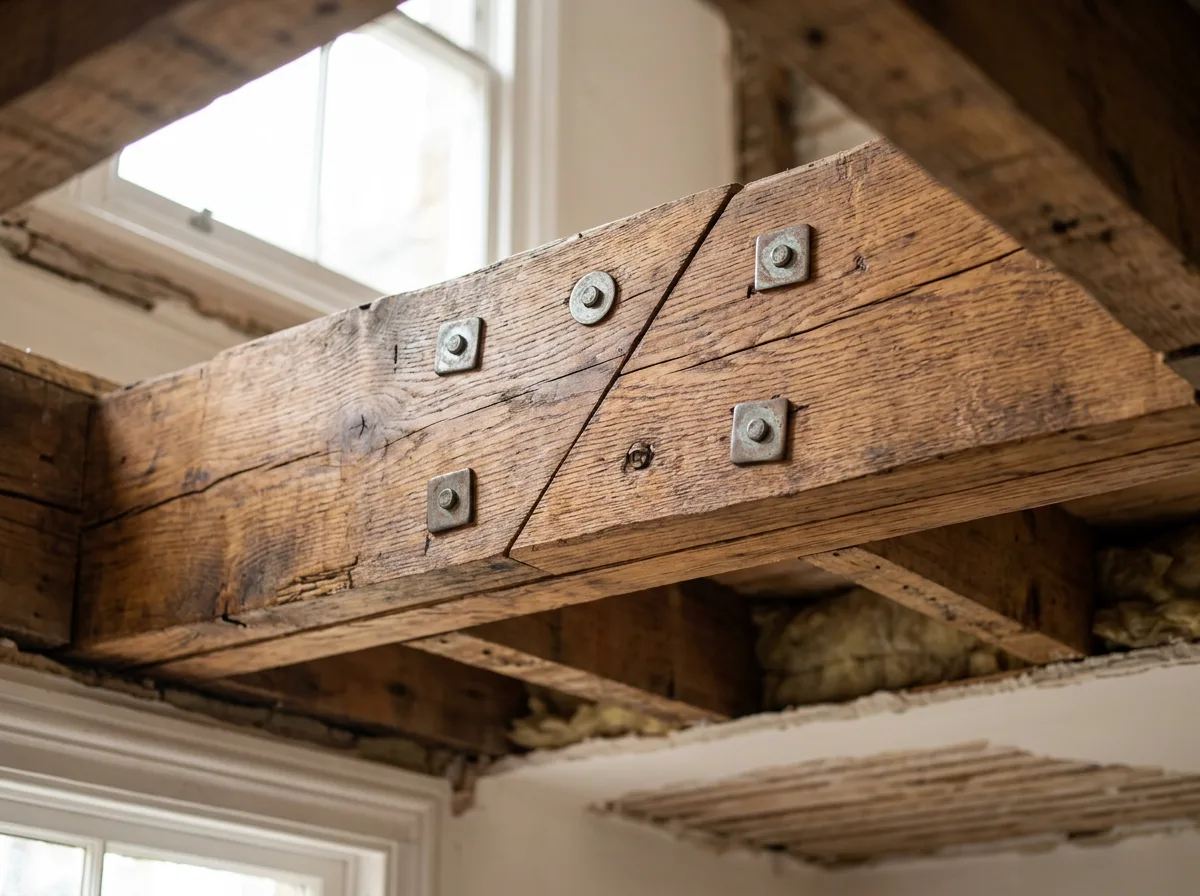
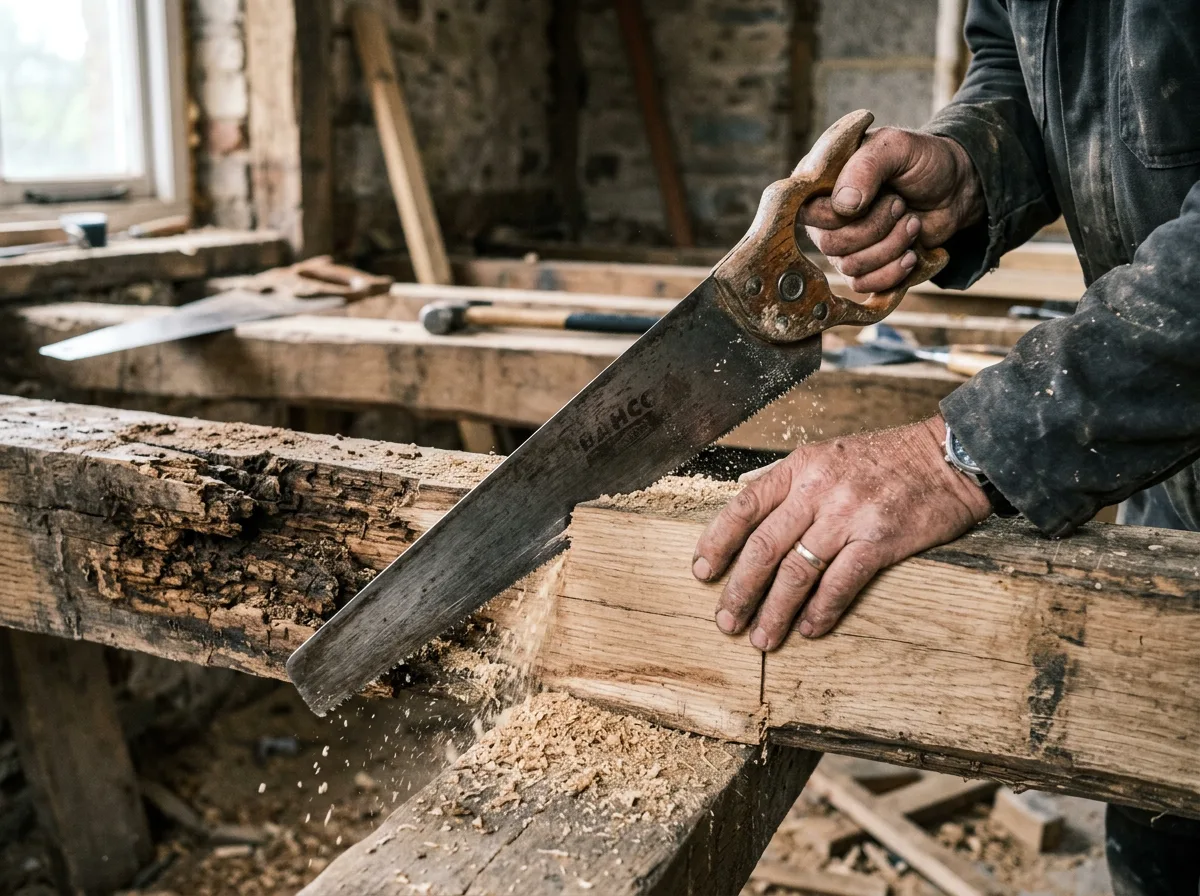
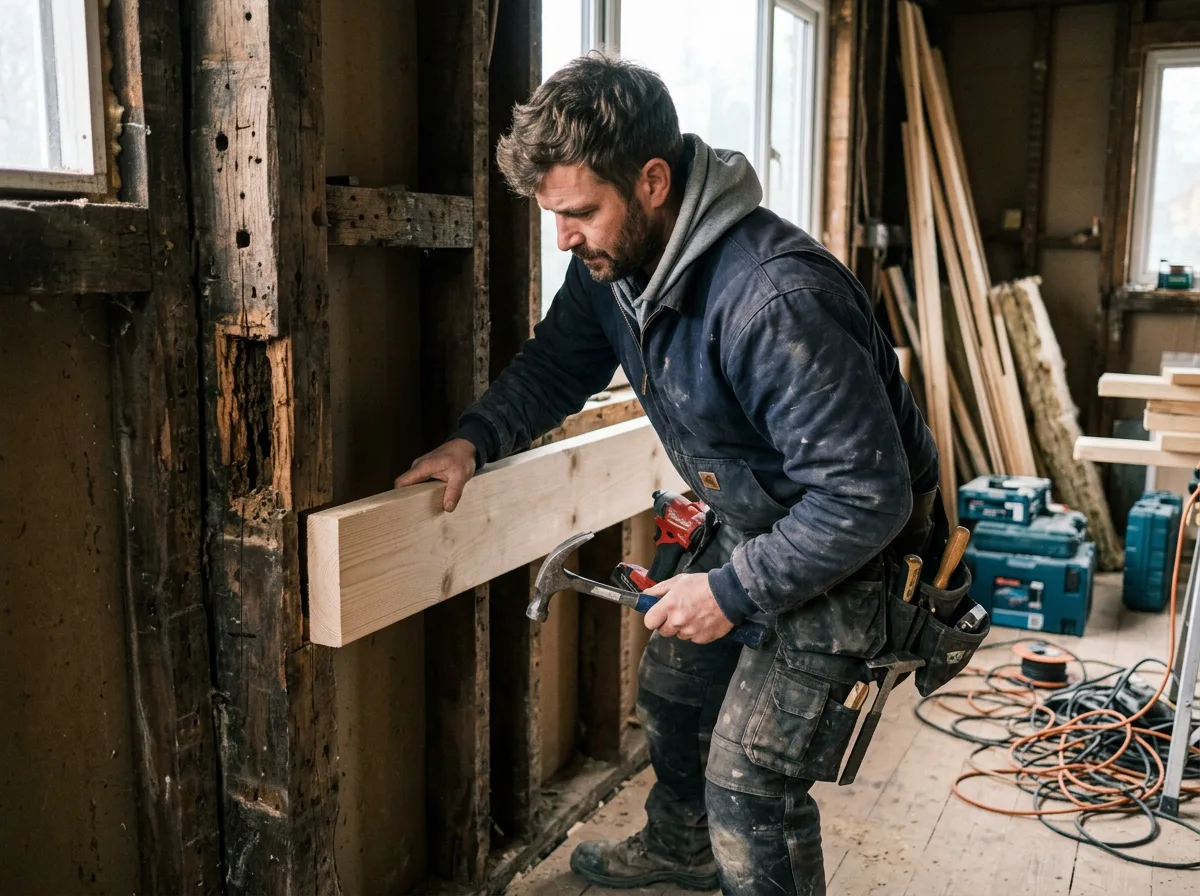
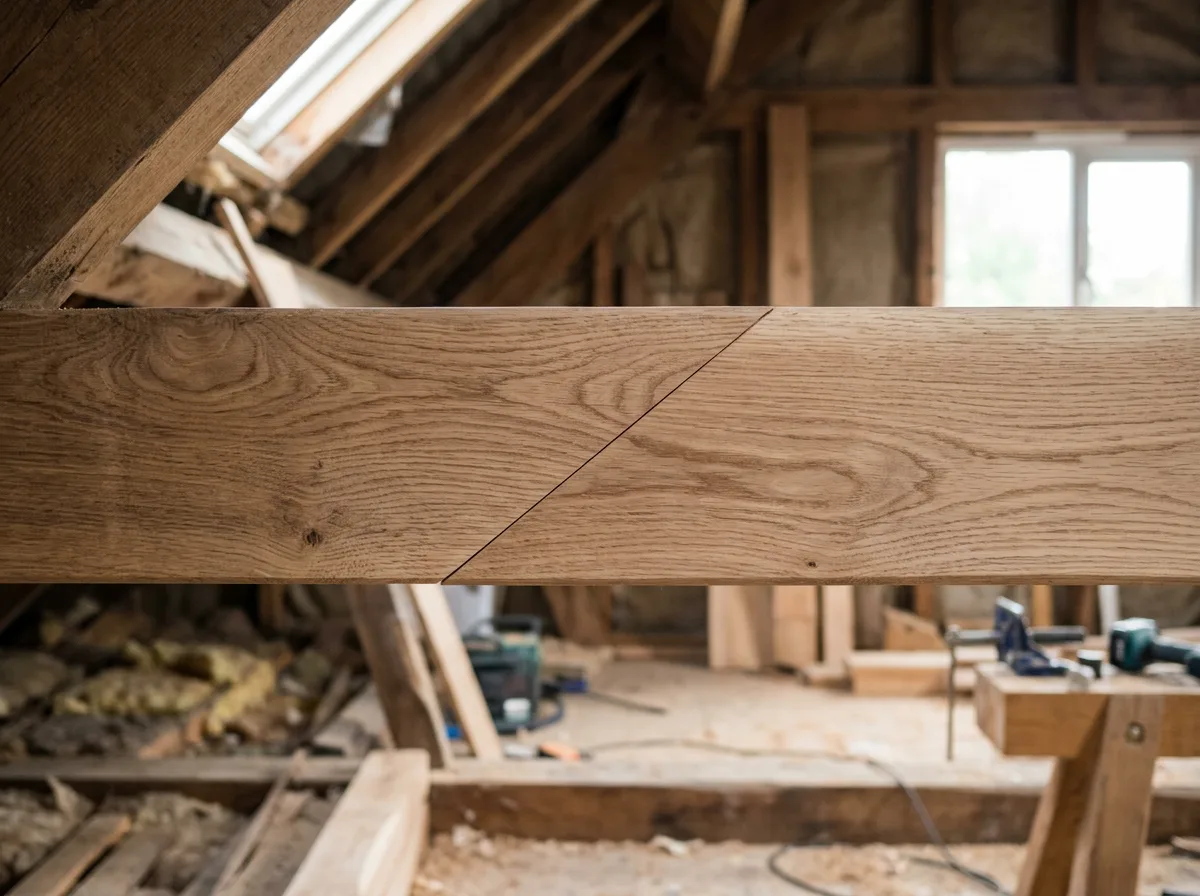
Once we know the real extent, the repair follows one of two paths. Where the decay is localised — the end of a joist, a section of a frame — we cut back to sound timber and splice in a matching new section, joined with an appropriate structural connection. This is less disruptive and usually faster than removing the whole member. Where decay runs further, or splicing would mean fitting a new section nearly as long as the piece being removed, we replace the complete structural member instead, sized to match the original specification or, where the repair also needs to carry more load than before, to a structural engineer's calculation.
We are careful not to confuse wet rot and dry rot, because the right response differs. Wet rot needs a sustained local moisture source and tends to stay where that moisture is. Dry rot is more serious — under the right conditions it can spread through masonry and plaster into timber that is not directly wet, and a dry rot finding usually needs a specialist timber and damp survey alongside our carpentry repair, since eradicating it properly goes beyond replacing timber alone.
Whatever the repair, we always flag the underlying moisture source — a failed roof detail, blocked guttering, a leaking pipe, rising damp, poor ventilation under a suspended floor — because replacing decayed timber without addressing what caused the decay is only a temporary fix. We are not a damp-proofing or roofing specialist ourselves, so where the cause needs treating, we say so plainly and point you to the right trade rather than quietly repeat a repair in a few years' time.
What We Do
Rotten & Structural Timber Work We Carry Out
Decay Assessment
Probing surrounding timber to find the genuine extent of rot before recommending a repair, rather than assuming the damage stops where it is visible.
Timber Splicing
Cutting back to sound timber and splicing in a matching new section where decay is localised — a joist end, a section of a frame — joined with an appropriate structural connection.
Structural Member Replacement
Complete replacement of a decayed joist, beam or frame where splicing is not practical, sized to match the original specification or an engineer’s calculation where the repair carries more load than before.
Rotten Door & Window Frame Repair
Replacing structural timber in door and window frames that has decayed from long-term damp or a failed seal, matched to the surrounding frame profile.
Joist & Beam End Repairs
Repairing joist and beam ends that have lost bearing on a wall plate or wall due to decay, re-establishing a sound bearing to the correct specification.
Moisture Source Identification
Flagging the likely cause behind the decay we find — a roofing defect, blocked guttering, a leak, rising damp or poor ventilation — so you can get it addressed by the right specialist.
Honest Scope
What We Leave to Other Specialists
- We do not diagnose or treat the source of damp or rot (damp-proofing, roof leaks, failed guttering, rising damp) — we replace the damaged timber and flag the likely cause, but a damp specialist, roofer or plumber should address the cause itself.
- We do not carry out dry rot eradication treatment — where dry rot is suspected, we recommend a specialist timber and damp survey alongside our carpentry repair.
- We do not provide structural engineering calculations or size replacement members for unusual loads ourselves — that comes from a structural engineer where the repair needs one.
- We do not provide Building Control sign-off — structural repair work we carry out is inspected by the local authority or an approved inspector where that applies.
- We do not do groundworks, foundations or brickwork.
How It Works
From First Look to a Sound Repair
Free Assessment Visit
We look at the timber in person and probe the surrounding area to establish the real extent of the decay.
Repair Approach Confirmed
We decide between splicing and full replacement, and confirm engineer input if the repair needs to carry more load than the original.
Fixed, Itemised Quote
A written quote once the extent of the repair is confirmed — no figure is given before we know exactly how much timber is affected.
Splicing or Replacement
Decayed timber cut back and either spliced with a matching section or replaced with a new structural member to the confirmed specification.
Cause Flagged & Handover
We flag the likely moisture source in writing, and hand the repair over ready for the next trade or for decoration.
Get Started
Request a Free Assessment
Tell us what timber you are concerned about, and we will arrange a free assessment visit before giving you a fixed, itemised quote.
Prefer email? Write to info@berkshirebespokecarpentry.co.uk or call 07399 651 836.
Getting a Quote
What Affects the Cost of Rotten Timber Repairs
We do not publish a price range for rotten timber repairs, because the price depends on how far the decay actually extends once we open things up, whether a splice repair or a full replacement is the right approach, access to the affected timber, and whether an engineer's calculation is needed because the repair has to carry more load than before.
Every enquiry starts with a free assessment visit. We probe the timber in person, confirm the extent of the repair, and then provide a fixed, itemised written quote — not an estimate that changes once we start. We are a sole trader, not VAT-registered, and the assessment visit costs nothing.
Common Questions
Rotten & Structural Timber Repairs — Frequently Asked Questions
How do I know if timber damage is structural or just cosmetic?
A rough rule: if the timber is carrying load — a floor joist, a structural door frame, a beam — any decay is potentially structural and worth having looked at properly, even if it looks minor on the surface. Surface mould or a slightly discoloured skirting board is usually cosmetic. If you are not sure which you are looking at, send us a photo and we will tell you honestly whether it needs a proper assessment.
How far does rot actually spread beyond what I can see?
Almost always further than the visible damage suggests, which is why we probe the surrounding timber with a bradawl or similar before saying where sound timber starts. Wet rot in particular tends to track along the grain from the original moisture source, and cutting back only as far as the obviously spongy section often leaves decayed timber behind a repair that then fails again within a few years.
What is the difference between wet rot and dry rot?
Wet rot needs a consistently damp timber source and generally stays localised to where the moisture is — it rarely spreads far into surrounding dry timber. Dry rot is more serious: given the right conditions it can spread through masonry and plaster into timber that is not directly wet, via fungal strands that carry moisture to new areas. Dry rot findings usually need a specialist timber and damp survey in addition to the carpentry repair, since eradicating it properly is more than a carpentry job alone.
Do you splice in new timber, or always replace the whole member?
It depends on how much of the original timber is sound. Where decay is localised — a joist end, a section of a door frame — we cut back to sound timber and splice in a matching new section, which is less disruptive than removing the whole member. Where the decay runs the length of the timber, or the section needed to splice in would be nearly as long as the original, a complete new structural member is the more sensible repair.
Will you also fix the damp or leak that caused the rot?
No — we replace the damaged timber and tell you plainly what we think caused it, but diagnosing and treating the moisture source itself (a failed roof detail, blocked guttering, rising damp, a leaking pipe) is outside our scope and needs a roofer, plumber or damp specialist. Replacing timber without addressing the cause is only a temporary fix, so we would rather flag it clearly than let you assume the problem is solved.
Does rotten structural timber replacement need Building Control approval?
Where the repair is a like-for-like replacement of a decayed structural member — matching the original size and specification — it often falls under permitted work rather than needing a fresh application, though it is still worth checking with Building Control in borderline cases. Where the repair also needs to carry more load than the original, or forms part of wider structural alteration, it falls under Building Regulations Part A and needs formal sign-off.
Can a rotten door frame be the same kind of repair as a rotten joist?
The principle is identical even though the setting is different — cut back to sound timber, splice or replace, and flag the cause. A door frame that has rotted from long-term damp or a failed seal is covered here; a frame that has split from a forced entry is a different cause and is covered on our burglary damage repairs page instead.
What areas do you cover for rotten and structural timber repairs?
We carry out rotten and structural timber repairs across Berkshire, Surrey and South Buckinghamshire, including Ascot, Bracknell, Windsor, Maidenhead, Reading, Wokingham, Sunningdale, Virginia Water, Camberley, Stoke Poges and Gerrards Cross.
Related Services
Often Paired With Rotten Timber Repairs
Structural Carpentry
Rotten and structural timber replacement is one of four areas covered under our wider structural carpentry service, alongside floor joists, stud walls and stair openings.
Floor Joists & Timber Floor Structures
Where a joist has decayed rather than simply sagged under load, this page covers the wider floor joist repair and replacement picture.
Burglary Damage Repairs
Where a door frame has split from a forced entry rather than rot or long-term damp, our burglary damage repairs page covers the frame and keep repair specifically.
Request a Free Rotten Timber Assessment
Send a few photos of the timber you're concerned about, and we'll arrange a free assessment visit, followed by a fixed, itemised written quote.
We carry out rotten and structural timber repairs across Berkshire, Surrey and South Buckinghamshire, including Gerrards Cross and Stoke Poges in South Bucks: