Repairs & Restoration
A Precisely Diagnosed Floorboard Repair
One loose, complaining floorboard — the kind of small, precise repair that comes from finding the real cause underneath, not just reaching for a screw from above.
Local to Berkshire
Experienced Carpenters
32 years in the trade
Fully Insured
High-Quality Finish
The Brief
A Small Fault, Properly Diagnosed
This is the kind of floorboard repair project we take on regularly across Berkshire: a perfectly sound room, let down by one board that announces itself every time someone walks across it. Not a creaking staircase, not a structural concern — just a single, persistent squeak in the middle of a bedroom or landing floor, usually at the worst possible moment of a quiet evening.
The exquisite part of this kind of repair is that it is rarely dramatic to look at — a lifted board, a torch beam into the void below, a few minutes of careful inspection. But that diagnosis is exactly what separates a repair that lasts from one that does not. A floorboard squeak is almost always a loose fixing, a worn edge, or a tired nail hole, and finding which one it actually is matters far more than simply driving a new screw through the carpet and hoping.
Most floors we are called to have had at least one previous attempt at a fix — a screw here, a dab of filler there — that treated the symptom rather than the cause. Lifting the board properly, even briefly, tells us exactly what is happening underneath and lets us fix it so it stays fixed.
This page illustrates the type and standard of floor repair work we carry out — not a specific named address or client. Every project is scoped and quoted individually after a free site visit.
The Process
From First Squeak to Silent Floor
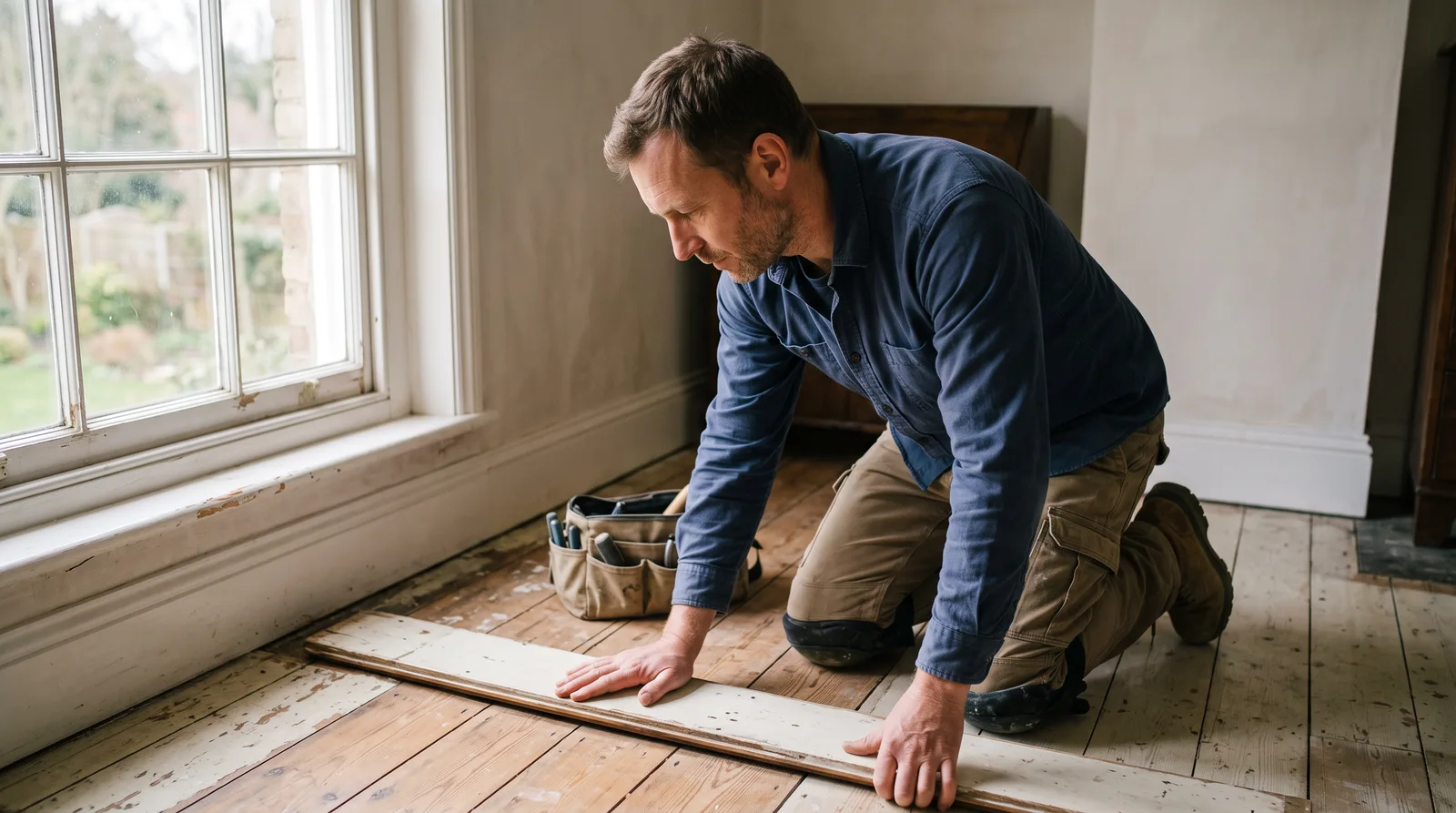
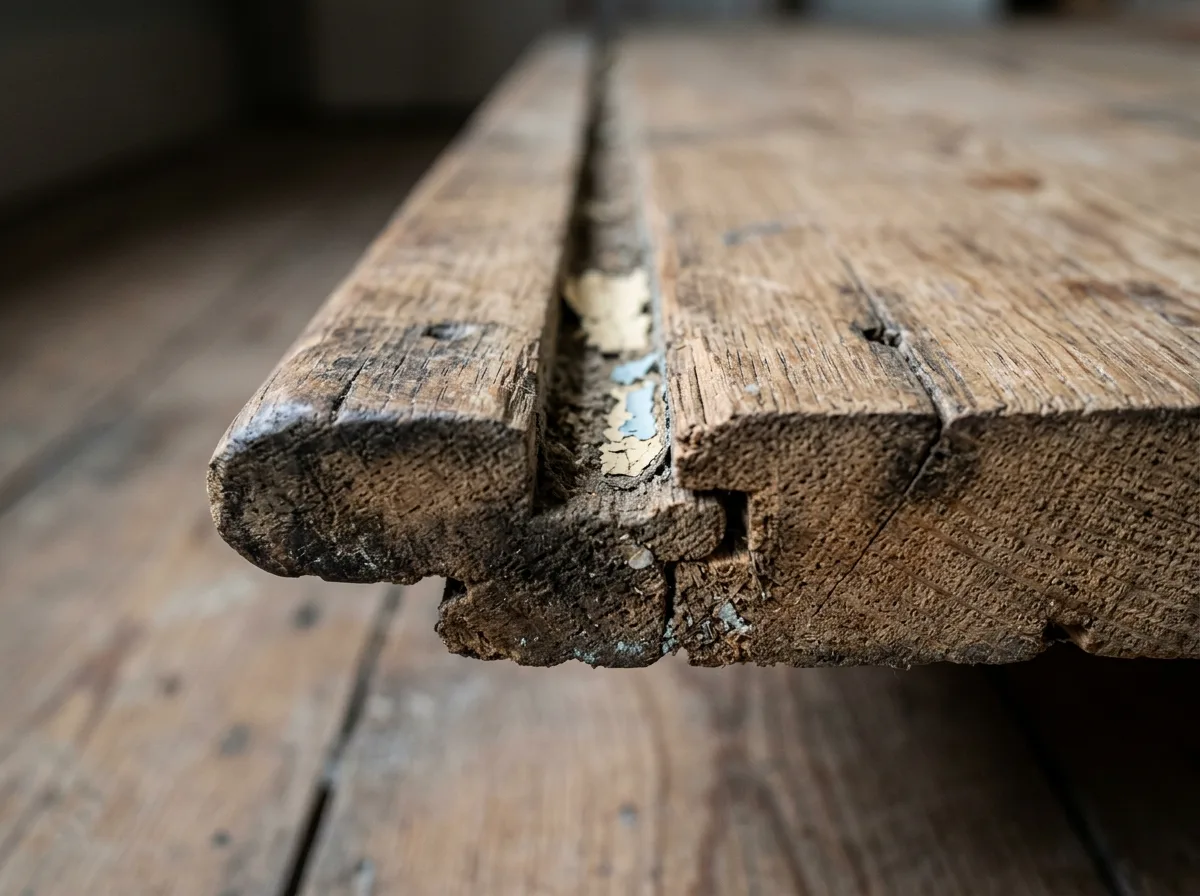
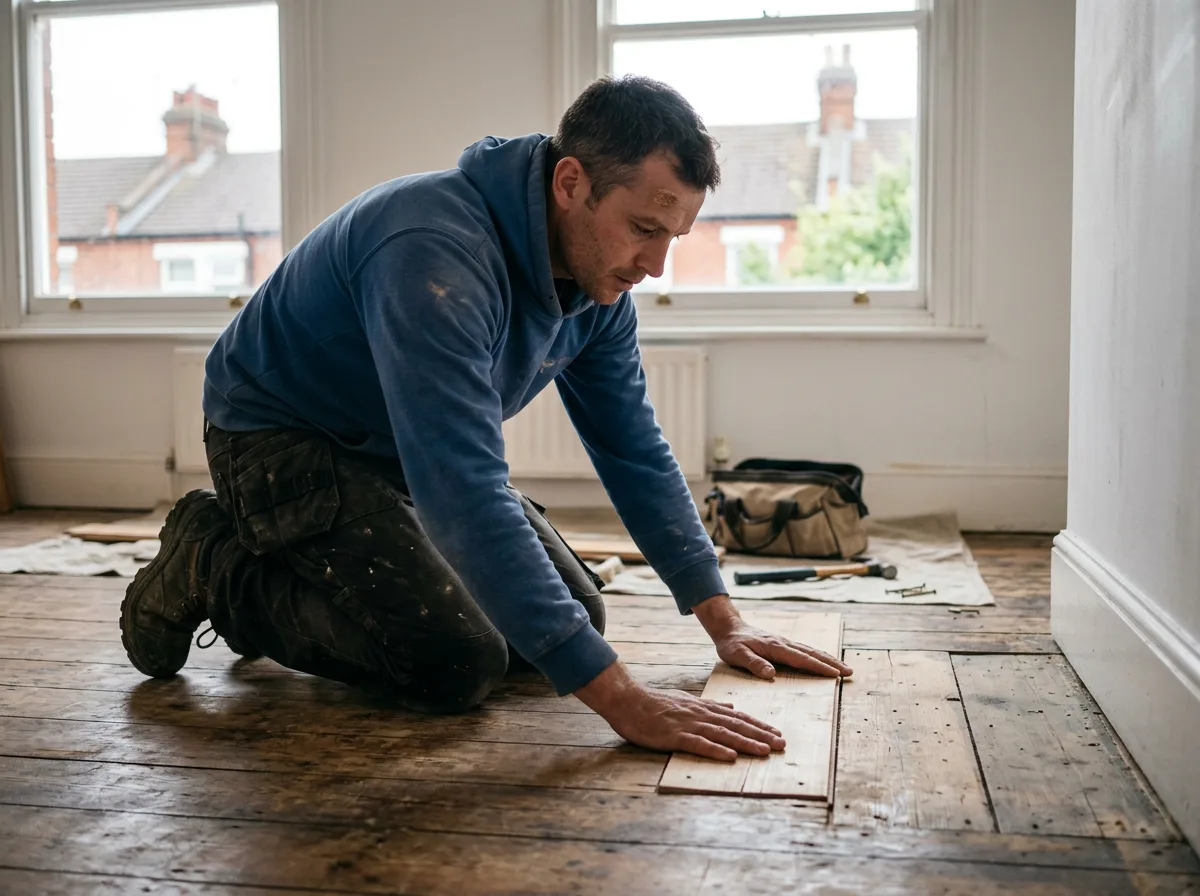
We start by finding the board that is actually moving, which is not always the one that sounds loudest from a standing position — floor noise can travel a little along a run of boards before it is heard. Once isolated, the board is lifted carefully with a pry bar, taking care not to split the tongue or damage its neighbours, and a torch into the void below tells us exactly what we are dealing with: a joist fixing that has worked loose over the years, a tongue-and-groove edge worn thin enough to rub, or a nail hole that has widened until the nail no longer grips. Screwing down blind from above, without this step, is simply a guess.
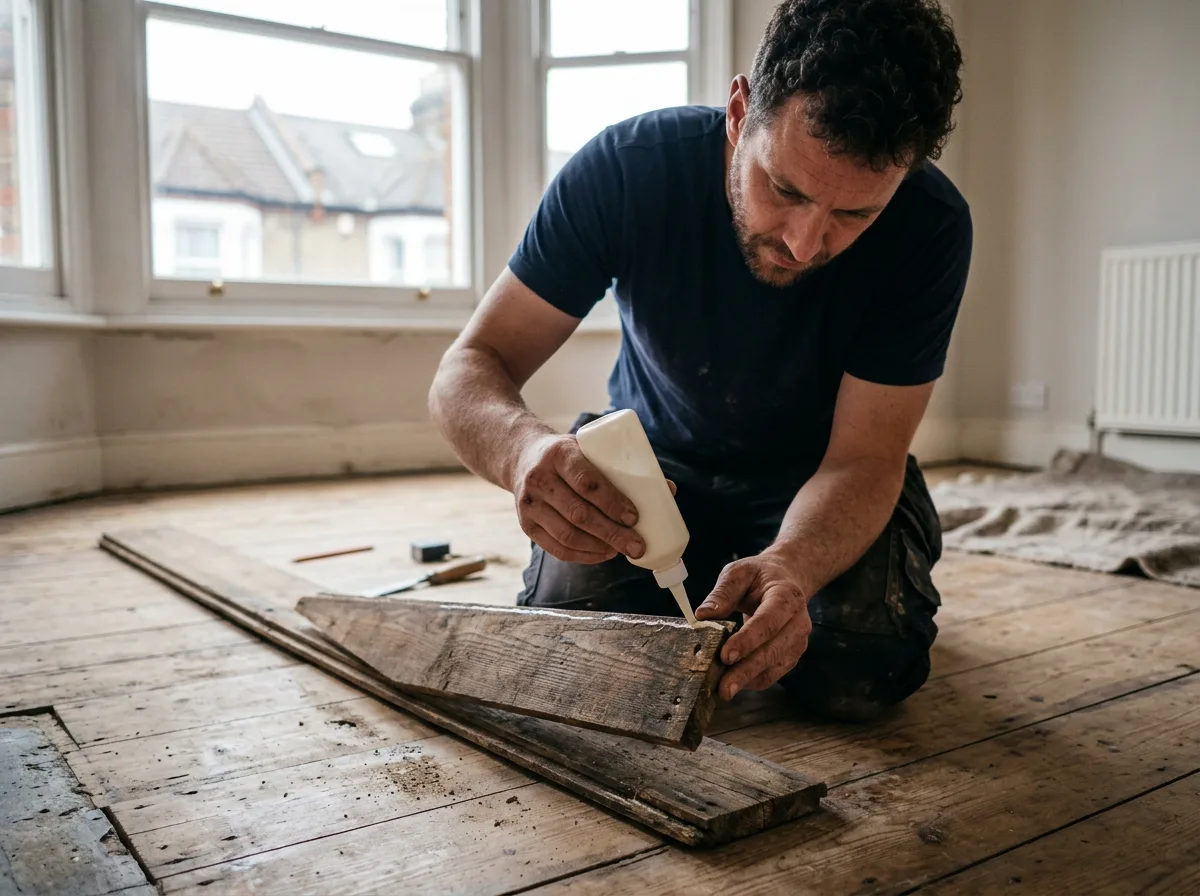
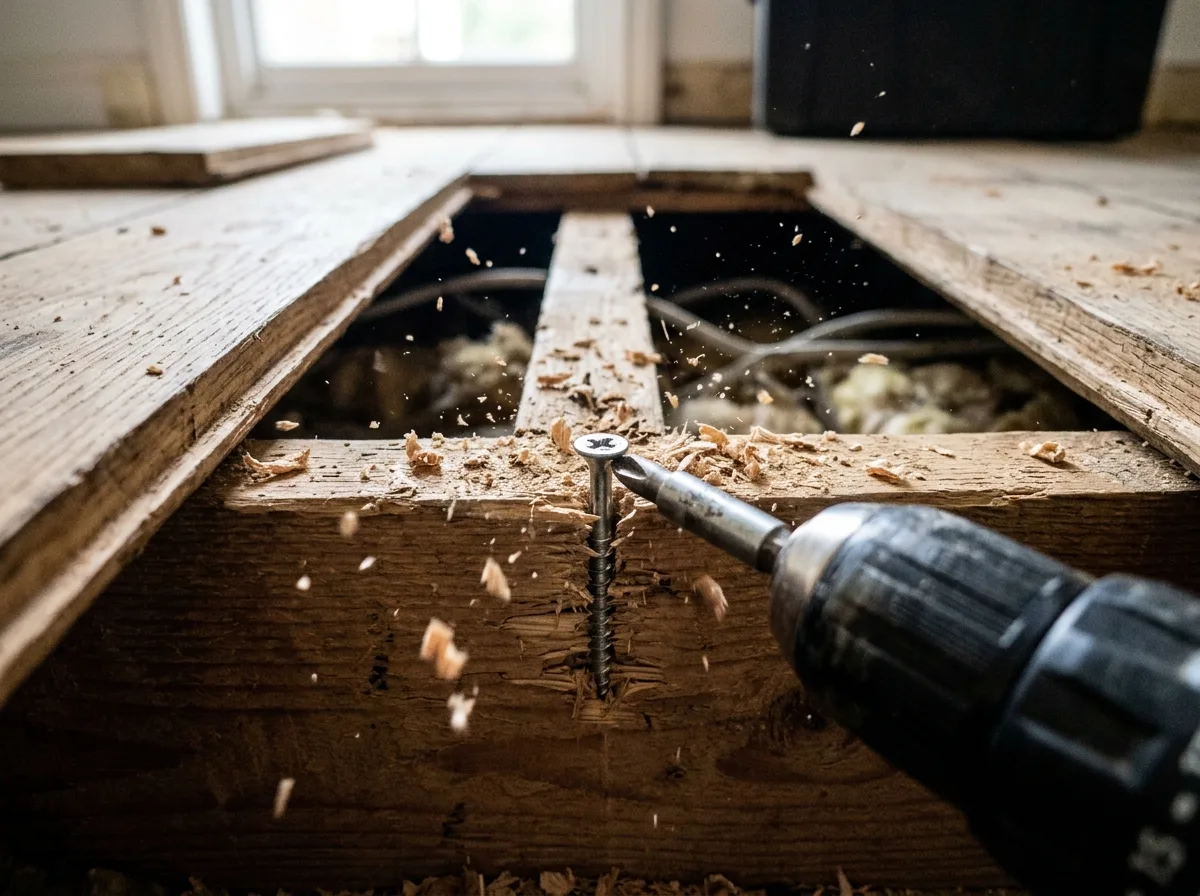
Once the actual cause is confirmed, the fix is matched to it rather than applied generically. A loose joist fixing gets a new screw driven at the correct angle into sound timber, not just alongside the old hole. A worn tongue-and-groove edge is glued and, where needed, lightly shimmed so the boards sit tight against each other again instead of flexing and rubbing. A widened nail hole is filled properly or re-fixed slightly offset from the original, so the board has something solid to bite into.
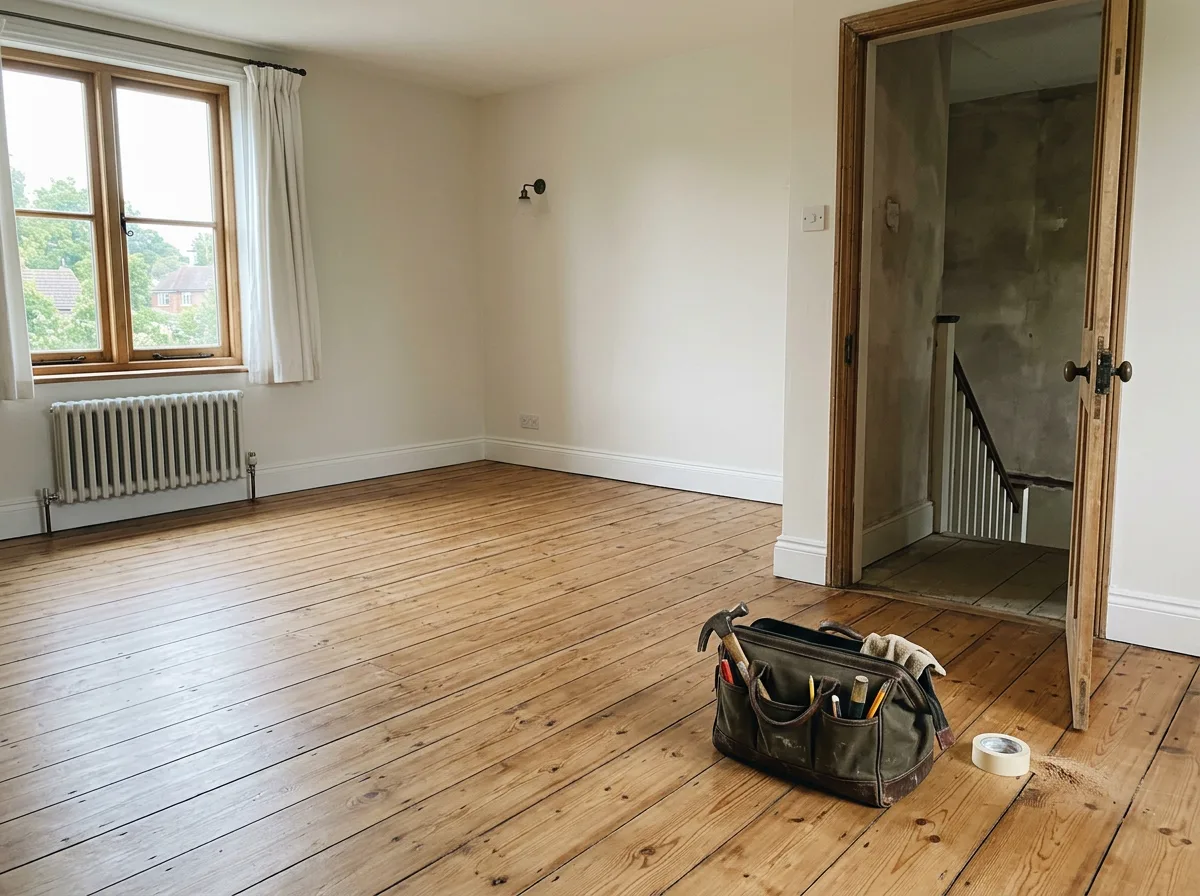
The board is then re-fitted, seated fully home, and tested underfoot with real weight before anything is called finished. Where the repair touches the visible face — sanding a glued edge flush, or re-fixing from above where that genuinely was the right call — the finish is matched to the surrounding boards so the repair disappears into the floor rather than sitting on top of it. The result is a floor that is simply quiet again, with no lingering wobble and no fresh screw heads catching the eye.
The Work, Step By Step
A Closer Look
A closer look at the kind of diagnosis and repair involved in putting a squeaking floorboard right.



Specification
Materials & Approach
- Fixing choice — screw or nail — selected for the actual joist condition and board material, not applied as a default
- Repair versus replacement judged on the extent of the wear: a worn edge or loose fixing is repaired, a genuinely split or rotten board is replaced
- Quality wood glue worked into worn tongue-and-groove joints, with a timber shim fitted only where the gap calls for one
- Finish — stain, oil or varnish — matched to the existing floor as closely as the original specification and natural ageing allow
- Sub-floor access planned around the existing floor covering wherever practical, to avoid unnecessary disruption to carpets or fitted flooring
- No filler or cosmetic patch used as a substitute for a proper mechanical fix at the actual cause of the squeak
Common Questions
Floorboard Repair — Frequently Asked Questions
What actually causes a floorboard to squeak?
Almost always one of three things: a fixing into the joist below that has worked loose over the years, a worn tongue-and-groove edge rubbing against its neighbour, or a nail hole that has widened with age and movement so the nail no longer grips. Timber shrinks slightly over time and foot traffic does the rest, so the board starts to flex and rub exactly where it used to sit still.
Can a squeaking board be fixed without lifting the carpet or flooring entirely?
In many cases, yes. Where the floor covering allows it, we can often work through a small, carefully made access point rather than lifting an entire carpet or floor finish. Where the covering is fitted in a way that makes partial access impractical, we will tell you honestly before starting rather than causing unnecessary disruption.
Is screwing down from above ever the right fix?
Occasionally, but only once the real cause has been identified and the screw is placed and angled correctly into sound timber. Screwing down blind from above, without first checking what is happening underneath, is how boards end up with several redundant holes and a squeak that keeps coming back. We only fix from above when it is the right fix for that specific board, not the default one.
Will I be able to see where the board was repaired?
That is the aim, always. Wherever the floor construction allows, we work from underneath so the visible face of the board is untouched. Where a repair has to be made or a board has to be lifted from above, we match the stain, finish and fixing pattern as closely as possible so it sits quietly among its neighbours rather than standing out.
How do you match an old floorboard's finish after a repair?
We look closely at the existing stain, oil or varnish, the sheen level, and how the surrounding boards have aged and worn, then sand and finish the repaired area to sit as close to that as realistically possible. On boards with decades of natural colour change, a perfect invisible match is not always achievable, but a careful, considered one is.
Does a squeaking board mean there is a structural problem with my floor?
Almost never on its own. A squeak is typically a joint or fixing problem, not a sign the joists or sub-floor are failing. That said, if a board feels like it genuinely moves or deflects under weight rather than just making a noise, that is worth having looked at properly as part of the same visit.
How long does a typical floorboard repair take?
A single board, once access is sorted, is often a job of an hour or two including diagnosis, repair and re-finishing time to dry. Several affected boards in the same room, or boards under a more involved floor covering, typically take longer. We confirm a time estimate as part of the written quote rather than an open-ended guess.
Do you offer a guarantee on floorboard repair work?
Yes — all our repair work is covered by our standard workmanship guarantee, confirmed in writing with your quote. If a repaired board were ever to start squeaking again under normal use, we would come back and put it right.
Get Started
Request a Free Quote for Your Floor
Got a Floorboard That Needs the Same Treatment?
A squeaking floorboard is usually a quick, tidy fix once the real cause is found. Get a free quote or arrange a site visit.