Repairs, Security & Insurance Estimates
Why a Forced Door Usually Fails at the Frame, Not the Lock
 Illustration
After a break-in, most homeowners assume the lock failed. In the majority of forced-entry jobs we attend, the lock is intact — the timber around it is not. Understanding why changes what you actually need to fix.
What Actually Gives Way First
A door is forced with a sharp, concentrated blow near the lock — a kick, a shoulder, or a crowbar worked into the gap. That force has to go somewhere. It rarely goes into the lock mechanism itself, because a cylinder and bolt are small, hardened, and designed to resist exactly that kind of load.
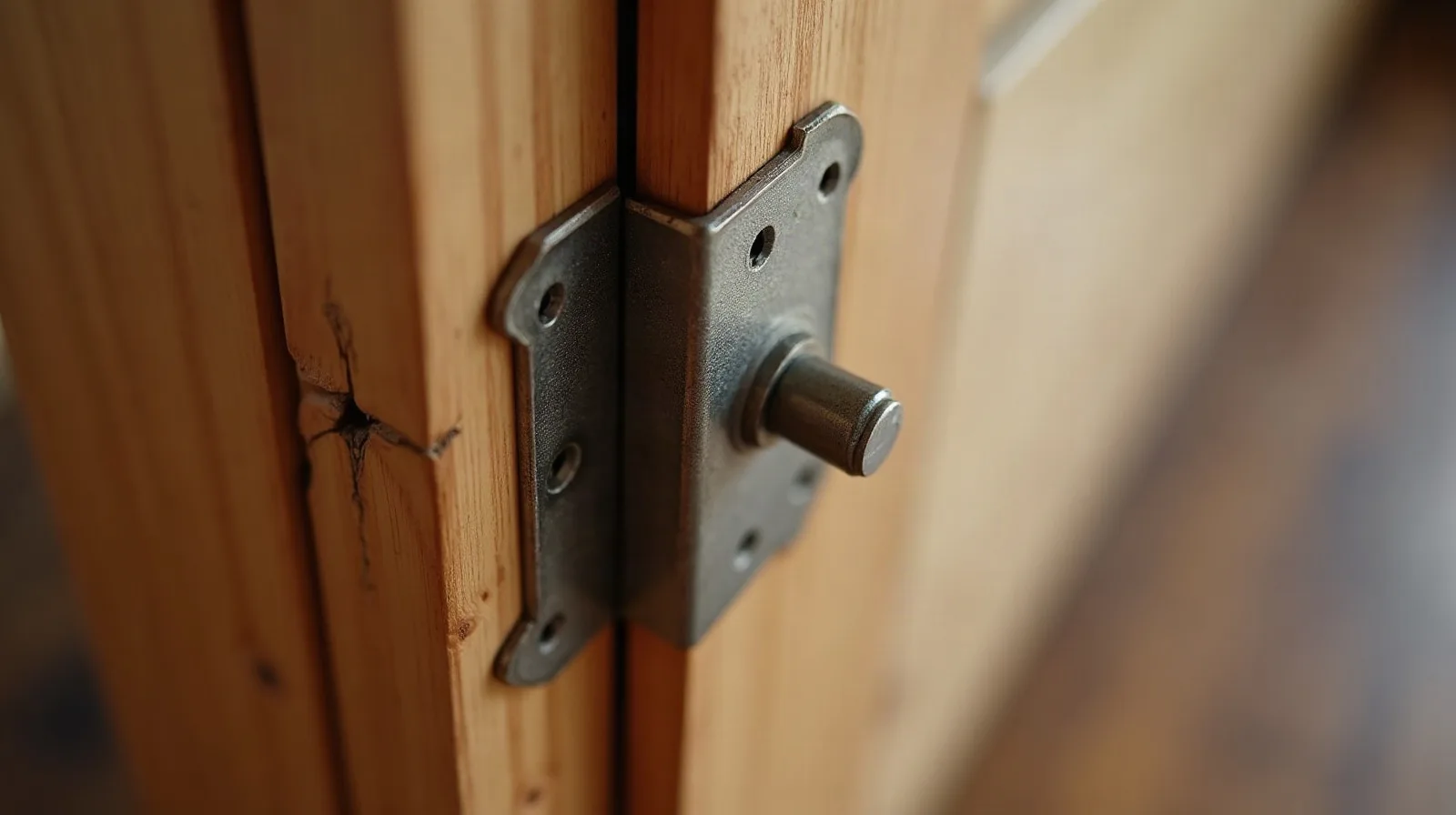
Instead, the force travels into the keep plate and the timber it is screwed to. A short keep plate only grips a small patch of wood. A thin softwood frame section has limited material to resist splitting. And the screws holding the keep in place often only bite 20-30mm into the frame — not nearly deep enough to reach the stud or masonry behind it. Under load, that shallow, narrow fixing is the first thing to fail.
Planning a project?
Skip the guesswork. Get a transparent, fixed-price quote from our Berkshire team — free measuring visit, no obligation.
Why "Just Fit a Better Lock" Misses the Point
It is a natural instinct to respond to a break-in by upgrading the lock. A better cylinder is rarely wasted money, but if the frame around it is the weak point, a stronger lock changes very little. The door will still fail in the same place, by the same mechanism, because the force never reached the lock in the first place.
We see this regularly on repair jobs: a relatively new, good-quality lock sitting in a frame that has already split once around the keep and been crudely patched. The lock did its job. The frame did not. Fixing only the visible, nameable part — the lock — while leaving the structural weak point untouched is a common and avoidable mistake.
What Actually Helps
Three changes make the biggest difference, and none of them require replacing the door. First, strengthening the frame itself — reinforcing the section around the keep and hinges so there is more sound timber to resist splitting. Second, longer fixings: screws long enough to reach the stud or masonry behind the frame, rather than stopping short in the frame timber alone. Third, a keep plate that spreads the load across a wider area of timber instead of concentrating it at one small point.
Done together, these three changes address the actual failure mechanism rather than the part that gets blamed for it. They are also considerably cheaper than a new door, and in most cases more effective than simply fitting another lock.
Where Insurance and Standards Fit In
Some insurers specify locks meeting BS 3621 on final-exit doors, and it is worth knowing whether yours already complies. But a certified lock bolted into an uncertified, weak frame is only addressing one half of the vulnerability. The standard describes the lock; it says nothing about the keep plate, the frame timber, or the screws holding it all together.
We will tell you honestly whether your existing lock already meets the relevant standard, and whether the frame around it needs attention as well. Both can be true at once — a compliant lock and a frame that would still fail under force.
Most forced entries succeed at the frame, not the lock. A good cylinder in a softwood frame with a short keep plate will give way at the timber long before the lock is defeated. Strengthening the frame, lengthening the fixings and fitting a keep that spreads the load is cheaper than a new door and more effective than another lock. Some insurers specify locks meeting BS 3621 on final-exit doors; we will tell you honestly whether yours already does.
The Hinge Side Is Vulnerable Too
Attention naturally goes to the lock side of a door, but the hinge side can fail the same way and is often overlooked. Standard hinges are commonly fixed with short screws into the same thin softwood section, and a door can be levered off its hinges with surprisingly little force if nothing reinforces that side.
Hinge bolts — small steel pins fitted close to each hinge that engage a corresponding plate in the frame when the door closes — address this directly. If the hinge screws do fail under force, the hinge bolts keep the door located in the frame. We treat the hinge side and the lock side as one assessment, not two, because a frame reinforced only around the keep still leaves an obvious second route in.
A Simple Check You Can Do Yourself
You do not need tools to get a rough sense of where your own door stands. Open it and look at the keep plate on the frame — is it a short strip covering only the bolt, or does it extend further up and down the frame? Count the screws holding it and, if you can see their heads clearly, note how short they look relative to the thickness of the frame section.
Press a thumb into the frame timber near the keep and the hinges. Softwood that feels spongy, or shows old filler, paint cracking, or a hairline split running from a screw hole, has already been under more load than it was built to take. None of this replaces a proper assessment, but it tells you whether a closer look is worth arranging before, rather than after, anything happens.
What a Proper Assessment Looks Like
We look at the door and the frame as two separate questions. The lock gets checked on its own merits — condition, standard, whether it still operates smoothly. The frame gets checked separately: timber condition around the keep and hinges, keep plate size, fixing length, and whether previous damage or repairs have already weakened the structure.
Where we find both a sound lock and a weak frame, the honest answer is to leave the lock alone and reinforce the frame. Where the frame is sound but the lock is old or sub-standard, the lock gets replaced. Recommending a full door replacement when repair and reinforcement would do the job is not something we do. The goal on every visit is to fix the part that actually failed, and to leave you able to see the difference between the two.
FAQ
Common Questions
If the lock usually survives, why bother upgrading it at all?
A sound lock still matters, and some insurers specify locks meeting BS 3621 on final-exit doors. The point is that a good lock fitted into a weak frame is only half the job — the frame needs attention too.
What is a keep plate, and why does its size matter?
The keep (or strike plate) is the metal plate the bolt engages into. A short, standard keep only grips a small area of timber, so a forced blow splits the wood around it. A longer keep spreads the load across more of the frame and is harder to break through.
Will fitting a multi-point lock solve the problem on its own?
It helps, because the door engages the frame at several points instead of one, but every one of those points is still only as strong as the timber it is screwed into. A multi-point lock in a thin softwood frame with short screws is a partial fix, not a complete one.
How long should the screws be in a door frame fixing?
Standard keep plates often come with screws that only bite 20-30mm into the frame timber — frequently not reaching the structural stud or masonry behind it. Longer screws that reach that structure behind the frame carry far more load before the timber gives way.
Can an existing frame be strengthened without replacing the whole door?
Often, yes. Reinforcing the frame around the keep and hinges, fitting a longer keep plate, and replacing short screws with fixings that reach the structure behind can meaningfully improve resistance without a full door replacement.
Is a new door always the answer after a break-in or a security review?
Not necessarily. If the door itself is sound but the frame failed, repairing and reinforcing the frame is usually cheaper and just as effective. We assess the door and the frame separately before recommending either.
Does this apply to UPVC doors as well as timber?
The principle is similar — the weak point is wherever the keep engages the frame, not the lock cylinder — but the materials and fixing methods differ. We assess UPVC frames on their own terms rather than treating them as timber.
How do I know if my current frame is vulnerable?
Signs include a standard short keep plate, visibly short screws, softwood that feels soft or splits easily near the strike, or a frame that already shows old repair marks around the lock. We check this as part of a home security assessment.
Ready to Start?
Get a Free, No-Obligation Quote
Free measuring visit across Ascot, Bracknell, Windsor, and the wider Berkshire area. Call, WhatsApp, or use our contact form — we respond within one working day.
Related Guides
- Misted Double Glazing: Repair the Unit or the Window?
- Door and Window Security Standards Explained for Homeowners
- How an Insurance Repair Estimate Is Put Together
- Squeaky Stairs: What Causes Them and What a Proper Repair Involves
- What to Do in the First Hour After a Burglary
- Damp and Ventilation: Preventing Musty Odours Behind External
- Fitted Wardrobes Price Guide Berkshire | 2026 Costs